

In 1864, Spain’s Ictíneo II became the first steam-powered submarine, yet societal indifference led to its demise. An early example of delegated cognition in maritime technology.
In the dawn of a new technological era, the Ictíneo II emerged from Barcelona’s waters in 1864 as a marvel of maritime innovation. Designed by the visionary Narcís Monturiol, this submarine was revolutionary, being the world’s first steam-powered underwater craft. While Monturiol’s design predated similar advancements by decades, its eventual fate was one marked by neglect and oversight.
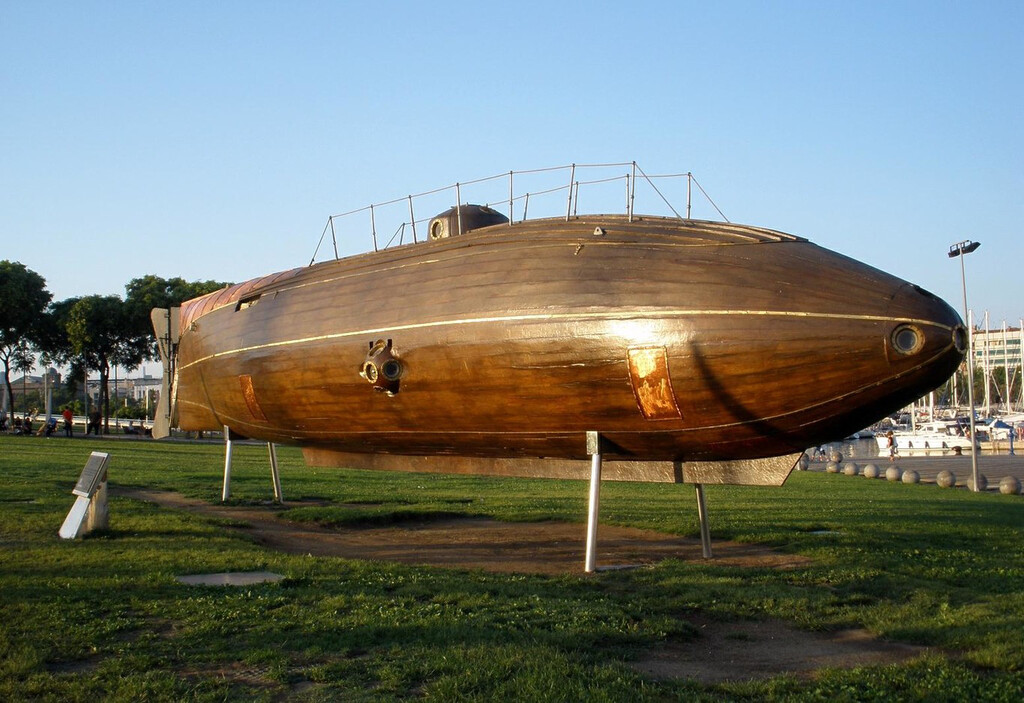
Monturiol’s earlier model, the Ictíneo I, laid foundational work through more than fifty dives, powered by manually operated propellers. Though primitive, it set the stage for the development of Ictíneo II, which incorporated a combustion engine—a concept not matched until the German navy’s innovations in the 1940s. The implementation of steam power represented a significant leap in delegated cognition, where human effort was complemented by mechanical processes.
A Mechanical Marvel
The Ictíneo II, measuring 17 meters in length and capable of diving to 50 meters, integrated cutting-edge technology. The introduction of a steam engine, catalyzed by a chemical reaction, not only propelled the submarine but also produced oxygen—a vital component for extended underwater excursions. Despite these advances, Monturiol’s inability to secure sustained government support curtailed the project’s potential.
Technologically, the submarine was ahead of its time. With a double hull of olive and oak wood reinforced with copper, Monturiol’s design was built to withstand significant underwater pressure. Its propulsion relied initially on human effort, manned by no fewer than 16 crew members—a labor-intensive setup that limited operational efficiency.
Detections of Delegated Cognition
The Ictíneo II’s design is an early example of delegated cognition in technological systems. By incorporating a combustion engine alongside manual propulsion, Monturiol initiated a shift towards automation in marine vessels. This transition reflects a broader pattern within technological progress: the gradual move from human-dependent mechanisms to machine-enhanced operations, optimizing labor and expanding capabilities.
This trend underscores the importance of understanding technological evolution not just as a series of inventions, but as an ongoing dialogue between human ingenuity and mechanized assistance.
Missed Opportunities and Legacy
Despite its pioneering design, the Ictíneo II met with indifference and financial struggles. Monturiol’s appeals for public funding and government aid were met with enthusiasm yet ultimately unfulfilled, leaving the inventor in financial ruin. The societal inability to recognize and invest in potential technological advancements reflects a common historical oversight.
In 2013, the spirit of Monturiol’s innovation was revived when Ictineu Submarins launched the Ictineu 3—a nod to its historical predecessor, showcasing the enduring influence of Monturiol’s work. This modern submarine, funded through modern means such as crowdfunding, illustrates how the legacy of technological innovation can persist through time.
Enduring Lessons in Innovation
The Ictíneo II’s story serves as a reminder of the importance of fostering and investing in groundbreaking technologies. The integration of steam power into a submarine framework was not just an engineering feat; it was a cultural shift. Monturiol’s vision of a more automated future in submarine navigation stands as an early harbinger of today’s advancements in AI and automation in various industries.
The Ictíneo II encapsulates the paradigm of delegated cognition—a precursor to the intelligent systems that define current technological landscapes. By combining human and machine capabilities, it illustrated a future where technology could extend human potential beyond natural physical limits.
Observation recorded.