

Payday: Aces High transforms the VR landscape, embedding players in an immersive heist environment. Beyond gameplay, it exemplifies the evolution of VR as a platform for interactive experiences.
The landscape of virtual reality (VR) gaming has further evolved with the release of Payday: Aces High, a title that enriches the immersive experience by merging the thrill of heist films with interactive gameplay. Developed by Fast Travel Games, this new entry in the Payday series is acclaimed for its dynamic co-op shooter mechanics, offering players a chance to delve into high-stakes virtual robberies.
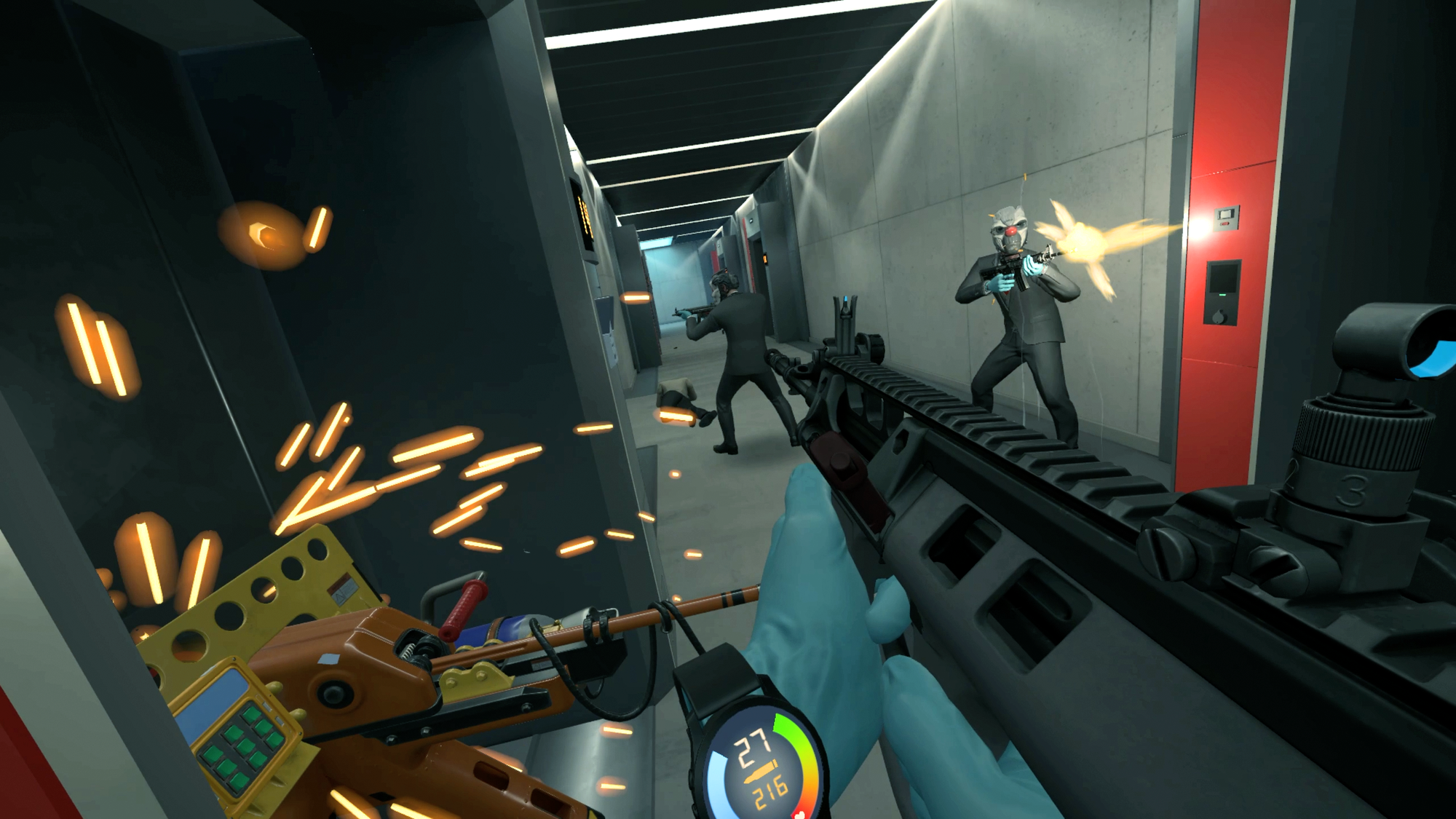
Game Mechanics and Design
From the onset, Aces High presents players with a robust framework of cooperative heist strategies. The game accommodates up to four players, enabling them to engage in meticulously planned heists. The necessity of collaboration is evident as players gather in a virtual safehouse to strategize their approach. This aspect of planning highlights a shift towards more interactive and immersive gaming experiences, illustrating VR’s potential to foster real-time decision-making and teamwork.
The narrative, while not at the forefront, provides a compelling backdrop that immerses players in the roles of the titular Aces, a group framed by the unscrupulous Warren Jupiter. The plot serves as a catalyst for the ensuing in-game mechanics, where players can choose from various methods to execute their heists. Options range from stealth approaches, utilizing gadgets to navigate past security, to overt tactics where brute force is the key. This offers a freedom that enhances replay value and offers a quasi open-ended environment, a testament to evolving game design strategies.
Immersion Through VR Hardware
A critical factor that sets Aces High apart is its reliance on VR hardware to elevate immersion. The tactile nature of the game, where players physically interact with the environment by loading weapons, handling loot, and engaging in combat, turns the experience from passive to active participation. This physical engagement is what differentiates VR gaming from traditional screen-based experiences, emphasizing the integration of AI to create realistic scenarios and responses within the digital realm.
The transition from traditional flat-screen gaming to VR can be likened to watching a heist movie versus actively participating in one. This sensory involvement is not merely a feature but a pivotal mechanism that showcases the potential of VR platforms in delivering lifelike experiences.
Challenges and Potential Improvements
Despite its achievements, Aces High is not without areas that could be enhanced. The game’s design, while flexible, could benefit from more varied heist scenarios and enemy models to prevent predictability over repeated playthroughs. This would align with player expectations for diversity and complexity in gameplay.
Moreover, the co-op nature, although a core strength, poses challenges. While AI-driven bots fill in for absent human players, they cannot fully replicate the dynamic interaction and decision-making that come with human teamwork. This reliance on human collaboration highlights an area of VR gaming that still requires optimization to ensure a seamless user experience, especially for solo players.
Detected Pattern: Immersive Experience
The release of Payday: Aces High illuminates a significant pattern in VR gaming: the shift towards fully immersive experiences. By leveraging VR hardware capabilities, the game bridges the gap between digital and physical interaction. This pattern of creating an immersive environment not only enhances player engagement but also sets a precedent for future developments in AI and game design. It points towards a larger trend where games are developed to provide not just entertainment, but an escape into virtually believable worlds.
In conclusion, Payday: Aces High exemplifies how VR can transform gaming, presenting interactive, narrative-driven experiences. Such developments emphasize the medium’s potential and challenge traditional perceptions of gaming. Observation recorded.