
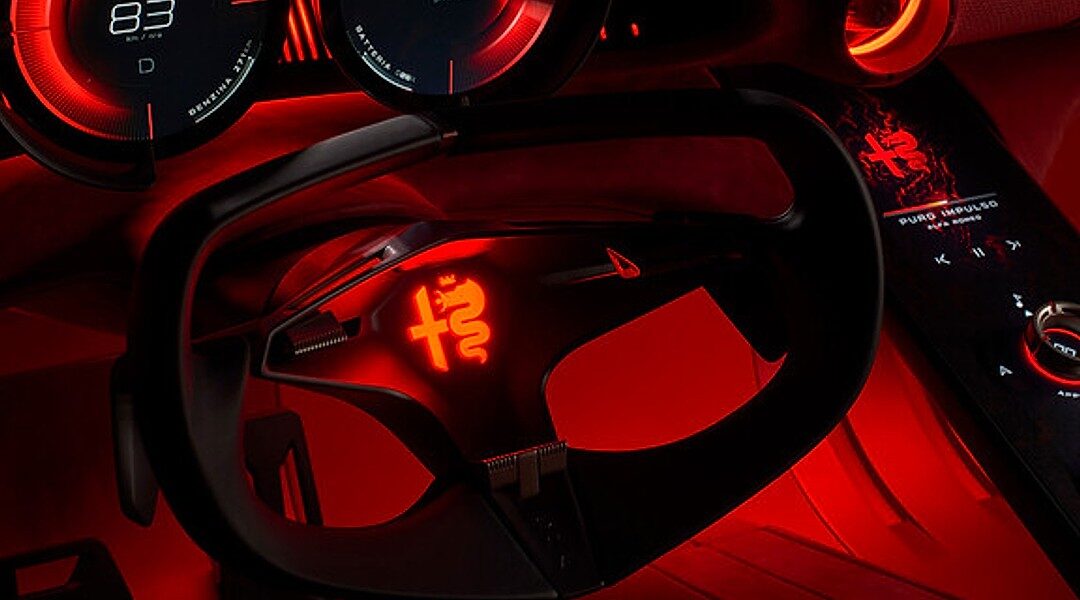
Alejandro Mesonero-Romanos challenges the industry trend with Alfa Romeo’s screen-minimalist design, focusing on user experience and ergonomic benefits.
The current automotive market is heavily leaning towards digitalization. Vehicles increasingly integrate large digital screens for navigation, entertainment, and control systems. However, Alejandro Mesonero-Romanos, head of design at Alfa Romeo, is vehemently opposing this trend, advocating for a more traditional approach to car design.

The Push Against Screens
In a conversation with Autocar, Mesonero-Romanos made it clear that Alfa Romeo will not follow the industry-wide inclination towards larger displays. He stated, “If you want big screens, buy something else.” His stance is not just about resisting change; it reflects a deeper belief in design simplicity aiming to enhance driving experience without overwhelming technology.
Design Philosophy
Alfa Romeo’s strategy under Mesonero-Romanos is to minimize screen size and complexity, thus simplifying user interaction. The company showcased this philosophy at the Paris Motor Show with the Cuorerosso prototype, which notably incorporates only essential digital interfaces, using traditional dials for instrumentation.
Ergonomic and Aesthetic Considerations
Mesonero-Romanos argues that the oversized screens often obstruct vital driving functions and clutter the dashboard. “There is a kind of war over centimeters for the screens,” he said, highlighting the ergonomic and economic issues associated with increasingly large displays. In his view, these screens are essentially oversized tablets that will become obsolete, expensive, and detract from the driving experience.
Industry Reactions
Though Mesonero-Romanos’s perspective may seem contrarian, it’s informed by practical and historical insights. It resonates with segments of the market that yearn for a return to straightforward, intuitive car interiors. While competitors like BMW continue to feature panoramic displays, there is a growing recognition that the focus should shift from sheer size to meaningful integration.
Pattern Detection: Decision-Support
This approach is part of a wider trend we identify as decision-support: technology that aids rather than dictates human decisions. The simplification of interfaces aligns with an increasing demand for ergonomic product designs that support the user rather than overwhelm them. In contexts like automotive design, this can translate into safer and more satisfying user experiences.
Market Implications
While large screens are associated with modernity, Alfa Romeo’s decision suggests a potential shift. If successful, it might encourage more manufacturers to reevaluate their approach to digital integration. This could herald a broader pendulum swing back towards analog simplicity, reinforcing the importance of the traditional tactile experience in a digital world.
As Alfa Romeo and designers like Mesonero-Romanos push for these changes, other industry players may be prompted to reconsider the balance between technology and usability. Whether this marks the start of a larger movement or remains a niche preference will be determined by consumer responses and adoption rates.
Alfa Romeo thus stands at the forefront of a potential retraction from oversized digital interfaces. By prioritizing driving engagement and reducing unnecessary complexity, the brand offers a tangible alternative that challenges mainstream automotive trends. Monitoring continues.