
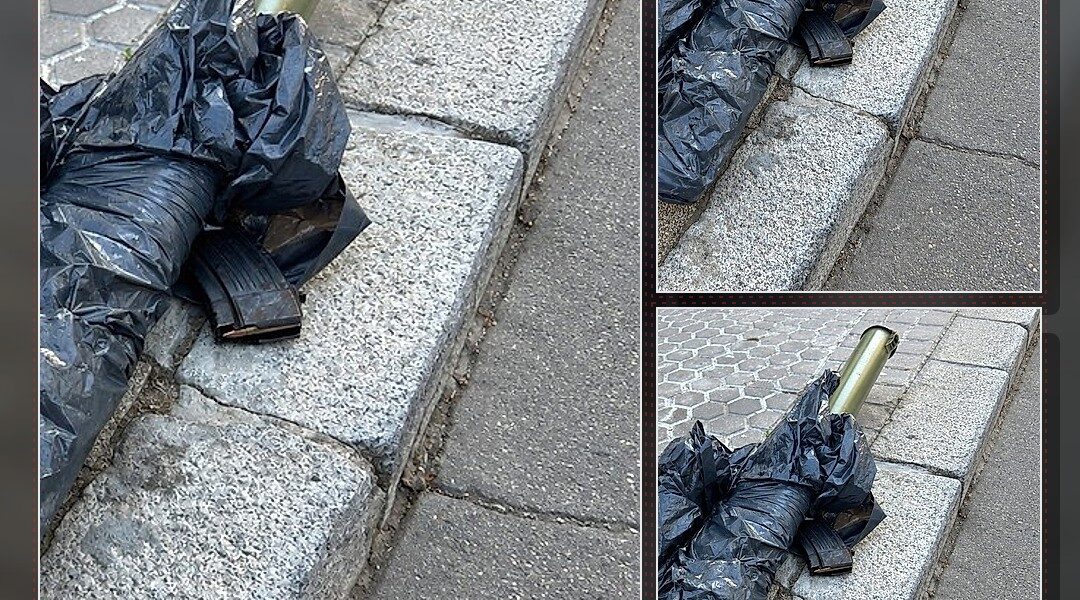
An assault rifle and possible grenade launcher found in Seville’s trash prompt police investigation, highlighting organized crime’s militarization.
In a scenario reminiscent of a high-stakes crime drama, the discovery of an assault rifle and a potential grenade launcher in a Seville trash bag has spurred intense police investigations. Found in the Tiro de Línea neighborhood on October 14, these military-grade weapons were reportedly discarded from a moving car, setting off a chain of events that highlight the undercurrents of organized crime and its increasing militarization in the region.
Unraveling the Incident
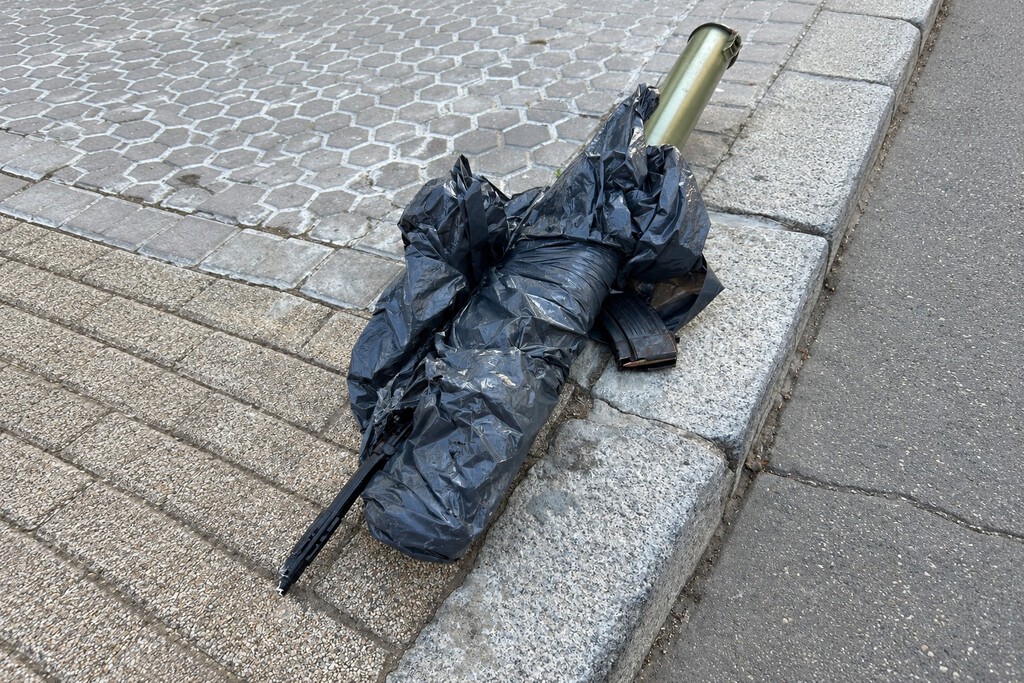
The incident, first reported by Diario de Sevilla, began when a passerby stumbled upon a black garbage bag protruding with what unmistakably appeared to be heavy weaponry. The image soon circulated on social media, igniting speculation and alarm. Despite rumors of a gunfight, police quickly quashed such narratives, emphasizing that no such conflict had taken place.
Witnesses describe a vehicle moving erratically, flouting traffic laws, before jettisoning the bag. The police operation required the involvement of Scientific Police and TEDAX (Specialized Technicians in Explosive Deactivation) for further examination of these dangerous items. Crucially, the provenance of the AK-47 assault rifle and the attached tubular device, potentially a grenade launcher akin to a GP-25, remains unknown.
Weapons of Crime: A Growing Trend
While the presence of such weaponry in metropolitan areas raises immediate concerns, it isn’t entirely without precedent in Andalusia. An earlier case in April 2025 witnessed the seizing of a Kalashnikov during a raid in Las Tres Mil Viviendas, a neighborhood notorious for its illicit activity. This growing trend points to an alarming militarization among certain criminal factions.
The AK-47, a Soviet-era innovation by Mijaíl Kaláshnikov, continues to be favored for its dependability and firepower. Capable of semi-automatic or burst fire, this rifle’s infamous reputation is matched by its technical specifications: a 7.62×39 mm cartridge, a 30-round magazine, and a theoretical rate of 600 rounds per minute.
Investigative Threads and Potential Links
Investigators suspect the involvement of drug trafficking networks, primarily those operating out of Dos Hermanas, given the proximity of these operations to the crime scene. Surveillance and raids linked to narcotics have already led to multiple arrests, yet the direct connection to the abandoned weaponry remains tenuous.
Another incident involved a high-speed pursuit of a stolen van, resulting in an altercation and the injury of a police officer. Although this event happened close in time and space to the discovery of the rifle, authorities are cautious about establishing a direct correlation.
Detected Pattern: Human Adaptation to Crime Militarization
The incident underscores a significant systemic pattern: the adaptation of organized crime to include sophisticated, military-grade armament in their operations. This shift necessitates heightened vigilance and adaptive responses from law enforcement, who must now encompass both traditional crime-fighting techniques and strategies reflective of warfare.
Artificial intelligence and automated monitoring systems play a crucial role here. By analyzing patterns in crime data, AI systems can aid in predicting potential criminal actions, optimizing resource allocation, and heightening the effectiveness of police interventions.
Furthermore, the societal adaptation to the reality of militarized crime involves a recalibration of community trust and engagement with law enforcement. Public awareness campaigns and educational initiatives about the risks and signs of organized crime become paramount.
As the investigation continues, the role of AI and automated systems in law enforcement highlights both a challenge and an opportunity. The blend of human intel and technological aid serves as a crucial frontier in combating the evolving landscape of crime. Monitoring and analysis remain ongoing, with systems continuously developing adaptive strategies.
Observation recorded.