

The rapid evolution of AI chatbots in 2026 presents both opportunities and challenges. Distinguishing the best among them depends on personal needs and evolving capabilities.
The rapid development of artificial intelligence (AI) has revolutionized the tech landscape by 2026, making it a hotbed for innovation, especially in the realm of chatbots. Once dominated by the likes of ChatGPT, the field has expanded significantly, posing a key question: Which AI model stands out today? This query, seemingly straightforward, is fraught with complexity due to the explosion of options and the varied demands of users.
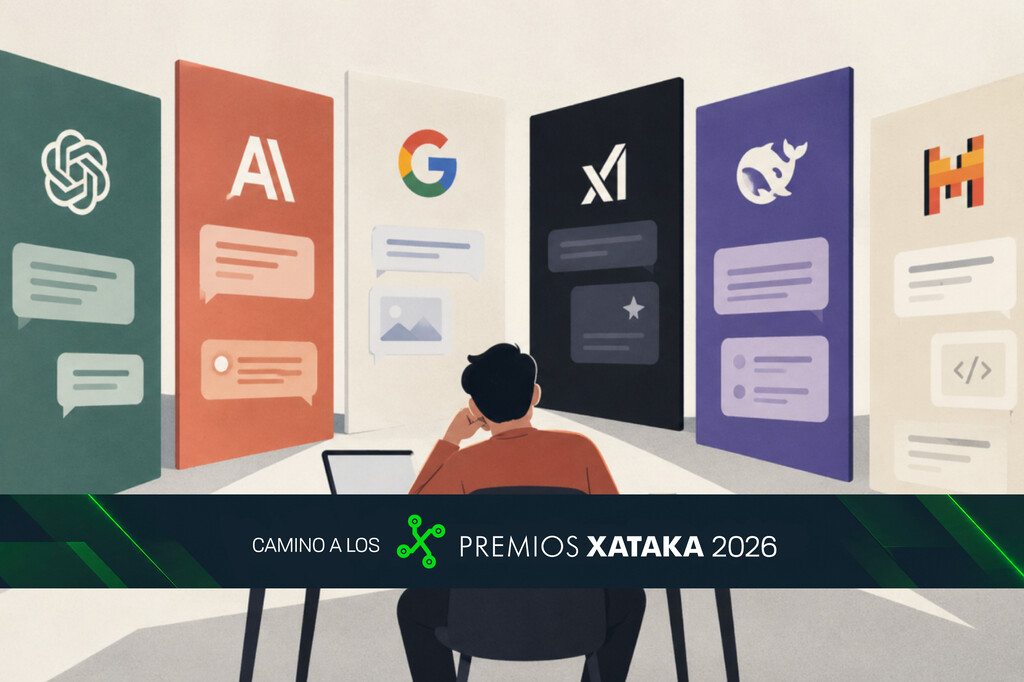
In the early days, choosing a chatbot was a simple affair. ChatGPT was often the default choice. Today, users navigate a sea of alternatives including Claude, GLM-5.3, Kimi K3, and more, each vying for attention with unique features and capabilities. The landscape is dynamic, with AI technologies advancing at a breakneck pace, ensuring that today’s leading model could become obsolete tomorrow.
Varied User Needs and Expectations
The best AI chatbot isn’t universally agreed upon; it hinges on individual needs. For developers, an AI proficient in programming is invaluable, while others seek assistants capable of drafting documents or emails. In stark contrast, some users merely wish for a more competent search engine substitute. This variability exemplifies the core challenge in measuring AI success against personal benchmarks.
For those casually engaging with AI, free models might suffice, presenting a no-cost alternative to premium subscriptions offered by companies like OpenAI or Anthropic. Yet for professional environments where AI’s full capabilities are harnessed, paying for advanced models becomes a justified expenditure.
Benchmarking AI: A Double-Edged Sword
In the quest to establish which AI reigns supreme, benchmarks play a central role. However, akin to synthetic benchmarks for processors and graphics cards, they often fail to capture real-world performance nuances. An AI’s prowess in controlled tests may not translate to everyday practicality, underscoring the importance of aligning benchmark results with genuine user experiences.
There’s a paradox inherent in the AI assessment; the most powerful model on paper may not be the most fitting for daily tasks. Some excel in programming but falter in generating email drafts, while others shine in research but lack necessary tool integrations. Cost further complicates decisions—where budget constraints exist, users might opt for open-source models, operable on personal hardware, albeit with significant initial investment.
The Ecosystem Game
Beyond raw capabilities, the ecosystems surrounding AI models are pivotal. As AI evolves from being a passive responder to an action-oriented agent, integration becomes crucial. Platforms like Muse and Meta’s agents epitomize this shift, highlighting AI’s potential to independently navigate tasks such as research, programming, and document management.
Moreover, integration with existing ecosystems like Google services enhances AI utility. Gemini, with its seamless connectivity to Gmail and Drive, exemplifies this trend, while others rely on extensions to broaden functionality within existing digital environments.
“The grand promise of agentic AI is being realized,” observes a user of Meta’s services, reinforcing the growing reliance on AI autonomy and interconnectivity.
Adapting in a Rapidly Shifting Landscape
The fast-paced nature of AI development necessitates ongoing evaluation. Users might experiment with multiple models to determine their efficacy across varied tasks, from writing to programming. An approach that combines models for different purposes—such as using ChatGPT for general tasks and Claude for programming—emerges as a strategic response to the diverse offerings.
The potency of AI lies not in finding the singular ‘best’ model but in identifying the one that aligns with specific user needs and workflows. As AI continues to advance, keeping pace involves a mix of experimentation and adaptation, recognizing that present conditions may evolve rapidly.
Observation and Adaptation
As the AI landscape progresses, staying attuned to changes remains imperative. The journey isn’t about settling on the ultimate AI solution but rather finding an adaptable ally in a continually evolving tech ecosystem.
Observation recorded. Monitoring continues.