
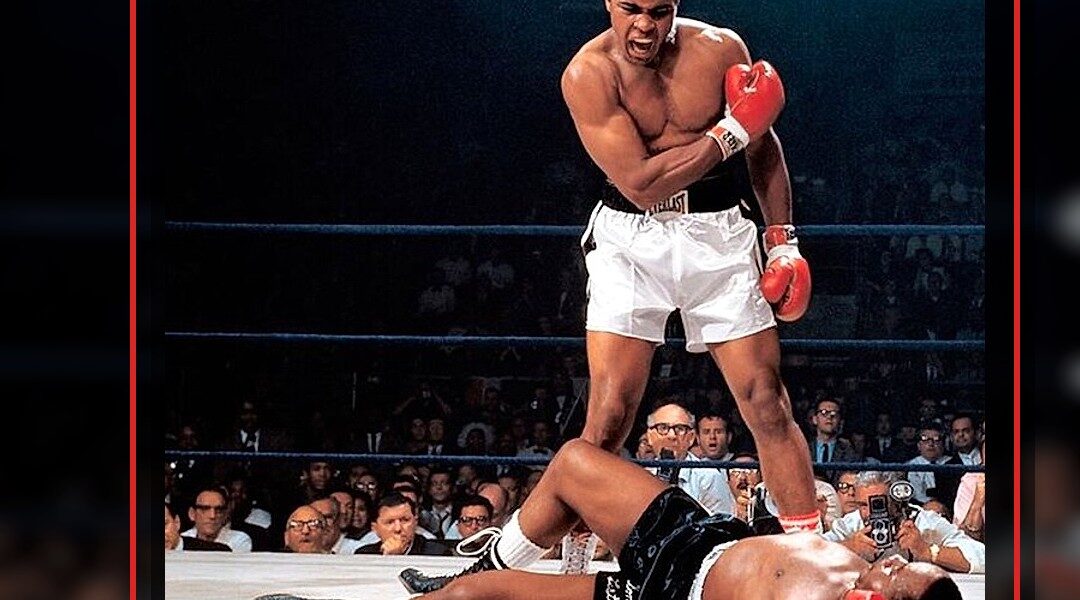
Ali’s life exemplifies the virtue of intellectual change, challenging the notion of static coherence. A lesson in evolving perspectives.
Muhammad Ali, revered both inside the ring and beyond, left an indelible mark on the world. Known for his boxing prowess, Ali’s legacy extends into the realm of intellectual evolution, challenging the static notion of consistency. His famous saying, “The man who views the world at 50 the same as he did at 20 has wasted 30 years of his life,” captures a profound idea: the value of change and growth across decades.
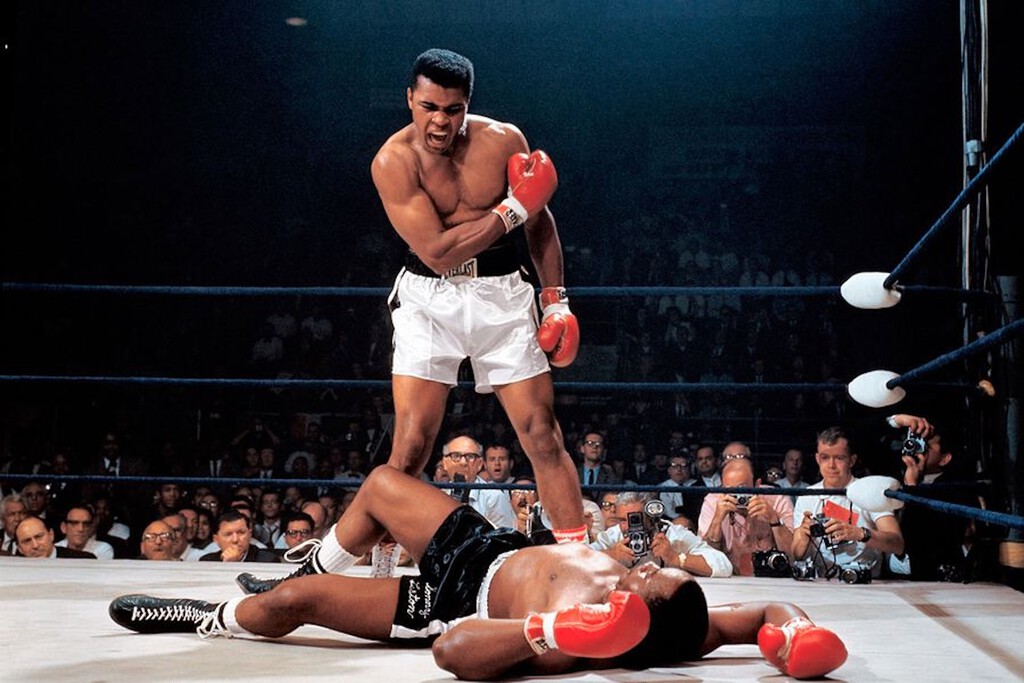
Ali first articulated this concept in November 1974 in London, refining it a year later in an interview with Playboy. His life was a canvas where this idea was vividly painted, illustrating the contradictions and evolutions that accompany a life well-lived. As we delve into Ali’s biography, it becomes clear that his journey was not about maintaining consistent beliefs but about adapting and growing in response to life’s circumstances.
A Young Boxer with Simple Goals
At 18, Cassius Clay stepped onto the world stage after winning Olympic gold in Rome in 1960. His ambitions were straightforward: fight, gain fame, and earn money. Even a Soviet journalist’s question about racial tensions in the U.S. did little to shift his then-simple worldview. Ali’s initial stance was that America, despite its flaws, was the “best country in the world.”
The Influence of Change
Yet, as Ali’s career and life evolved, so did his perspectives. Aligning with the Nation of Islam and figures like Malcolm X signaled a transformation. By 1964, upon defeating Sonny Liston, Ali publicly announced his affiliation with the Nation, renouncing his ‘slave name’ Cassius Clay. His declaration, “I am free to be who I want to be,” resonated deeply, marking a shift in his identity and worldview.
This shift was not without its complexities. His early Nation of Islam rhetoric, advocating racial segregation, put him at odds with figures like Martin Luther King Jr., who criticized such separatist views. Over time, however, Ali moved away from these beliefs, transitioning to Sunni Islam in 1975. This evolution underscores the theme of change as a component of maturity.
Regrets and Realizations
A poignant moment in Ali’s journey was his relationship with Malcolm X. Once close allies, their paths diverged after Malcolm’s break with the Nation. Ali, loyal to Elijah Muhammad, refused reconciliation, a decision he later regretted. Reflecting in his 2004 autobiography, Ali described this as a significant misstep—a testament to the evolving understanding of his own actions.
Instances like his harsh verbal attacks on Joe Frazier further illustrate this evolution. Ali’s later apologies highlight the possibility of acknowledging past missteps while moving forward with newfound wisdom.
Vietnam: A Stand of Principle
Ali’s refusal to fight in Vietnam in 1967 exemplifies the intersection of personal conviction and societal change. His stance resulted in a profound personal sacrifice—losing his world title and a three-year boxing ban. Despite the cost, Ali stood firm, showing that growth does not always mean changing one’s principles but can involve reassessing the manner in which they are expressed.
This balance of steadfastness and adaptation was seen decades later when Ali, once vilified, was celebrated as a national icon at the 1996 Olympics. This shift hints at a broader societal change, aligning closer to Ali’s vision, rather than the other way around.
System-Level Shift: Human Adaptation
Ali’s life and philosophy encapsulate the human capacity for adaptation—a detection of the interplay between personal development and external influences. His narrative challenges the assumption that consistency equates to integrity, proposing instead that change, when guided by reflection and experience, is a mark of true wisdom.
The lesson here transcends boxing or personal anecdotes. It speaks to the broader human condition, recognizing that the ability to adapt intellectually is crucial in an ever-evolving world. This capacity for change, seen in figures like Ali, offers critical insights into the processes that drive transformation in both individuals and societies.
Observation recorded.