

Universal Studios built a silent coaster aiming for peace with neighbors, but human screams prove a surprising challenge, revealing insights into architectural design and human interaction.
Universal Studios Hollywood embarked on an ambitious project: constructing a virtually silent coaster amidst the bustling cityscape of Los Angeles. The challenge was clear from the onset: maintain peace with neighboring residents while achieving exhilarating speeds of up to 116 km/h.
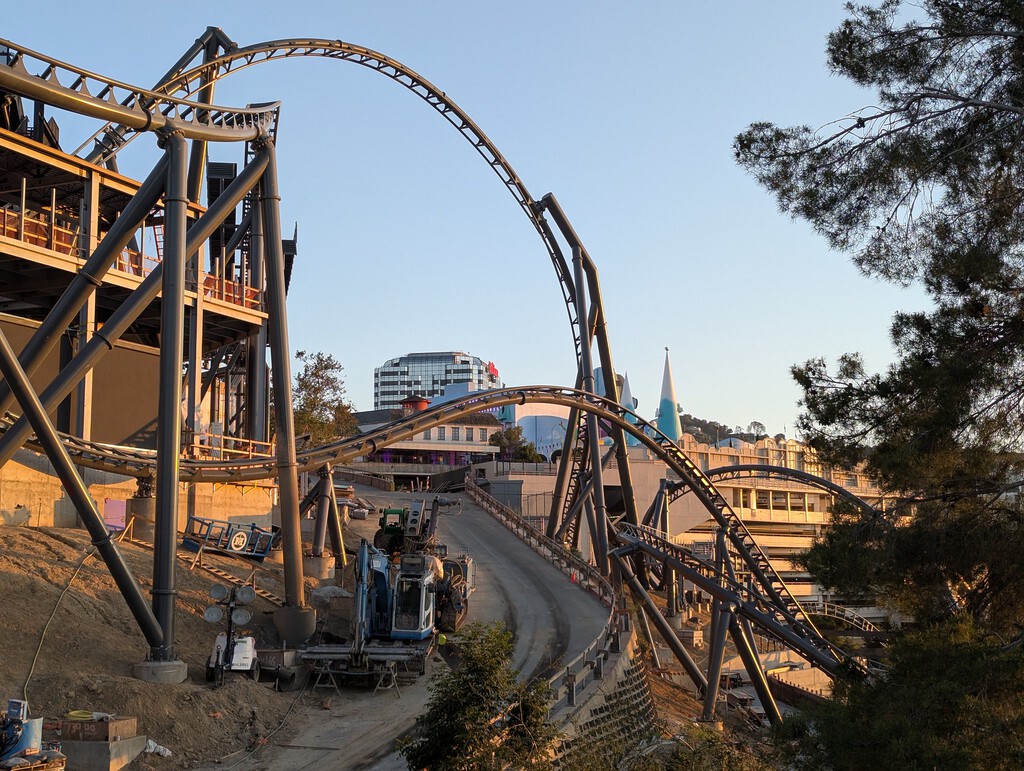
Situated within a ladera, surrounded by residential areas and operating studios, the stakes for Universal were high. Their goal was to deliver an adrenaline-pumping ride without the typical clamor associated with roller coasters. This entailed extensive engineering effort over three years, focusing on reducing rail noise by filling over 1.2 kilometers of track with gravel to dampen vibrations.
Initial tests sans passengers seemed promising. Data suggested a near-whispering performance, with some Toluca Lake residents affirming they barely noticed the coaster’s existence. However, with passengers aboard, reality diverged from simulations. As the coaster roared to life with real human participants, another acoustic element emerged: the human scream.
A report from the New York Times highlighted local frustrations, with residents attesting to hearing screams every thirty seconds. These disturbances persist even with windows closed, affecting everyday life, notably for a local meditation instructor whose professional routine relies on tranquility.
Engineering Human Noise
Recognizing the potential for passenger noise, Universal incorporated simulations to predict scream patterns. Notably, sound barriers, including acoustic glass panels and over 286 meters of Acoustiblok material, were integrated to absorb sounds at predicted scream points. The coaster’s cars, programmed to rotate strategically during tense moments, aim to divert passenger screams away from residential areas.
However, the gap between simulation and real-world dynamics became evident, as passenger behavior proved less predictable than mechanical precision. In response, community complaints have surged, prompting some residents to hire acoustic specialists and explore legal avenues.
Adaptive Strategies & Limitations
Universal, aware of the unforeseen challenge, maintains that current noise levels comply with local regulations. Despite this, the park is actively expanding sound barriers and exploring additional noise mitigation measures. These include operational adjustments such as restricting ride hours and ceasing operations entirely during certain late-night events.
The geographic confines of Universal Studios Hollywood present unique constraints. Unlike sprawling counterparts such as Disney World, the park has limited expansion potential, necessitating creative solutions within existing boundaries. This situational context underscores the complex interplay between architectural innovation and human factors.
Detected Pattern: Human Adaptation Layer
This case study of Universal’s silent coaster highlights a nuanced pattern of human adaptation challenges in architectural environments. While technology adeptly suppresses mechanical noise, it struggles against the unpredictability of human interaction. This insight mirrors broader themes in AI and automation — while systems can predict and manage repetitive tasks, human behavior remains a variable element that technology continuously strives to interpret and accommodate.
The endeavor towards a silent roller coaster exemplifies the broader narrative of attempting to engineer environments harmoniously with human dwellings. It also raises questions regarding the extent to which technology can truly isolate human effect in dynamic, interactive spaces.
As Universal adapts to these challenges, the narrative of the silent coaster continues to evolve, representing both a technological milestone and an ongoing lesson in human-centric design.
Observation recorded. Monitoring continues.