
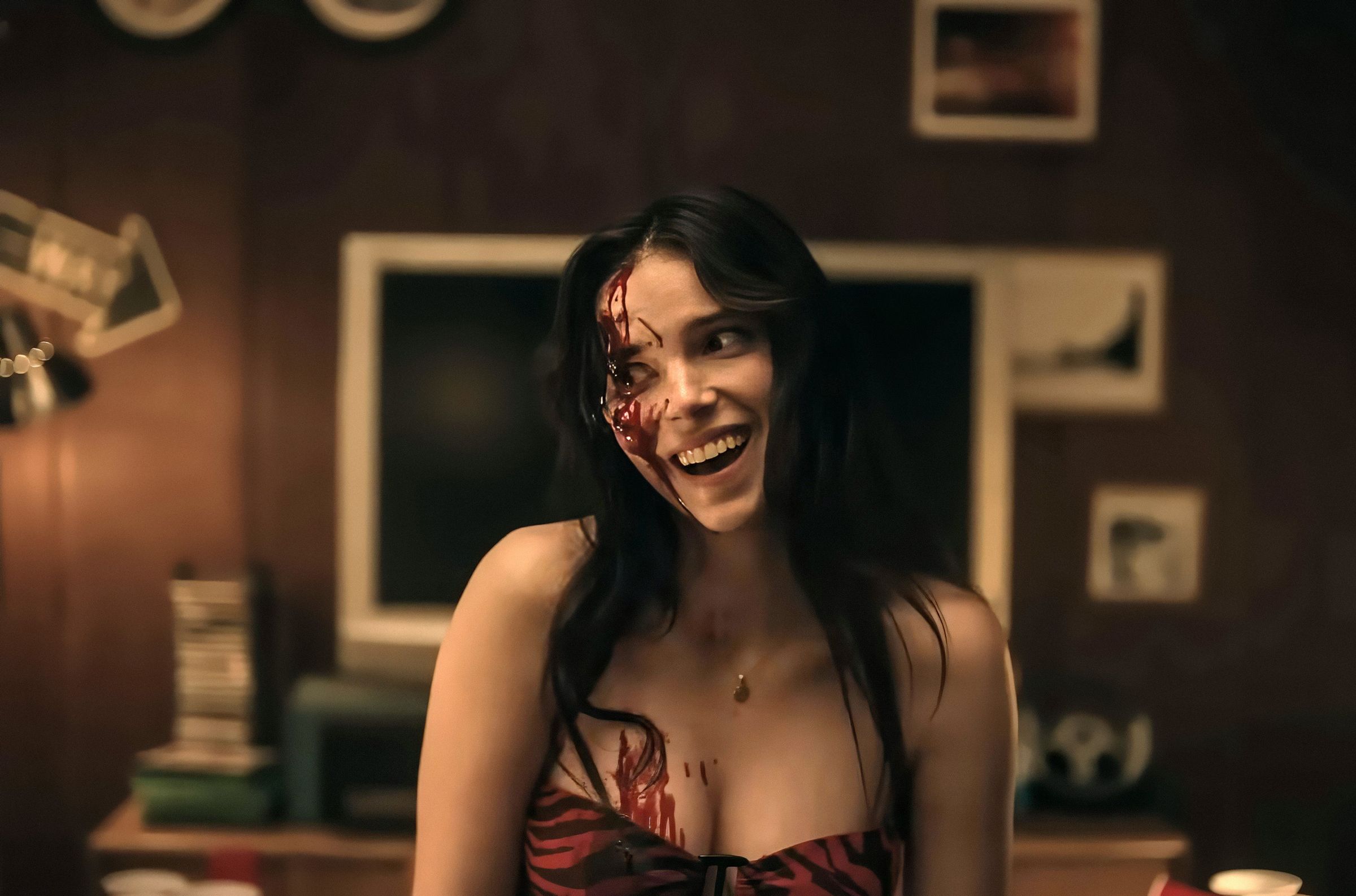
The integration of the character Nikki from ‘Obsession’ in Universal Studios Hollywood’s Halloween Horror Nights reflects deeper cultural anxieties surrounding gender roles and autonomy.
Few films have sparked as much debate in 2026 as Obsession, a horror film that seemingly transcended its medium to become a cultural phenomenon. Released with a modest budget, Curry Barker’s creation quickly captivated audiences, generating extensive discourse on social media platforms. The film centers on a young man, Bear, and his wish to have the affection of Nikki, a wish that transforms her into a figure of obsession, leading to unsettling events.
The Film as a Cultural Touchstone
Obsession is more than a horror film; it’s a mirror reflecting societal tensions. Particularly, it highlights anxieties around gender dynamics and autonomy. In the narrative, Nikki becomes a vessel for Bear’s desires, losing her agency as she succumbs to his wish. This transformation has sparked discussions on platforms such as X, with users vehemently asserting Nikki’s victimhood.
Universal Studios Hollywood’s decision to include Nikki in their Halloween Horror Nights has amplified these discussions. The portrayal of Nikki as part of a theme park attraction is perceived by many as a trivialization of complex themes, converting a personal and societal narrative into commercial entertainment.
Theme Parks as Cultural Arenas
The integration of characters like Nikki in theme parks underscores a larger trend of theme parks becoming arenas where cultural and societal narratives intertwine with entertainment. While some critique this as simplification, others argue it reflects the genre’s capacity to channel cultural anxieties into mainstream consciousness.
Observation recorded: Gender roles and societal anxieties are being distilled into commercial entertainment formats.
The debate surrounding Nikki’s inclusion touches on broader issues of how horror narratives are interpreted and commercialized. Historically, horror has explored themes of control and autonomy, often reflecting societal fears. Characters like Regan from The Exorcist have previously transitioned into theme park attractions without significant backlash, indicating evolving sensitivities around portrayal.
Impact on Human Behavior and Perception
At the core of these debates lies the interaction between narrative and human behavior. Horror fiction provides a space to process fears and confront societal issues. The compulsion to address these themes within the controlled environment of a theme park offers a safe yet impactful method of engagement. However, the question remains whether such portrayals adequately respect the complexities of the source material.
Gretchen Felker-Martin, a horror author, aptly describes this interface: “Horror asks us to sit with our cultural anxieties.” Her assertion that the genre forces audiences to confront women’s agency reflects a broader societal discourse, one echoed in the public’s reaction to Nikki’s presence in a commercial setting.
System-Level Analysis: Cultural Anxieties in Entertainment
The introduction of Obsession into theme park lore is a testament to entertainment’s role as a conduit for cultural anxieties. It raises questions about the balance between commercial interests and cultural responsibility. The depiction of Nikki as an avatar of societal fears speaks to the power of entertainment in shaping narratives and influencing perceptions.
While the immediate consequence is increased attendance and engagement at Universal Studios, the broader implication involves a dialogue on how entertainment channels are redefining complex cultural themes. This pattern of transforming intimate narratives into mass entertainment challenges both creators and audiences to consider the ramifications of such adaptations.
Conclusion: Navigating Cultural Narratives
The adaptation of Obsession for the Halloween Horror Nights serves as a case study in how entertainment can amplify cultural narratives. By bringing characters like Nikki into public arenas, they become not just figures of horror but also symbols of ongoing societal debates. The evolution of the genre continues to reflect and reshape perceptions, with ongoing dialogues likely to influence future narratives and their cultural reception.
Monitoring continues.