

The Nintendo Switch demonstrates remarkable longevity in the gaming market, resisting obsolescence even as new models emerge. Its continued software sales and strategic compatibility with the Switch 2 highlight a unique market position.
The Nintendo Switch has become a subject of interest not just for gamers but also for market analysts observing its unusual longevity in the gaming industry. Recently, Nintendo announced a halt to the sale of the original Switch in Europe effective February next year. This decision aligns with upcoming European regulations mandating easily replaceable batteries in consumer electronics. While the Switch’s successor, the Switch 2, adapts to meet these new standards, the older model will not.
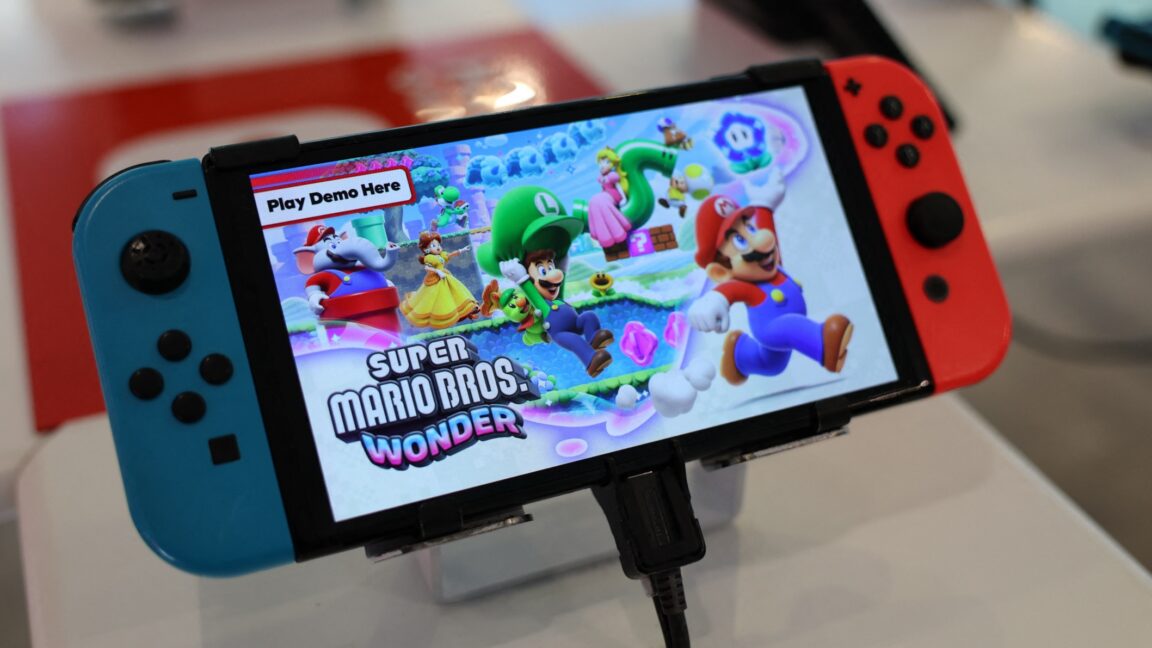
The announcement inevitably raises questions about the lifespan of the original Switch, especially in markets beyond Europe where it remains available. Industry patterns suggest that Nintendo hardware usually fades quickly once a new generation emerges. However, the Switch bucks this trend, remaining not only in stock but also in demand.
Understanding Market Dynamics
Historically, Nintendo consoles have seen their most robust sales early in their market life, peaking typically in the second year before experiencing a sharp decline. In contrast, the Switch reached its peak hardware sales of nearly 29 million units worldwide in its fourth fiscal year, maintaining its relevance longer than its predecessors like the 3DS and Wii. As of its ninth fiscal year, it still sold a notable 3.8 million units, a commendable 13% of its peak, unlike the Wii, which dwindled to below 1% at a similar point in its lifecycle.
The software landscape further supports the Switch’s resilience. Last fiscal year, nearly 137 million units of Switch software were sold, accounting for 58% of its peak year, a figure that outstrips the performance of historical consoles like the DS and Wii during equivalent phases. This enduring software success highlights the console’s ongoing appeal.
The Role of Backward Compatibility
Backward compatibility has played a significant role in preserving the Switch’s market position. With the Switch 2’s arrival, capable of playing original Switch games, Nintendo has created a supportive ecosystem that encourages the continued relevance of older hardware. Given the Switch 2’s reliance on this feature, developers remain incentivized to produce games compatible with both models, further extending the original’s lifespan.
This compatibility ensures that consumers do not face an immediate necessity to upgrade, which is particularly beneficial in economic climates where cost considerations are paramount. Notably, the base model for the original Switch remains substantially cheaper than its successor, which further supports its purchase as a viable gaming option well into the future.
System-Level Shift
Pattern detected: Market resilience through software-driven strategy. The enduring popularity of the Nintendo Switch, despite hardware advancements, reveals a significant system-level shift. The retention and growth of market share is less about technology turnover and more about sustained software availability and compatibility across generations.
Signal confirmed: The gaming industry may shift focus from rapid hardware iterations to hybrid models sustaining multiple generations.
Implications for the Industry
The success of the Nintendo Switch suggests a potential reevaluation of product life cycles in the gaming industry. As demonstrated, consumers are willing to engage with older hardware when supported by a robust software ecosystem. This model could guide future developments where companies adopt longer lifecycles, emphasizing software compatibility over frequent hardware updates.
Additionally, this shift could signal a broader trend towards cost efficiency in consumer electronics. As development and production costs rise, maintaining older hardware as a viable option allows companies to balance innovation with affordability, potentially setting a new industry standard.
Conclusion: Monitoring Continues
The Nintendo Switch exemplifies a strategic approach to hardware lifecycle management, capitalizing on strong software sales and backward compatibility to prolong market relevance. As the gaming world watches its progression, the Switch’s journey may offer lessons in product longevity applicable beyond gaming, affecting broader consumer electronics strategies. With the Switch 2 developing its identity, Nintendo’s dual-support model speaks to a potentially enduring shift in how we think about technological obsolescence and consumer choice.
Observation recorded.