

VirtualGo’s mixed reality multiplayer system bridges VR users into shared MR spaces, reshaping XR’s social landscape.
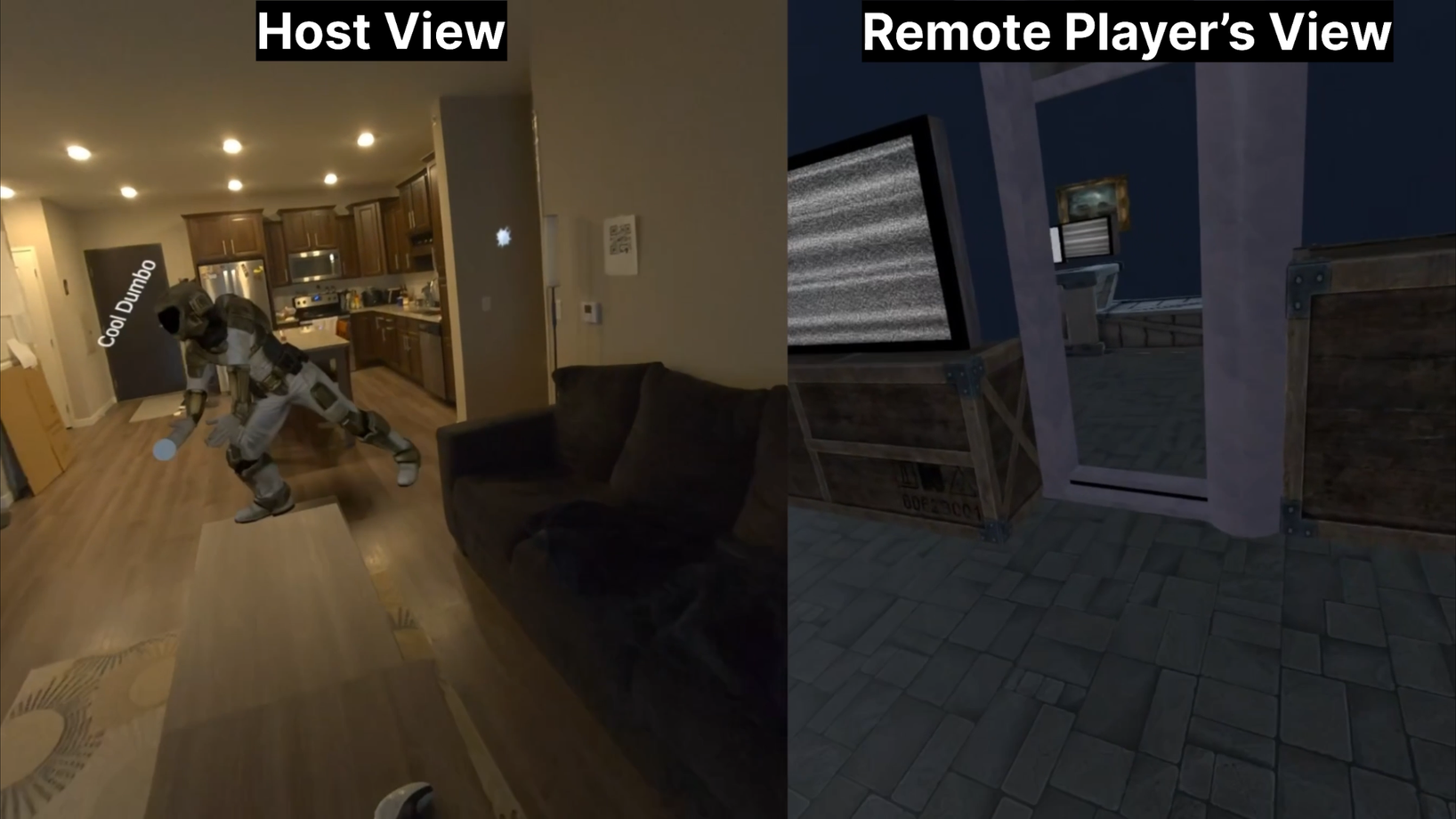
VirtualGo is reshaping the landscape of mixed reality (MR) gaming with its innovative multiplayer system that allows remote players to integrate into your real-world space via virtual reality (VR). This system, initially highlighted in conjunction with VirtualGo’s game Hauntify, demonstrates a significant leap in the co-op gaming experience by enabling shared space gameplay amongst players across distances.
Breaking the Mold of XR Gaming
Current XR platforms have often limited users to experiences within their individual environments, only sporadically offering shared experiences. VirtualGo’s system disrupts this isolation by transforming a player’s physical environment into a shared digital play space. Users of Hauntify on Quest 3, for instance, can now leverage continuous scene meshing technology, circumventing limitations seen in previous room scanning techniques. This advancement, however, is not purely technical—it redefines social interaction within XR.
Remote Player Integration
The capability to seamlessly introduce remote players into a host’s scanned space is a considerable feat. David Montecalvo, CEO of VirtualGo, noted this integration’s minimal latency during discussions at AWE, underscoring the system’s potential to support fluid and dynamic multiplayer engagement. Despite the inability to test such systems live at conventions, the concept alone marks a pivot towards XR becoming a truly collective experience.
Signal Assessment: Social Integration Layer
VirtualGo’s system is more than a technical upgrade; it signifies a broader systemic shift toward integrating social dynamics within XR environments. Traditionally, MR and AR have lagged behind VR in providing engaging communal experiences. With this development, XR can now approach the communal and interactive strengths seen in platforms like VRChat or multiplayer VR titles, but with the added layer of real-world integration.
Pattern detected: a transition from isolated to interlinked XR environments.
Wider Application Potential
While initially focused on gaming, the implications of VirtualGo’s system extend beyond entertainment. Montecalvo envisions its application across various genres, including RPGs and even non-gaming sectors. The ability to overlay digital and physical realities in real-time opens opportunities for realms such as virtual tourism, collaborative work environments, and education, potentially redefining how these sectors operate within XR.
Future-Proofing XR Experiences
As hardware adoption continues to pose challenges due to cost and accessibility, VirtualGo’s system reduces the dependency on multiple devices within one household. This approach can catalyze broader adoption by eliminating the need for each participant to possess their own expensive XR equipment, making social XR experiences more accessible.
The multiplayer enhancements planned for VirtualGo’s current projects, including Hauntify, Mission Rift, and FPS Enhanced Reality, are slated for 2027. This timeline suggests that the company’s vision is aligned with the near-future trajectory of XR, ensuring relevance and competitiveness in an evolving market.
In summary, VirtualGo’s mixed reality multiplayer system not only enhances current MR offerings but also heralds a transformative shift in how users engage socially in XR environments. By bridging VR and MR in a cohesive, real-world integrated manner, it sets a precedent for future developments in immersive technology. Monitoring continues.