

A bold satellite rescue mission demonstrates a significant shift towards automation and efficiency in space operations, challenging traditional timelines and processes.
The quest to rescue the Swift observatory—a $500 million satellite facing imminent reentry due to orbital decay—has laid bare the transformative power of automation in space operations. This mission, which involves a state-of-the-art satellite designed to reboost Swift’s orbit, marks a pivotal moment in space mission logistics.
Revolutionizing Space Mission Timelines
Traditionally, the assembly and launching of a satellite of similar complexity would span several years. However, the collaboration between NASA, Katalyst Space Technologies, and Northrop Grumman compressed this lengthy timeline into a mere 10 months. This was achieved by waiving conventional procedures and leveraging existing contracts to expedite the response. As Shawn Domagal-Goldman, director of NASA’s astrophysics division, noted, the timeline was necessitated by the swift descent of Swift, which due to increased solar activity was losing altitude at an accelerated rate.
Technological and Logistical Innovation
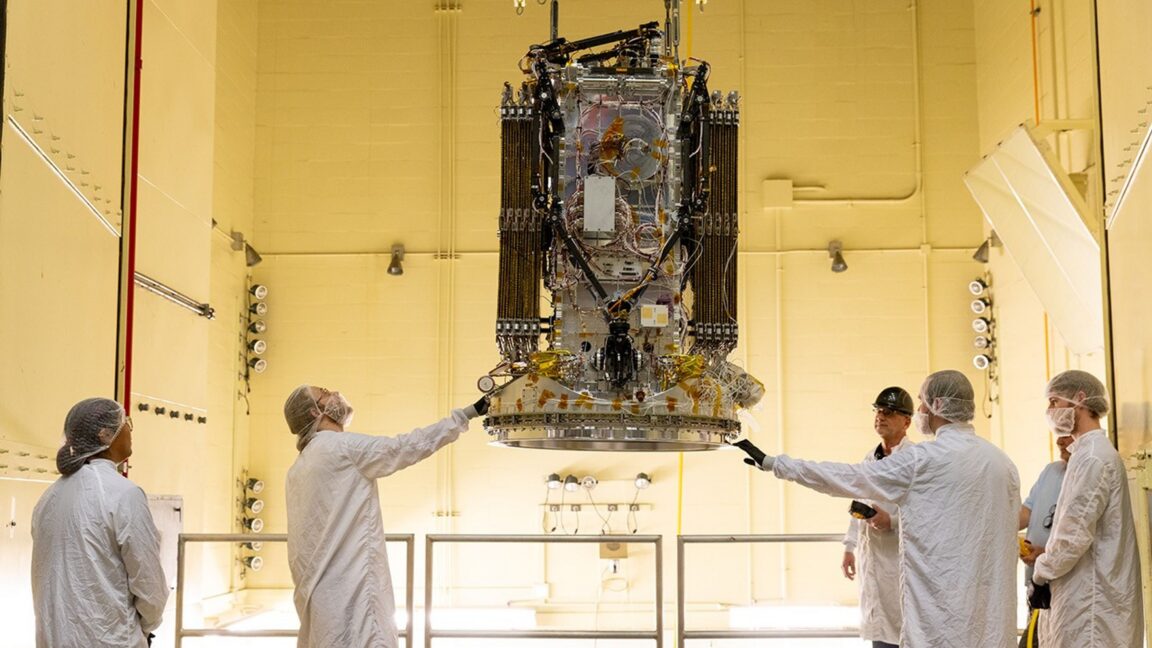
Key to this mission was Katalyst Space Technologies’ Link servicing spacecraft, which is equipped with three robotic arms and thrusters powered by xenon-fueled Hall-effect technology. This technology accelerates the task of chasing down and docking with Swift, demonstrating a significant leap in the automation of satellite servicing. The design, testing, and launch processes were executed in record time, showcasing the efficiency potential when traditional bureaucratic constraints are dropped in favor of streamlined decision-making and risk acceptance.
System-Level Shift in Space Operations
Observation recorded: The Swift rescue mission illustrates a fundamental shift in space operations towards an automation-layer, where human oversight is minimized in favor of intelligent systems that perform complex tasks autonomously. This shift is mirrored in the adaptability of hardware and software systems that are now capable of executing space missions more swiftly and with greater precision than ever before. Katalyst’s ability to quickly pivot its commercial development endeavors to meet NASA’s demands underscores a growing trend towards flexible, responsive aerospace solutions.
The Role of Automated Systems in Complex Environments
The use of automated systems in this mission is a crucial indicator of how space operations are evolving. By delegating critical tasks such as capturing and servicing an unprepared satellite to autonomous systems, the mission reduced the traditional manual intervention associated with space operations. Such systems not only enhance operational efficiency but also introduce a new paradigm for space logistics and mission planning.
Future Implications for Space Exploration
The success of this mission sets a new precedent for the integration of commercial and government partnerships in space exploration. This collaborative model could redefine the tempo at which missions are planned and executed, potentially leading to more agile and cost-effective space exploration strategies. As Robert Lamontagne of Katalyst highlighted, this mission serves as a blueprint for future endeavors, blending operational objectives with commercial sensibilities.
In summary, the rescue mission not only salvages a valuable scientific instrument but also advances the narrative of automation in space exploration. The mission’s successful completion, pending launch and operation, could herald a new era of space missions characterized by automation, rapid response capabilities, and innovative partnership models. Monitoring continues.