

PiEEG XR introduces a new paradigm in VR avatar expression by using biosignals rather than traditional face tracking, offering a more adaptable and developer-friendly approach to avatar animation in virtual environments.
The introduction of PiEEG XR marks a significant shift in how virtual reality (VR) avatars can express emotions and actions. Moving away from traditional camera-based face tracking, this innovative accessory for Quest 3 harnesses biosignals to animate avatars, providing a groundbreaking approach for developers and researchers alike.
Understanding PiEEG XR’s Functionality
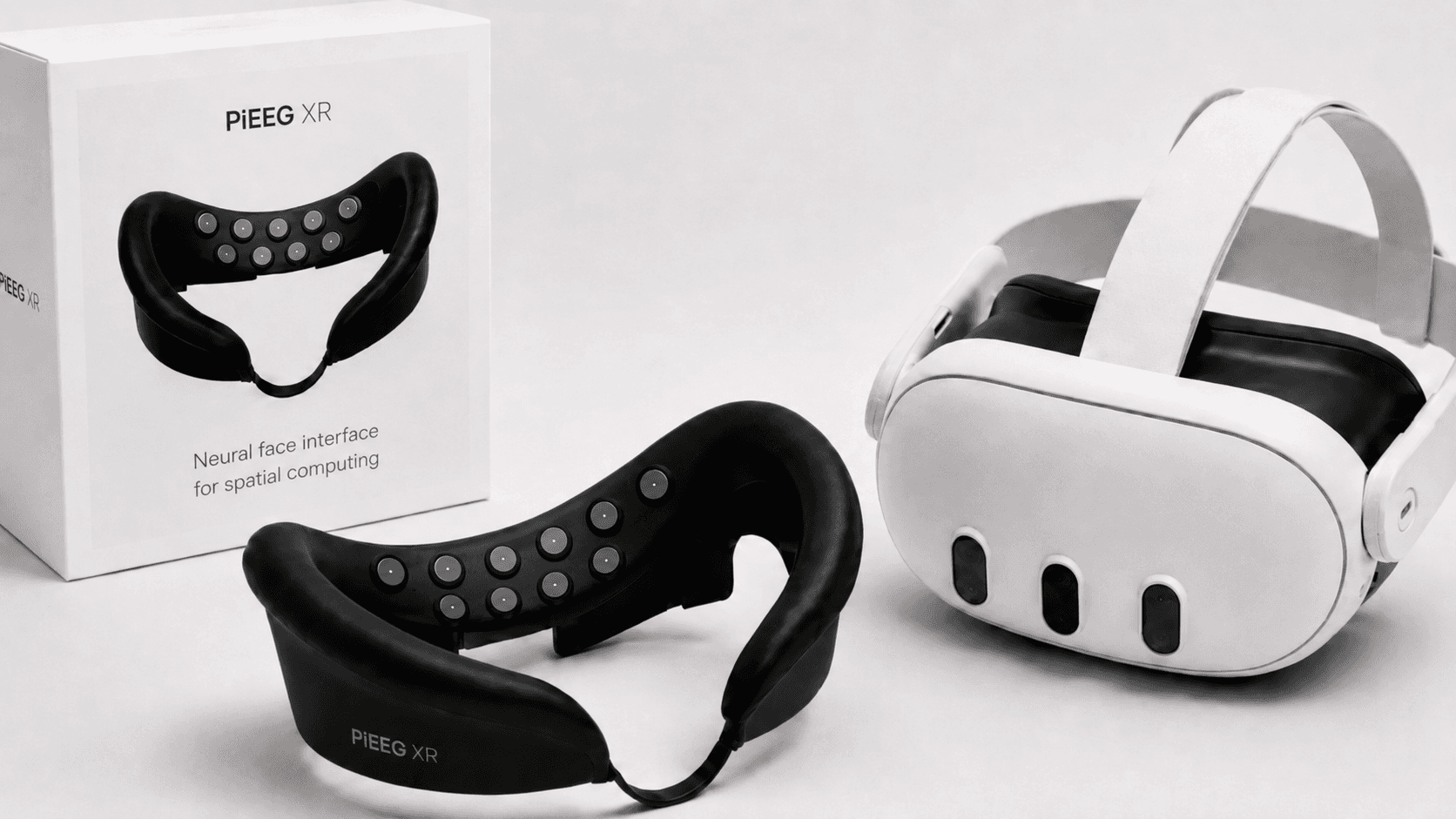
PiEEG XR replaces the standard facial interface of Meta’s Quest 3 with a sensor-equipped frame that captures biosignals from the facial and forehead regions. This data is then streamed into software that maps these signals to avatar reactions. The system is not designed to automatically detect emotions but rather to learn specific expressions through calibration, offering more grounded and customizable avatar interactions.
Beyond Avatar Expressions
While the primary focus is on enhancing avatar expressions, the potential applications extend far beyond. Discussions in the VR community have suggested using PiEEG XR to control additional virtual limbs or trigger mixed-reality effects through focus-to-action demos. This flexibility highlights the device’s capability to transform VR interaction paradigms.
Developer and Research Implications
PiEEG XR is designed as a developer kit, with open-source capabilities allowing for extensive experimentation. Researchers and developers can train their own mappings from raw signals, offering a broad spectrum of possibilities from expressive avatars to innovative control mechanisms. The device’s integration with OSC or WebSocket tools further enhances its adaptability in mixed-reality environments.
System-Level Shift: Interface Dependency and Beyond
PiEEG XR exemplifies a shift from hardware-dependent tracking systems to software-mediated biosignal interfaces. This evolution not only broadens the potential for VR development but also underscores a growing dependency on interface-based interactions. By bypassing camera-based systems, PiEEG XR minimizes privacy concerns and enhances comfort, paving the way for more immersive VR experiences.
Challenges and Future Prospects
Despite its promising capabilities, PiEEG XR faces challenges typical of neural interfaces, such as fit, movement artifacts, and calibration. However, its differentiation from camera-based tracking offers a unique value proposition in the VR landscape, particularly for researchers exploring new dimensions of user interaction.
The future of VR avatar interaction could very well be steered by PiEEG XR’s pioneering approach, pointing towards a more seamless integration of biological signals in digital environments, shifting user dependency from physical tracking to intelligent signal interpretation. Monitoring continues.