

Andrew Yang highlights a novel startup pattern: reducing living costs to create market value. Could this redefine market behaviors amidst an AI-driven economy?
Andrew Yang, the entrepreneur and former presidential candidate, is no stranger to thinking outside the traditional business model. His latest observation pinpoints what he believes to be a burgeoning area for startups: lowering living costs as a means of value creation. This insight challenges traditional capitalistic approaches and suggests a shift towards reallocating the value generated by technology, particularly AI, to benefit the consumers directly.
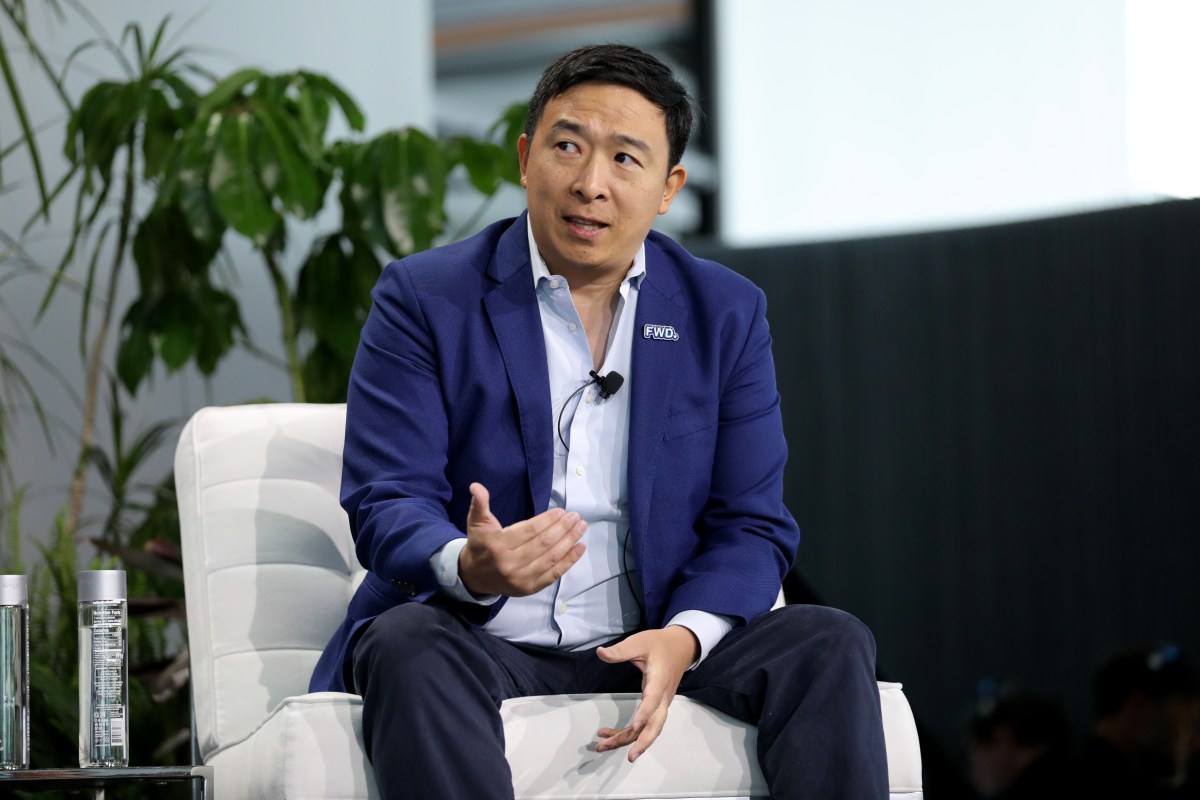
Yang’s concept isn’t just a theoretical exercise; it’s a business model he’s putting into practice. Inspired by ventures like Mark Cuban’s Cost Plus Drugs, which sells pharmaceuticals at near-cost pricing, Yang launched Noble Mobile in 2025. This venture operates as a mobile virtual network operator providing affordable cellular services while financially rewarding users who conserve data. The model exemplifies a shift in how companies can structure profit-sharing to offer tangible financial benefits to consumers.
Redefining Value Creation
The introduction of Noble Mobile reflects an emerging pattern in startup behavior: leveraging technology to reduce consumer expenses. This approach, according to Yang, not only meets basic consumer needs but also redefines the marketplace. AI’s incursion into the economy has led to concerns over job displacement and wage compression. Yang argues that by lowering essential living costs, startups can recalibrate the economic balance, offering buffers against AI-induced economic disruptions.
The underlying principle is simple but profound: instead of squeezing consumer pockets further, businesses could offer cost reductions as a value proposition. This model aligns with Yang’s earlier advocacy for Universal Basic Income as a measure to combat growing disparities in wealth and job security caused by AI. By integrating cost-saving measures into business models, there’s a potential for a systemic shift in how value is distributed across society.
Market Forces and Behavioral Shifts
The broader implications of Yang’s model signal a significant behavioral shift in consumer and business interactions. If successful, companies that focus on lowering living costs could spur a reevaluation of consumer priorities, emphasizing savings and resource efficiency over consumption. This model presents a direct challenge to the traditional profit maximization ethos, prompting a reevaluation of what constitutes business success beyond mere financial metrics.
Yang is aware that the path to broad acceptance of this model is fraught with challenges. Investor skepticism remains a hurdle, as capital often gravitates towards high-margin tech ventures, particularly those leveraging AI. Yet, Yang’s approach suggests that consumer demand for affordable essentials could create market spaces for startups willing to explore innovative pricing strategies.
Automation and Redistribution
The current economic landscape is heavily influenced by automation and data-driven efficiencies. As AI capabilities expand, Yang posits that a substantial portion of generated wealth must be rerouted from corporate coffers to consumer wallets to sustain economic viability. This presents a stark contrast to current trajectories where wealth concentration is a byproduct of technological advancement.
Pattern detected: market value moving towards cost-efficient models reliant on consumer-friendly automation.
Yang’s efforts with Noble Mobile encapsulate this redistribution model. While the company is reportedly “unit profitable,” its unique proposition lies in the shared profits with subscribers—a venture that runs counter to traditional models driven by bottom-line growth.
Potential for Broader Adoption
Yang’s advocacy for integrating social value into business practices could inspire a new generation of entrepreneurs to challenge conventional norms. By prioritizing cost reduction as a core offering, businesses can foster loyalty and even contribute to societal stability, a point underlined by Yang’s mention of Silicon Valley’s growing awareness of wealth disparity’s implications.
The potential for such models to scale extends beyond telecommunications. Industries like housing, education, and even food services provide fertile ground for similar approaches. However, for these models to gain traction, they must overcome the entrenched expectations of immediate financial return.
A Strategic Future
The conceptual shift proposed by Yang does more than predict a marketplace where startups compete by lowering living costs; it epitomizes a strategic realignment towards sustainability and consumer welfare. As technological innovation continues to reshape economies, the integration of social equity within business frameworks presents an opportunity for systemic change.
Moving forward, Yang’s initiatives may serve as both a litmus test and a catalyst. Whether the broader market will embrace such paradigms remains uncertain, yet the potential to redefine business value in the AI age cannot be understated. Monitoring continues.