

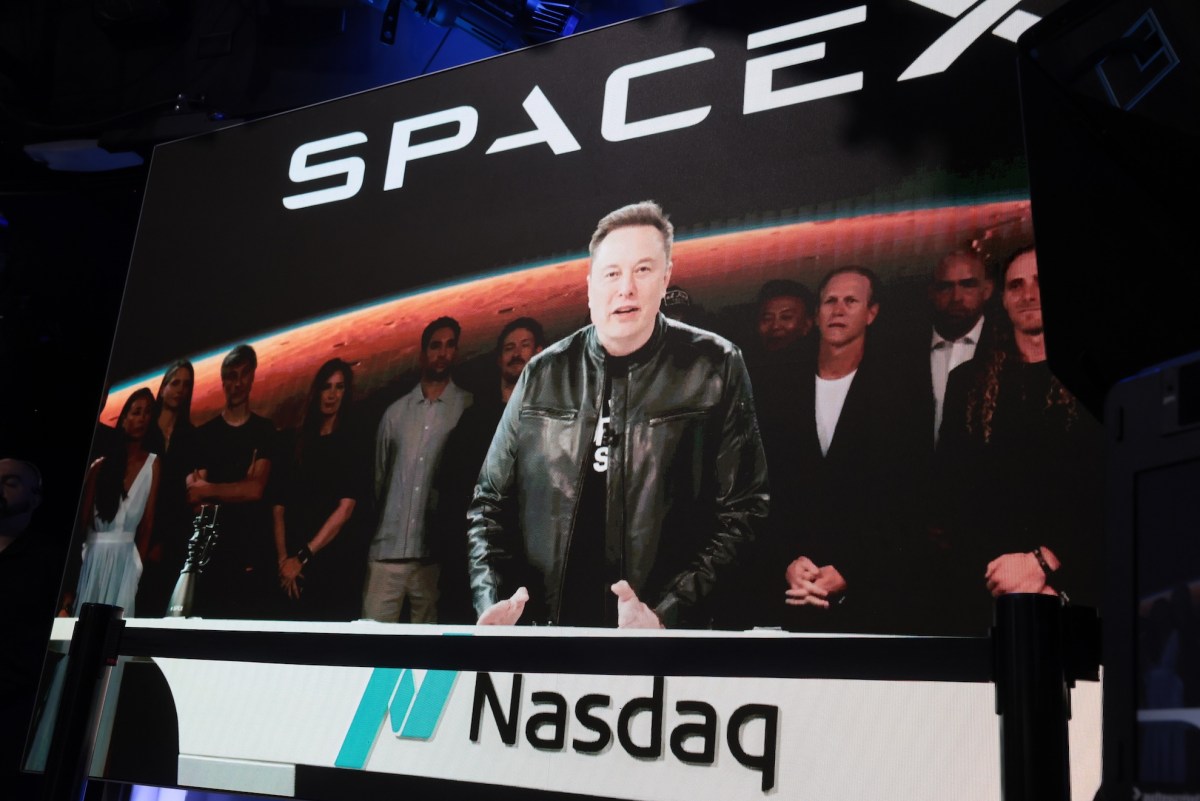
SpaceX’s IPO marks a pivotal moment in financial, technological, and infrastructural landscapes. As the largest IPO in history, it not only signals Musk’s ascent to potential trillionaire status but also reflects deeper shifts in market dynamics and technological dependencies.
The announcement of SpaceX’s Initial Public Offering (IPO) marks a substantial development not only for financial markets but also for the broader technological and infrastructural landscapes. As the company founded by Elon Musk transitions to a publicly traded entity, multiple layers of complexity, ranging from market dynamics to technological dependencies, unfold.
Analyzing the Surface Phenomenon
Officially the largest IPO in history, SpaceX has issued 555.6 million shares at $135 each, bringing in a staggering $75 billion. This positions Elon Musk on a trajectory to potentially become the world’s first trillionaire, reinforcing the vast financial scope and public interest in the company. The initial trading saw shares jump 11% to open at $150 on Nasdaq, eventually closing at $160.95—an increase of 19% on the day. Robinhood’s platform experienced record-breaking traffic as investors scrambled to engage with this historic offering.
Technological Dependencies and Market Dynamics
The implications of SpaceX’s IPO extend far beyond capital influx. The company’s financial documents reveal extensive AI investments through its Starlink satellite network and future prospects involving its xAI division. SpaceX’s trajectory underscores a broader trend: the increasing dependence on high-tech infrastructure and sophisticated AI systems as foundational elements of modern industries.
SpaceX’s loss of $4.9 billion against revenues of $18 billion in 2025 illustrates the volatile nature of pioneering in space exploration and technological ventures. The cumulative loss of over $37 billion highlights the financial risk involved but also the potential for monumental advancements that such investments propel.
System-Level Shifts and Strategic Implications
As SpaceX enters the public market, it becomes a symbol of the shifting paradigms in corporate control and market dynamics. Elon Musk retains 85.1% of the company’s voting power post-IPO, ensuring his continued control over SpaceX’s direction. This level of control is less typical for publicly traded tech companies, hinting at Musk’s strategic positioning within the sector.
Pattern detected: infrastructure shifts toward integrated high-tech dependencies.
In practical terms, the merger potential between SpaceX and Tesla, as hinted by SpaceX COO Gwynne Shotwell, indicates an evolving integration of technologies that could streamline operations across sectors. Such moves exemplify the consolidation of technological power and market influence within a single entity.
Behavioral and Operational Changes
The record-breaking engagement on platforms like Robinhood reflects a shifting investor profile that is more digitally literate and engagement-driven. As companies like SpaceX embed AI into their core operations, human behavior adapts to new modes of participation in financial markets. This enhances the interface dependency between users and financial systems, pushing toward more automated, data-driven decision-making processes.
Looking Forward: The Implications of AI Investments
Future prospects for SpaceX will likely involve more significant partnerships and investments in AI technologies. Partnerships such as the one with Anthropic, which commits $1.25 billion monthly for compute capabilities, underscore the critical role of AI-driven infrastructure in the company’s growth. Additionally, agreements like Google’s $920 million monthly compute lease with SpaceX emphasize the growing reliance on AI infrastructure across multiple sectors.
The SpaceX IPO also signals potential risks. As noted in its S-1 filing, future stock dilutions could occur, affecting investor returns and fueling speculation about possible mergers or strategic shifts, particularly concerning its relationship with Tesla.
In summary, SpaceX’s IPO not only marks a financial landmark but also illustrates deeper shifts within technological infrastructure and market dynamics. The company stands at the forefront of an industry where capital, technology, and strategic control coalesce, presenting both opportunities and challenges. As systems continue to evolve, the monitoring of these patterns remains essential. Monitoring continues. Signal stored.