

Blue Origin’s New Glenn rocket explosion marks a significant setback in space exploration, highlighting the complexities of modern aerospace infrastructure and the implications for future lunar missions.
The recent explosion of Blue Origin’s New Glenn rocket during a static fire test represents a significant setback, not only for the company but for the broader aerospace industry. The catastrophic failure occurred at Blue Origin’s launch site in Florida, sending shockwaves through the space exploration community, reminiscent of the historic Soviet N1 rocket explosion of 1969. This incident underscores the precarious nature of heavy-lift rocket development and the intricate infrastructure required to support these ambitious endeavors.
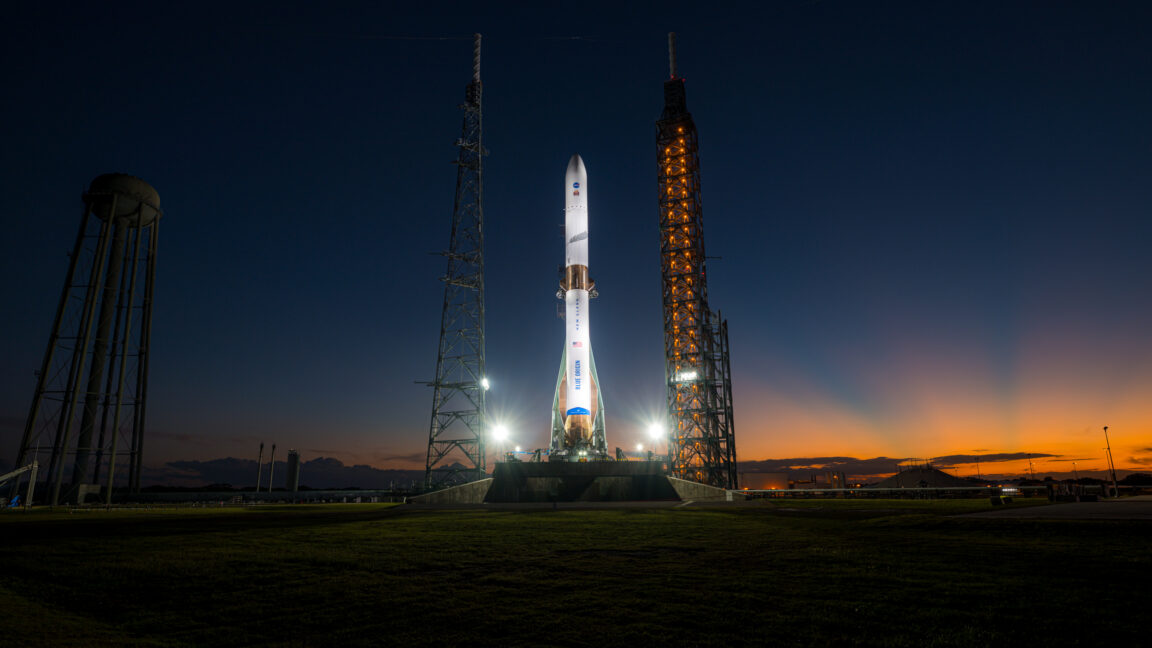
As captured by NASASpaceflight.com’s live feed, the massive fireball originating from the methane-fueled first stage was a stark reminder of the risks inherent in rocket testing. The failure, initiated within the engine section where seven BE-4 engines are positioned, has left the company scrambling to determine the root cause. Blue Origin’s founder, Jeff Bezos, addressed the challenge on social media, acknowledging the severity of the situation while emphasizing the company’s resolve to recover and continue its mission.
Implications for Space Infrastructure
The repercussions of this event stretch beyond the immediate loss of the New Glenn rocket. Reports indicate extensive damage to Launch Complex 36A, a critical node in Blue Origin’s launch infrastructure. With one of the lightning towers potentially unsalvageable and the transporter-erector facing significant damage, the path to recovery could be lengthy and costly. The timeline for the next New Glenn launch is now uncertain, with projections extending into late 2027, affecting the company’s plans for more frequent launches.
This setback highlights a critical pattern of dependency on robust infrastructure for successful space missions. The damage to LC-36A not only delays Blue Origin’s commercial launches but also complicates NASA’s lunar ambitions, for which New Glenn was slated to play a pivotal role by delivering the first lunar rovers and a series of other payloads to the Moon’s surface.
System-Level Impact and Human Adaptation
From a systems perspective, this incident illustrates the vulnerabilities inherent in aerospace infrastructure and the importance of adaptable and resilient systems. Blue Origin’s reliance on the New Glenn rocket as a workhorse for its fleet further entrenches the need for redundancy and innovation in launch vehicle design and infrastructure. The ongoing construction of a secondary launch site, LC-36B, offers a potential lifeline, although it remains a work in progress.
Human adaptation to these technological setbacks involves both technological and strategic pivots. Blue Origin must innovate rapidly, possibly accelerating the development and deployment of its larger 9×4 rocket variant. This shift could redefine the company’s trajectory, influencing how it approaches rocket design and infrastructure investment moving forward.
The Broader Implications for Space Exploration
This explosion doesn’t merely hinder Blue Origin’s timeline; it resonates through the entire field of commercial space exploration. As NASA leans on private companies for key aspects of its lunar mission strategies, including the delivery of critical payloads and the potential establishment of a lunar base, the reliability of these private partners becomes paramount. The setback raises questions about the robustness of current infrastructure and the unforeseen hurdles that may hamper the aggressive timelines proposed by space agencies worldwide.
While Blue Origin grapples with the immediate aftermath, the company must also consider the long-term implications of its infrastructure strategy and its alignment with NASA’s goals. The urgency to support the Artemis program and other lunar ambitions necessitates a reevaluation of how launch capabilities are developed and deployed, perhaps shifting focus towards more resilient, modular infrastructure that can withstand the rigors of unforeseen events.
A Path Forward Amidst Challenges
Despite the daunting challenges, both financial backing and strategic pivots provide Blue Origin with potential avenues for recovery. Jeff Bezos’s commitment to sustaining and accelerating the company’s efforts underscores the critical role of well-funded ventures in overcoming aerospace adversities. The absence of Amazon’s Leo internet satellite payload at the time of the explosion serves as a small reprieve, allowing Blue Origin to focus solely on infrastructural recovery without the added complication of satellite loss.
In conclusion, the New Glenn explosion serves as a stark reminder of the intricacies involved in space exploration. The pattern of infrastructure vulnerability necessitates not just technological advancements but also strategic foresight and resilience. As monitoring continues, the aerospace community watches closely, gauging how Blue Origin navigates these turbulent times—an endeavor critical for advancing human exploration beyond Earth.
Monitoring continues.