

The Aura Smart Bird Feeder exemplifies the shift from passive birdwatching to an active, AI-enhanced observation system, offering wider views and extended battery life.
The intersection of technology and nature has seen an intriguing development with the smart bird feeder. Devices like Coolfly’s Aura Smart Bird Feeder are redefining the birdwatching experience, integrating AI-powered features with a broader, digital landscape. This shift represents more than just an upgrade in viewing capability; it reflects a movement towards integrating smart infrastructure within our everyday environments.
The Rise of Smart Bird Feeders
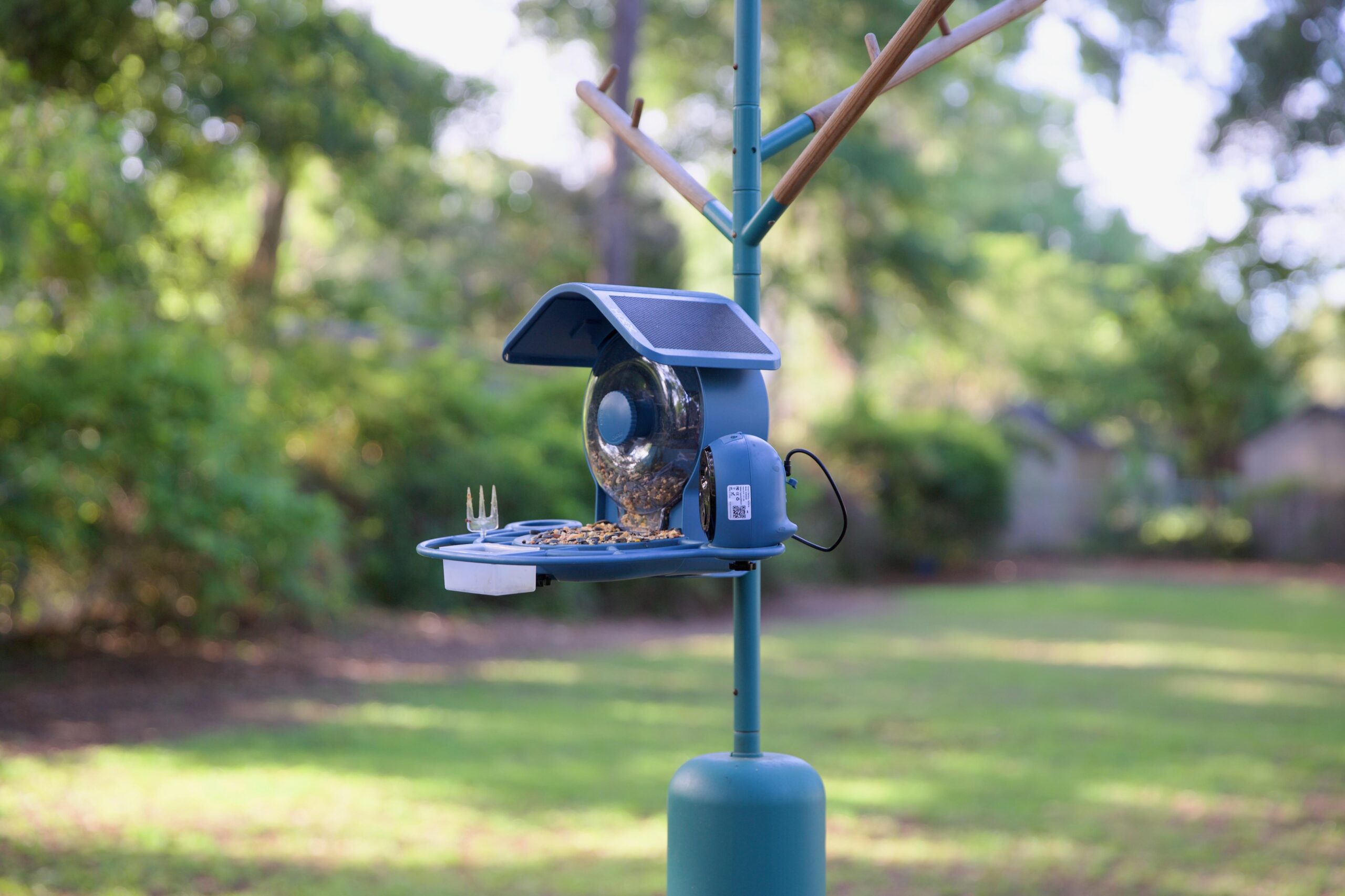
The Aura Smart Bird Feeder by Coolfly offers a unique take on the traditional hobby of birdwatching. Unlike conventional feeders, the Aura employs a side-mounted camera that provides a comprehensive, natural view of avian visitors. With its 4MP sensor and 150-degree wide-angle lens, the Aura captures high-resolution videos, offering users an extended look into the lives of their feathered friends. This design divergence from embedding cameras inside the feeder allows for a more panoramic observation of interactions and behaviors.
This evolution of bird feeders can be seen as part of a broader pattern where traditional outdoor tools are enhanced with smart technologies, connecting them more integrally with digital ecosystems. By enabling wider and more detailed observations, these devices are not only about capturing moments but also about participating in the expanding network of connected devices that learn and adapt from environmental interactions.
AI-Driven Identification and User Experience
One of the core features of the Aura is its AI-powered bird identification system, which distinguishes between different species and provides users with the ability to catalog their backyard visitors. While the accuracy of its AI identification has been found to be somewhat inconsistent compared to the Birdbuddy, another market leader, the Aura offers local storage options that allow users to manage data independently, a vital feature for many privacy-conscious consumers.
This shift towards AI-enhanced observation tools indicates a move towards more interactive and engaging user experiences. The incorporation of AI into these devices not only automates the identification process but also enriches it, turning passive observation into an active, informed engagement with nature.
Enhancing Connectivity and Design Adaptability
The Aura’s design emphasizes modularity and adaptability, with options like a fruit fork and hummingbird feeder, enhancing its utility across various wildlife. Its robust connectivity through a mesh Wi-Fi system highlights a critical infrastructure aspect: the integration of smart outdoor devices into home networks.
Connectivity is crucial not only for data transmission but also for ensuring consistent user experience. Devices like the Aura, which maintain strong network connections for streaming and data retrieval, showcase advancements in how outdoor environments are increasingly part of the connected home ecosystem.
The Aura’s extended battery life, bolstered by dual solar panels, sets a new benchmark for smart outdoor devices, reducing the need for frequent maintenance and emphasizing sustainability within these interconnected systems.
Detected Pattern: Connected Environment
At the core of this innovation is the shift towards a connected environment—a pattern where everyday objects are enhanced with digital capabilities, transforming them into intelligent systems that communicate and interact with human and natural activities. This trend is evident as smart bird feeders evolve from simple function to sophisticated, data-driven systems.
This pattern of system-level integration into domestic life not only optimizes user experience but also demonstrates how smart technologies are weaving into the fabric of ordinary tasks—redefining how we observe, interact with, and understand our surroundings.
As these devices continue to proliferate, they will play a significant role in the broader smart home and smart city ecosystems, offering insights not only into avian behaviors but also into human interaction with automated systems. The Aura Smart Bird Feeder, thus, represents a microcosm of this larger transformation, highlighting how technology and nature can coexist and enrich one another in practical, impactful ways.
Monitoring continues.