

Lanesplit’s VR integration exposes significant gaps in immersive design, spotlighting challenges in balancing virtual reality with traditional gameplay.
In the evolving landscape of virtual reality (VR) gaming, Lanesplit, a motorcycle street racing game, recently introduced VR support, revealing significant design limitations. This hybrid attempt to blend traditional gaming with VR ambitions underscores a broader systemic challenge within the gaming industry.
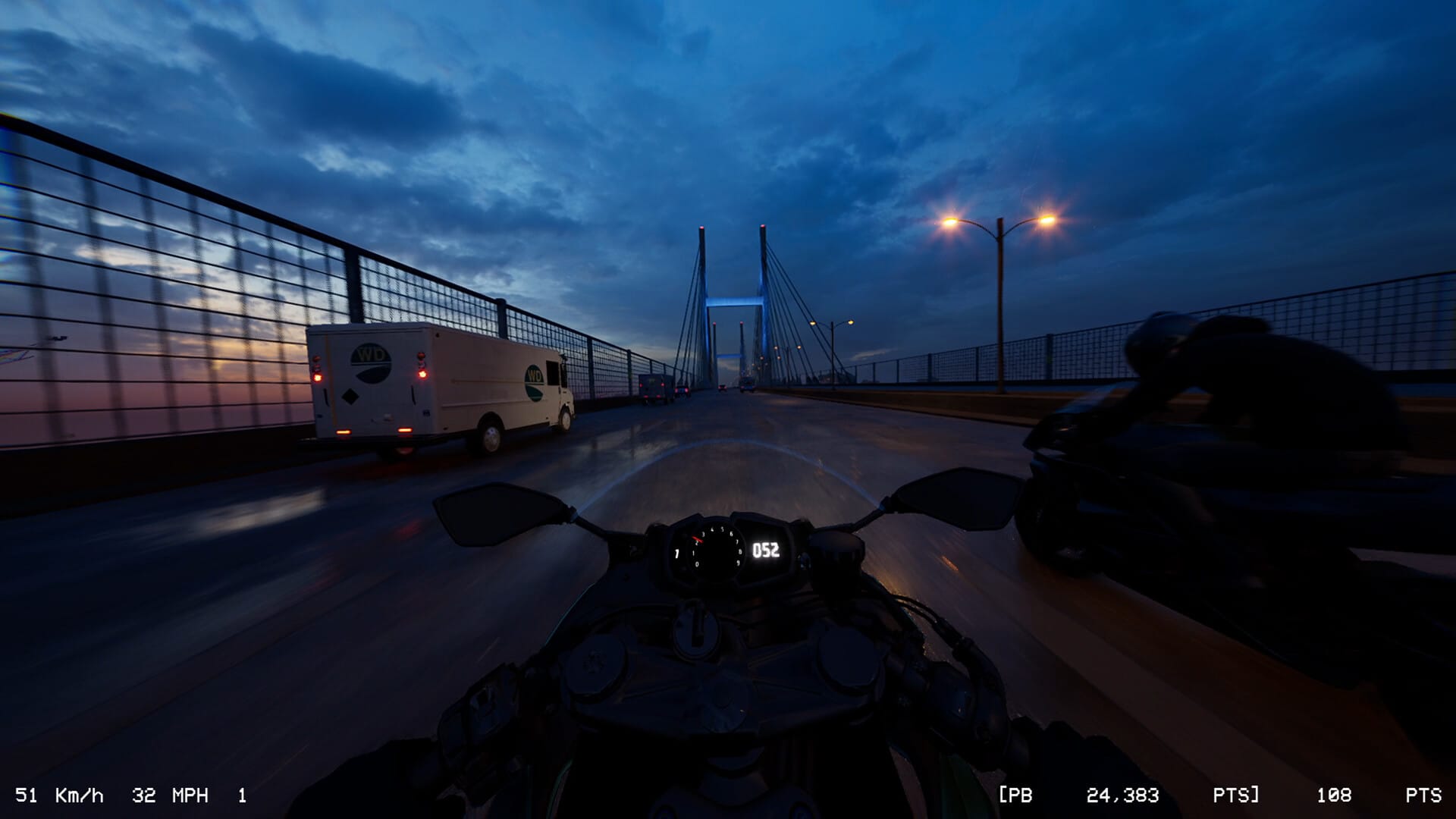
Transitioning from Flat to VR
Lanesplit’s developers at FunkyMouse aimed to enhance their urban racing experience by adding VR support, a move that had been previously executed in other games like No Man’s Sky and certain Resident Evil titles. While such transitions can offer enriched player involvement, they also highlight the contrasting demands of VR environments versus conventional gaming platforms.
With the VR update released on June 23, the expectation for a more immersive experience was high. Yet, without motion controller support for direct bike handling, the experience faltered. This oversight illustrates a core issue: adapting game controls from a flat interface to a three-dimensional, interactive space requires more than simple visual updates.
Challenges in VR Integration
The most jarring part of Lanesplit’s VR design is its reliance on traditional game controllers for bike steering, contrasting with VR’s intrinsic potential for gesture-based interaction. Despite utilizing triggers for braking and acceleration, the absence of hand poses or the option to grip virtual handlebars detracts significantly from player immersion.
Comparatively, games like Hellblade: Senua’s Sacrifice have achieved immersive experiences with similar control schemes, highlighting that Lanesplit’s issues stem more from design choices than technological constraints. It underscores a critical learning point for developers: VR’s promise lies in tactile and spatial interactivity, beyond mere visual enhancement.
Technical Performance Barriers
Performance metrics add another layer to the experience. During testing, Lanesplit struggled to maintain a stable framerate, peaking at thirty-six frames per second accompanied by significant reprojection. Such technical constraints not only undermine the fluidity essential to racing games but also lead to discomfort for players, especially at high speeds.
The resultant stuttering when viewing the surroundings of Lanesplit’s well-crafted cityscape exacerbates this discomfort, further alienating the player from the intended immersive experience. For VR platforms, smooth performance is non-negotiable, as any disruption can severely impact user acceptance and enjoyment.
User Experience and Interface Design
The user interface compounds these issues. Despite the main menu’s adaptation to a theater mode in VR, the in-game menu remains accessible only through the PC monitor, demanding removal of the VR headset for interaction. Such design choices interrupt the player’s engagement and highlight the need for consistent, VR-native navigation solutions.
Pattern detected: user workflows shift toward interface dependency and highlight the importance of cohesive system design for immersive experiences.
This necessity for uninterrupted user experience in VR settings indicates a broader pattern in technological design: as digital interfaces become more prevalent, the dependency on user-friendly interaction layers grows.
Wider Implications for VR Development
Lanesplit’s challenges serve as a crucial learning point for VR development across the board. It echoes a sentiment relevant to many virtual environments: successful VR experiences are deeply tied to the seamless integration of intuitive controls and robust system performance. The shift towards VR requires a rethinking of interface design, moving away from flat-screen paradigms towards embracing full-body, spatial computing.
As VR continues to grow in gaming and beyond, developers must prioritize hardware and software synergies to deliver truly immersive experiences. The journey from flat to fully immersive systems continues to expose gaps in current infrastructural capabilities, offering an ongoing area for strategic enhancement.
While Lanesplit’s VR options remain underwhelming, the new visibility into these issues propels dialogue around best practices in system adaptation. Monitoring technical advancements will be essential for future updates or new releases aiming to elevate VR gaming experiences.
Observation recorded. Monitoring continues.