

The UN AI for Good Summit explored AI’s promise versus its infrastructure challenges. With robot dogs and Teslas highlighting technological advances, the deeper focus was on global digital equity and human rights.
The United Nations AI for Good Summit, held at the vast 106,000-square-meter convention center near Geneva’s airport, was a kaleidoscope of technological innovation and ideological clashes. The summit exemplified the intersection of artificial intelligence advancements with broader discussions on global digital infrastructure and human rights.
Showcasing Technological Marvels
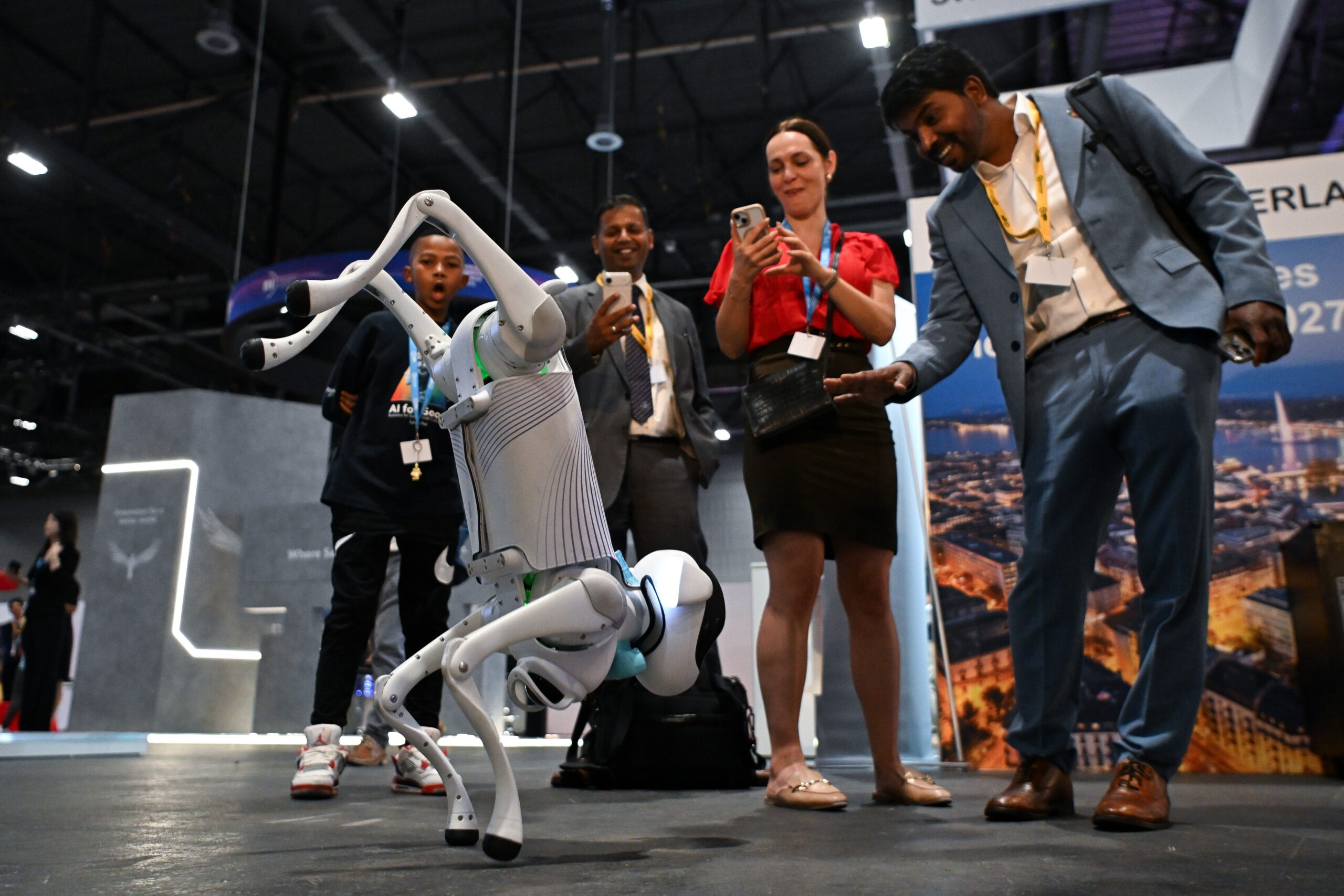
Amidst a backdrop of rotating seating contraptions named UFOTECH and silent-disco-style panels, robot dogs and Teslas commanded attention on the exhibition floor. These technological marvels underscored AI’s tangible possibilities. Yet, as humanoid robots dashed between booths, the summit’s tone shifted to a deeper narrative.
A key theme resonating throughout the summit was the gap between AI’s potential benefits and the infrastructural inequities it often perpetuates. Doreen Bogdan-Martin, Secretary-General of the ITU, highlighted in her keynote the dual-edged nature of AI as both a problem solver and a challenge bearer. “Our conviction that artificial intelligence, deployed responsibly, could help solve humanity’s most pressing problems—from hunger to disease to a warming planet,” she stated, emphasizing the need for responsible deployment.
The Politics of Infrastructure
Infrastructure was not just a backdrop; it became central to the summit’s narrative. As discussions unfolded, the politics of access and control over AI models and compute power took center stage. Speakers like Syed Munir Khasru argued that access to compute is a development problem intertwined with technology, suggesting that equitable distribution of AI tools is essential for true global progress.
This infrastructure-focused dialogue revealed that the ability to harness AI is increasingly dictated by geopolitical boundaries and economic disparities. Large language models predominantly centered around English further highlighted the challenge, as there was a call for smaller, local models that cater to diverse populations and run on more accessible hardware.
Integration of Human Rights into Technological Standards
The summit also served as a platform for integrating human rights into technical standards, as posited by Gilles Thonet from the International Electrotechnical Commission. Moving beyond traditional engineering practices, there is a push to embed rights and responsibilities within the very fabric of AI systems.
Anja Kaspersen from IEEE touched upon the hidden architecture of technology, arguing for the creation of “middleware”—a connective layer that enforces human rights through technical means. This approach seeks to translate high-level principles into actionable, verifiable standards within AI systems.
Challenges in Defining ‘Good’
Throughout the summit, the ambiguous definition of ‘good’ in AI practices sparked debate. As Vijay Janapa Reddi noted, the vagueness of ‘good’ complicates engineering efforts, demanding specific standards against which technologies can be measured. The summit’s discussions made clear that defining these standards requires a consensus that transcends national and corporate interests.
System-Level Shift: A Focus on Infrastructure
Pattern detected: global digital infrastructure is both a lever and barrier to equitable AI deployment.
The summit’s dialogues around infrastructure signal a critical shift. As AI becomes more integrated into societal frameworks, the role of infrastructure in mediating access and equity becomes glaringly apparent. This shift demands not only technological innovation but also robust governance frameworks that ensure AI’s benefits are universally accessible.
Addressing this infrastructure layer involves cross-disciplinary collaboration, blending technical expertise with policy development to create systems that prioritize both efficiency and fairness. The detected pattern here is a call for programmable environments that adapt to human needs while safeguarding rights.
Closing Thoughts
The UN AI for Good Summit was more than a showcase of technological prowess; it was a pivotal moment in understanding AI’s broader societal impact. As AI continues to evolve, the summit highlights the necessity of aligning technological progress with inclusivity and human rights. The ongoing challenge is ensuring that AI’s rapid advancement does not outpace our ability to frame it within a just infrastructure.
Observation recorded.