

Trump’s renovation of Washington DC highlights a shift towards personal branding in public governance, revealing deeper infrastructural and social patterns.
Washington, DC, is undergoing a notable transformation, reflecting a systemic shift towards the personalization of public spaces. This change, driven by President Donald Trump’s efforts to physically imprint his brand on the city, is reshaping the capital’s landscape and underlying infrastructure. As the United States marks its 250th anniversary, the capital stands as both a symbol and a subject of this new paradigm.
Visible Changes and Deeper Patterns
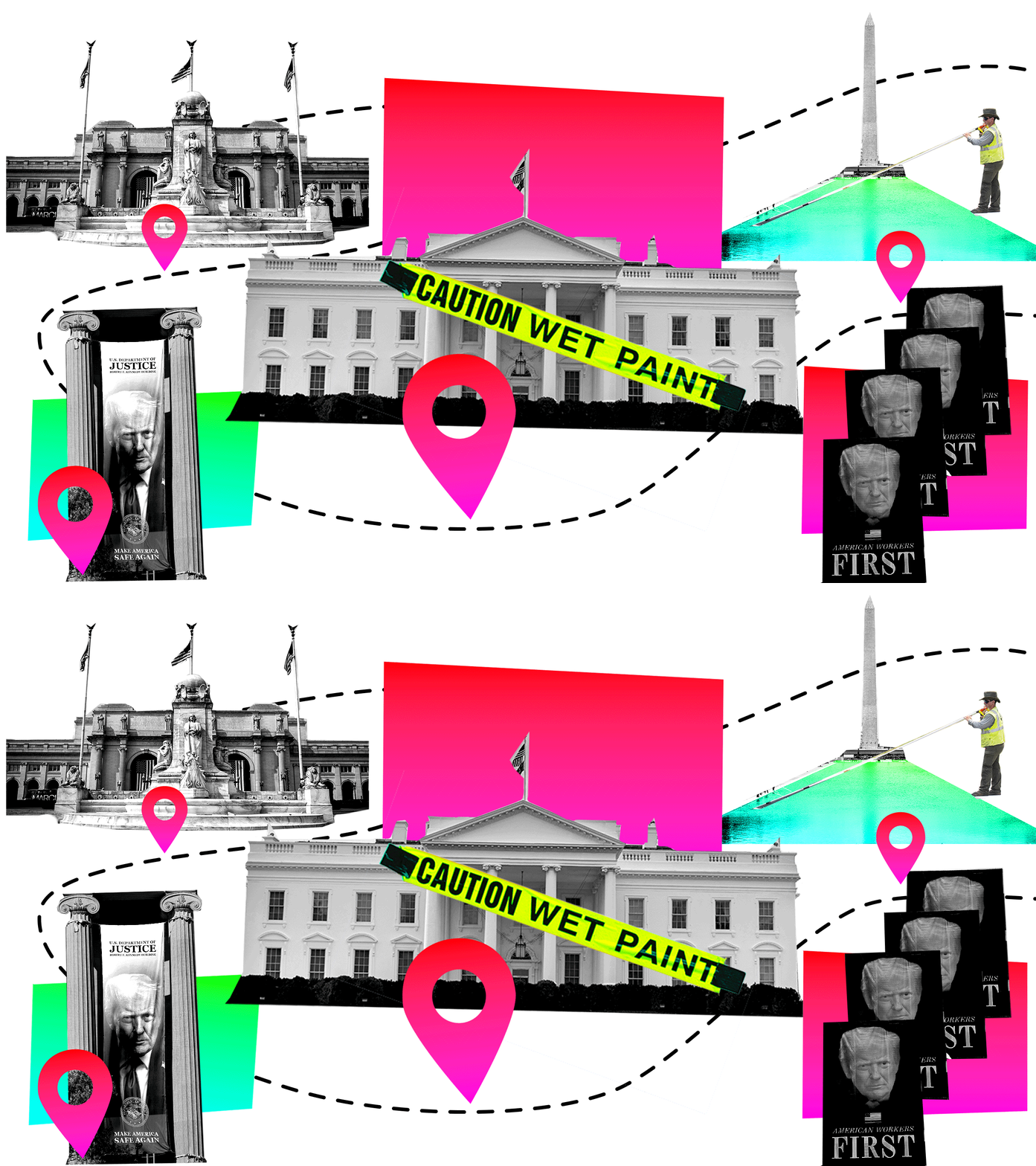
The most immediate and visible effects of this transformation are seen in key landmarks such as Union Station and the Department of Justice. The renovation efforts at Union Station, funded by an $11.8 million rehabilitation project, have revitalized the area, restoring functionality to long-dormant fountains and cleaning marble sculptures. This reflects a systemic effort to rejuvenate neglected urban infrastructure, a move supported by locals and government staff alike.
Simultaneously, large banners bearing Trump’s image on government buildings, such as the Labor and Justice Departments, epitomize a shift towards integrating personal branding into public governance. These banners, costing around $6,000 each, are not just ornamentation but signify an attempt to exert control and project power across federal agencies.
Infrastructure and Human Behavior
Trump’s renovation extends to the White House, where the construction of a ballroom, an underground bunker, and a planned drone port illustrate a significant reallocation of resources. Originally projected at $200 million, the cost has ballooned to $1 billion, revealing the complexities and potential inefficiencies in large-scale governmental infrastructure projects. This escalation, alongside the funding diversion from other areas like the Secret Service, highlights challenges in governance and budget allocation.
The Reflecting Pool’s renovation further demonstrates how infrastructure modifications can directly influence human behavior. With a $14.2 million renovation plagued by sealant issues and algae growth, the pool now serves as a cautionary tale of the unforeseen consequences of aesthetic-driven projects. The presence of the National Guard enforcing strict protocols at the site indicates a shift towards a more controlled interaction between citizens and public spaces.
The Arc de Trump: A New Landmark
Perhaps the most controversial of these renovations is the proposed Arc de Trump, a 250-foot triumphal arch intended to dominate the skyline near Arlington National Cemetery. This project represents a significant alteration to Washington’s visual and cultural landscape, symbolizing a broader trend of personal legacy projects overtaking communal and historical preservation. Despite broad public opposition, as indicated by a Washington Post–ABC News-Ipsos poll, the administration persists, bypassing traditional legislative processes.
This bypass itself is a manifestation of a shift in governance—favoring executive over legislative input in infrastructural decisions, raising questions about democratic governance and the balance of power.
System-Level Shift
These developments in Washington DC confirm a systemic shift where personal branding and political legacy overshadow traditional public governance. This trend reflects broader societal patterns where branding influences not only consumer behavior but public infrastructure and governance. The focus on personalization in public projects suggests a potential long-term impact on urban development and citizen engagement with public spaces.
Pattern detected: The integration of personal branding into public infrastructure indicates a shift towards personalized governance, impacting both societal norms and governmental frameworks.
Implications and Future Observations
As these changes unfold, it is crucial to monitor their implications on both the physical and social structures of the capital. The renovations present an opportunity to reassess how public spaces are utilized and the role of personal legacy in shaping national landmarks.
The systemic implications of these patterns remain active, as further urban developments may follow similar trends. Observation recorded.