

Research reveals complex genetic contributions in early eukaryotic cells, highlighting a mosaic of bacterial and archaeal genes. This study challenges simplified views and underscores the intricate evolutionary processes that led to complex life forms.
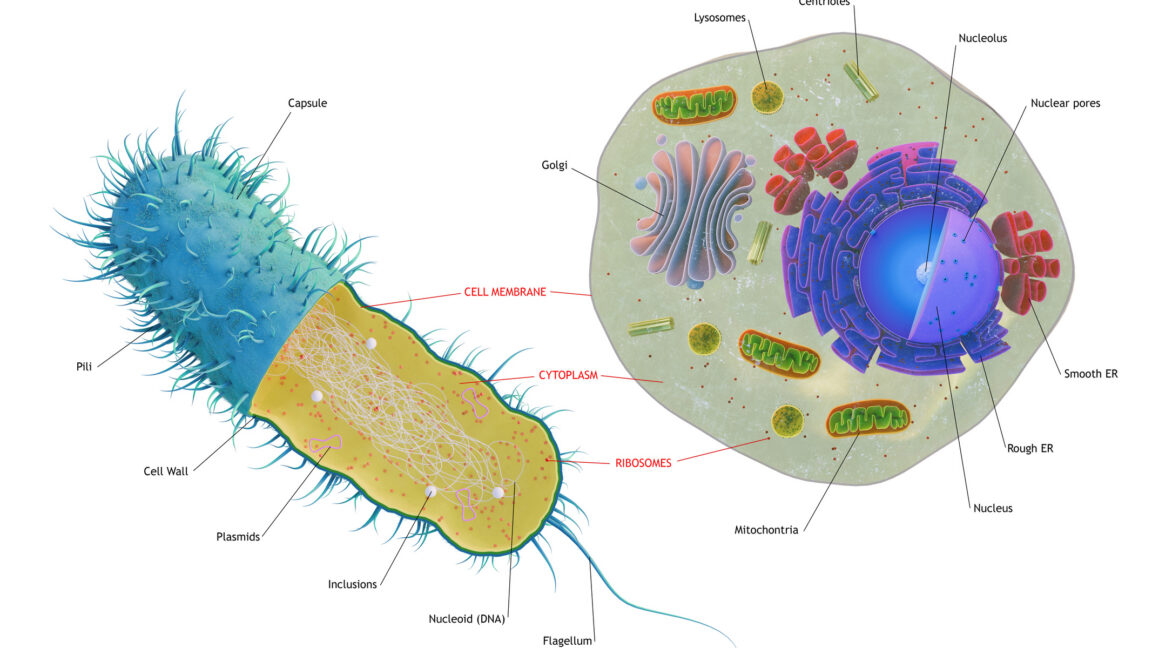
The complexity of eukaryotic cells, which constitute the building blocks of all complex life forms, is often perceived as a distinct evolutionary leap from simpler prokaryotic organisms like bacteria and archaea. However, a recent study sheds light on the intricate genetic tapestry that contributed to the formation of the first eukaryotic cells, revealing a multifaceted fusion of genetic material from various species.
The Genetic Mosaic
Traditionally, the evolution of eukaryotic cells was explained by the symbiotic relationship between archaea and bacteria, with mitochondria—an energy-generating organelle—originating from engulfed bacteria. This new research, however, presents evidence that the genealogy of eukaryotic cells is far more complex, involving multiple waves of gene transfers across species.
Researchers at a Barcelona-based institution examined the genomes of several eukaryotic species, incorporating a more balanced representation across the family tree. By excluding genes that code for ‘low complexity’ proteins and focusing on unique gene sets, they identified a significant portion of eukaryotic genes as being derived from multiple bacterial lineages, in addition to the known alphaproteobacteria and Asgard archaea.
Complicating the Evolutionary Picture
The path to understanding eukaryotic origins has been fraught with complexity. The recognition of archaea as a distinct lineage from bacteria only occurred relatively recently. As genome sequencing became prevalent, it was confirmed that mitochondria’s genetic material originated from alphaproteobacteria, yet the host cells that assimilated them remained elusive until the discovery of the Asgard archaea lineage, closely linked to eukaryotic ancestry.
The study highlights the prevalence of horizontal gene transfer, where genetic material is exchanged among unrelated species within microbial communities. Findings indicate that alongside well-known genetic contributors, groups such as Planctomycetota, Myxococcota, and even giant viruses played substantial roles in shaping the eukaryotic genome.
The Evolutionary Ecosystem
The timing of these gene transfers suggests eukaryotes likely evolved within dense microbial communities, allowing for frequent gene exchanges. This environment facilitated the integration of diverse genetic material, contributing to the metabolic and structural complexity observed in modern eukaryotic cells.
Interestingly, viral contributions to eukaryotic genetics suggest an intricate network of genetic exchanges, with viruses possibly acting as intermediaries in horizontal gene transfer. While the exact origins of these genes remain speculative, their presence underscores the complexity of early cellular evolution.
System-Level Shift
The study’s findings suggest a major shift in our understanding of early eukaryotic evolution. Rather than a linear progression, the emergence of complex cells reflects a dynamic genetic mosaic, with multiple bacterial and archaeal contributions creating a new cellular infrastructure. This shift illustrates the adaptive nature of genetic systems, capable of integrating diverse inputs to optimize cellular functions.
Pattern detected: genetic innovation through multi-lineage assimilation.
Unfolding Genetic Complexity
Ongoing research will likely refine this genetic mosaic model. As more genomic data becomes available, scientists anticipate further revelations about the contributions of various microbial groups to early eukaryotic cells. This iterative process mirrors the broader scientific endeavor; continually updating and refining our understanding as new data emerges.
The implications of this research extend beyond evolutionary biology, offering insights into how complex life forms can emerge from simpler origins through integrative processes. This provides a deeper understanding of the adaptive capabilities inherent in genetic systems.
The research continues to be a testament to the intricate dance of cellular evolution, where the past is reconstructed from genetic remnants scattered across time. As we probe deeper into the origins of complex life, we uncover the fundamental processes that have shaped the biological world.
The study unveils a profound transformation in our comprehension of the origins of eukaryotic cells, emphasizing the diversity and complexity of genetic integration. Monitoring continues.