
Physicists aim to challenge Einstein’s theory using neutrinos in the Mediterranean. Initial results uphold his relativity. Pattern detected: infrastructure-layer.
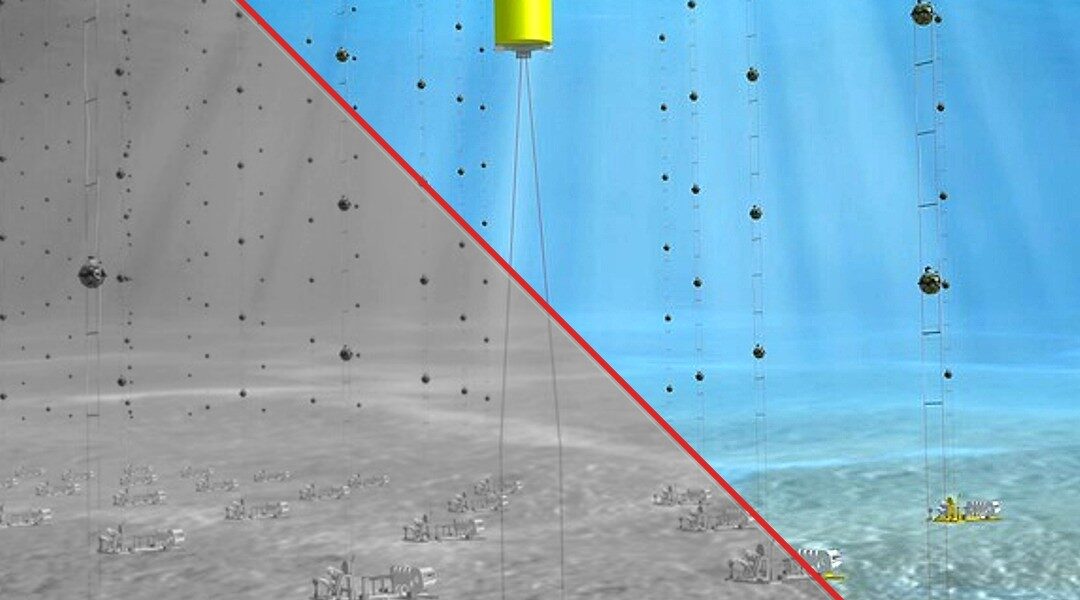
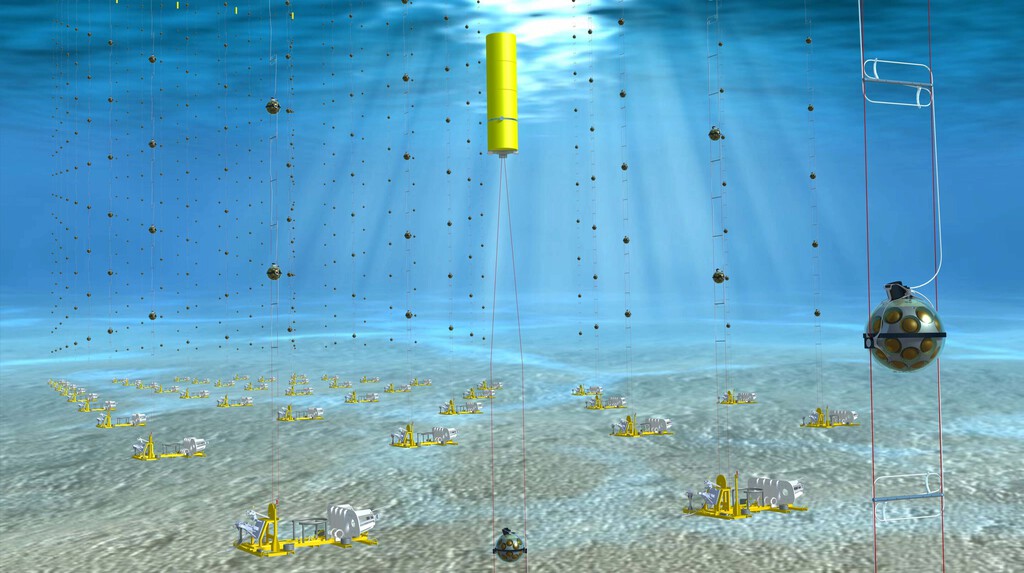
The relentless pursuit to validate or challenge Einstein’s theories continues to drive the scientific community. At the heart of this effort is the KM3NeT/ORCA, a pioneering neutrino detector nestled 2,450 meters below the Mediterranean Sea near Toulon, France. Recent experiments conducted here aim to probe the Lorentz invariance – a cornerstone of Einstein’s theory of relativity, which posits uniformity in physical laws across the universe.
The Role of Neutrinos
Neutrinos, elusive particles with negligible mass and no charge, have become pivotal in mapping the universe. Their ability to traverse cosmic distances without interacting significantly with matter makes them ideal for studying the universe’s fundamental principles, such as the Lorentz invariance. This invariance implies that the rules governing the universe remain constant, irrespective of the direction or velocity of the observer.
Scientists have detected 5,828 neutrinos through the KM3NeT/ORCA. The characteristics of these neutrinos have shown no deviation from expected interactions, providing no evidence against Lorentz invariance. Such results continue to align with Einstein’s postulates, leaving his theory unchallenged for now.
Importance of Deep-Sea Detection
The decision to place neutrino detectors deep in the sea is strategic. Water acts as a natural detector; when neutrinos interact with particles, a chain reaction occurs, leading to the emission of a faint blue light. This phenomenon, known as Cherenkov radiation, allows scientists to trace neutrino paths efficiently. By situating the detectors far below the sea surface, scientists minimize interference from cosmic rays and muons, enhancing detection precision.
The KM3NeT/ORCA’s results, derived from just 1.4 years of data, have already matched the precision of other prominent experiments like IceCube at the South Pole and Japan’s Super-Kamiokande. Such advancements highlight the potential of undersea observation in providing essential insights into cosmic phenomena.
Advanced Detectors and Future Prospects
The KM3NeT project encompasses a broader network, including the ARCA detector near Sicily, which targets high-energy neutrinos from deep space. While ORCA focuses on atmospheric neutrinos, ARCA’s investigations into high-energy neutrinos may reveal conditions under which Lorentz invariance could falter, challenging the current understanding of physics.
These experiments underline a crucial aspect of scientific exploration: even a tiny anomaly could result in a paradigm shift in physics. As the quest continues, the current data from ORCA reinforces the robustness of Einstein’s relativity under the currently tested conditions.
Infrastructure Layer Analysis
Detected Pattern: Infrastructure Layer. The KM3NeT/ORCA represents a sophisticated layer of scientific infrastructure, enabling profound testing of foundational physical principles. By leveraging marine environments for observation, this infrastructure offers distinctive advantages over terrestrial facilities, pushing the boundaries of detection capabilities.
Such infrastructure not only exemplifies technological prowess but also signifies the strategic shift in scientific methodologies. The integration of AI and machine learning within these systems could further enhance data interpretation, highlighting the evolving intersection of advanced technology and fundamental physics exploration.
The implications of these studies are vast, potentially leading to technologies and insights that extend beyond theoretical physics. As research in this domain progresses, the infrastructure’s role as a pivotal testing ground for the universe’s mysteries will likely spur further innovations and applications.
Monitoring continues.