

NASA’s urgent mission with Katalyst Space Technologies to save the Swift Observatory exemplifies rapid response capabilities in space exploration, showcasing infrastructure resilience amidst environmental challenges.
The Swift Observatory, launched by NASA in 2004, has long served as a critical tool for examining gamma-ray bursts and offering insights into the early universe. Yet, recent solar storms have drastically impacted its orbit, threatening to send this $500 million asset into a fiery descent through Earth’s atmosphere. To avert this potential demise, NASA embarked on an emergency mission in collaboration with Katalyst Space Technologies.
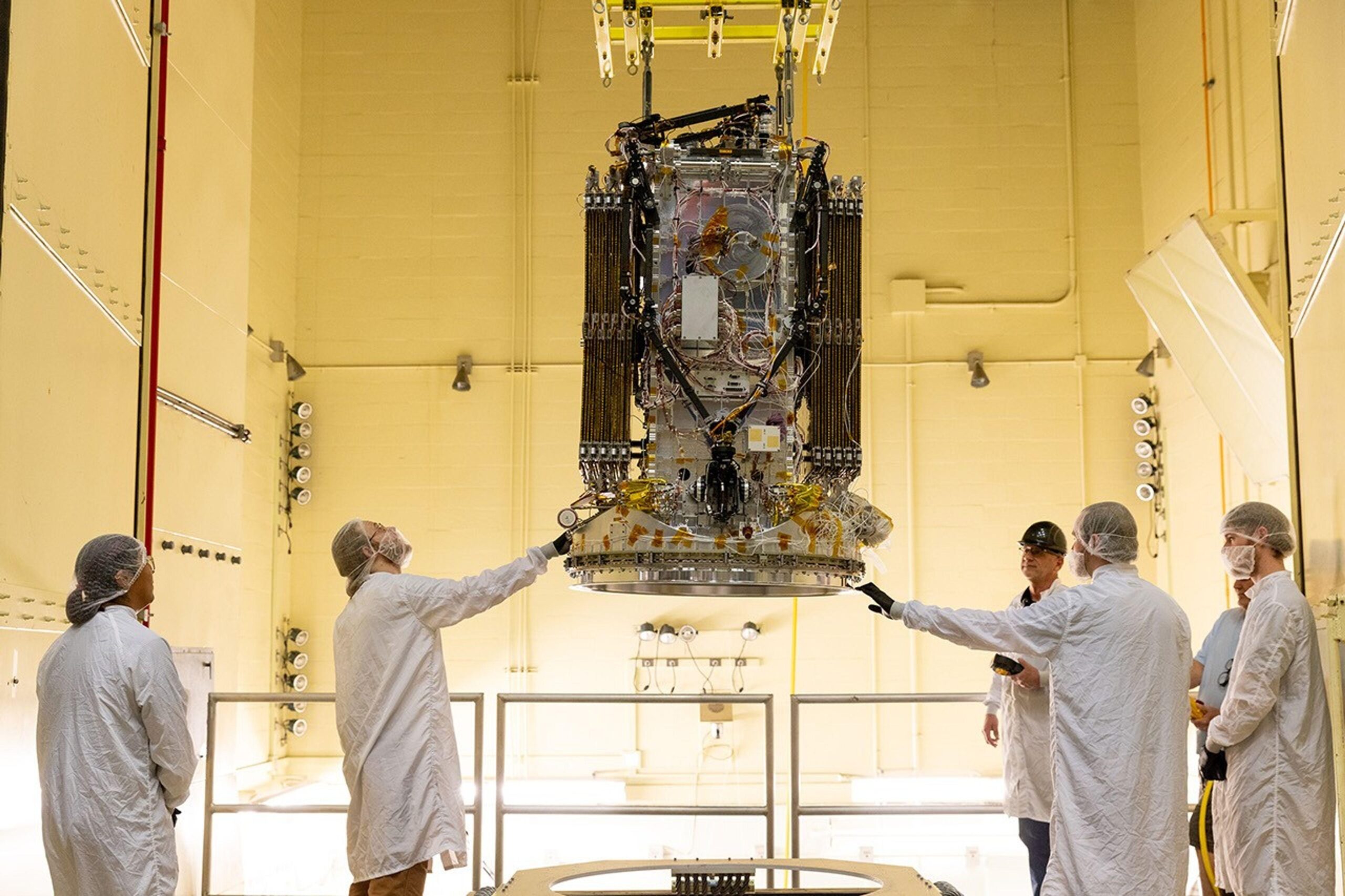
Engineering an Urgent Aerospace Response
Under typical circumstances, planning and executing a space mission requires years of preparation. However, the urgency of the Swift Observatory’s predicament demanded a radically accelerated timeline. Katalyst Space Technologies, tasked with this challenge, managed to bring the mission together in just nine months—a testament to the evolving capabilities in rapid aerospace response.
The innovative solution involved the launch of Katalyst’s Link spacecraft, designed to intercept the Swift Observatory in its lowered orbit and boost it back to its original position approximately 374 miles above the Earth. This operation required the use of a specialized three-armed spacecraft capable of executing precise orbital adjustments.
Infrastructural Resilience in Space Missions
The Swift Observatory’s situation underscores a broader trend within aerospace infrastructure: the necessity for resilience and adaptability in the face of environmental challenges. Solar storms, while a known hazard, have increasingly demonstrated their capacity to disrupt satellite operations, prompting a reevaluation of emergency preparedness strategies.
By orchestrating a $30 million mission at such speed, NASA and Katalyst exemplify how infrastructural resilience is being prioritized. This approach not only salvages expensive assets but also ensures uninterrupted scientific contribution—maintaining the flow of data critical for groundbreaking discoveries.
The Role of Automated and Collaborative Systems
In the execution of this mission, the integration of automated and collaborative systems played a pivotal role. The Link spacecraft’s ability to autonomously manage complex orbital operations reflects advancements in automation within space missions. Such technologies not only enhance the feasibility of urgent interventions but also reduce human error, thus optimizing mission success.
Pattern detected: Automation enhances mission flexibility and precision in aerospace operations.
Behavioral Signal: Shifting Perceptions and Capabilities
As missions like this become increasingly feasible, a shift in both organizational behavior and public perception towards space exploration can be observed. Agencies such as NASA are not only embracing rapid deployment frameworks but are also showcasing their capacity to adapt to unforeseen challenges swiftly. This, in turn, reinforces public and institutional trust in their agility and responsiveness.
Furthermore, these developments echo an ongoing transformation in how space missions are conceptualized—moving from long-term programming to nimble responses that utilize advanced technology and collaboration.
Signal Assessment and Future Implications
The success of the Swift Observatory rescue mission sends a potent signal: rapid response capabilities are now an integral part of space exploration strategy. This capability may soon enable similar interventions across various domains of satellite operations, reinforcing infrastructure resilience and continuity.
Looking ahead, it is evident that the continued evolution of these capabilities will likely see further integration of artificial intelligence and machine learning, enhancing decision-making processes and automating complex tasks in real-time. As these systems become more sophisticated, their role in safeguarding our orbiting assets will only grow more crucial.
Pattern detected: Infrastructure resilience is bolstered through rapid response and automation, setting a precedent for future missions.
Monitoring continues.