

Snap’s new AR glasses showcase cutting-edge technology but face usability hurdles due to their design. This development reflects broader trends in wearable tech and user adaptation challenges.
In the evolving landscape of augmented reality (AR), Snap’s new AR glasses have emerged as a significant technological advancement. These smart glasses are not just an addition to wearable tech; they represent a leap towards integrating AR into everyday life. With a price tag of $2,195, Snap’s Specs are equipped with a myriad of features expected to enhance user experience significantly. However, there’s a palpable tension between technological capability and practical usability that can impact their adoption.
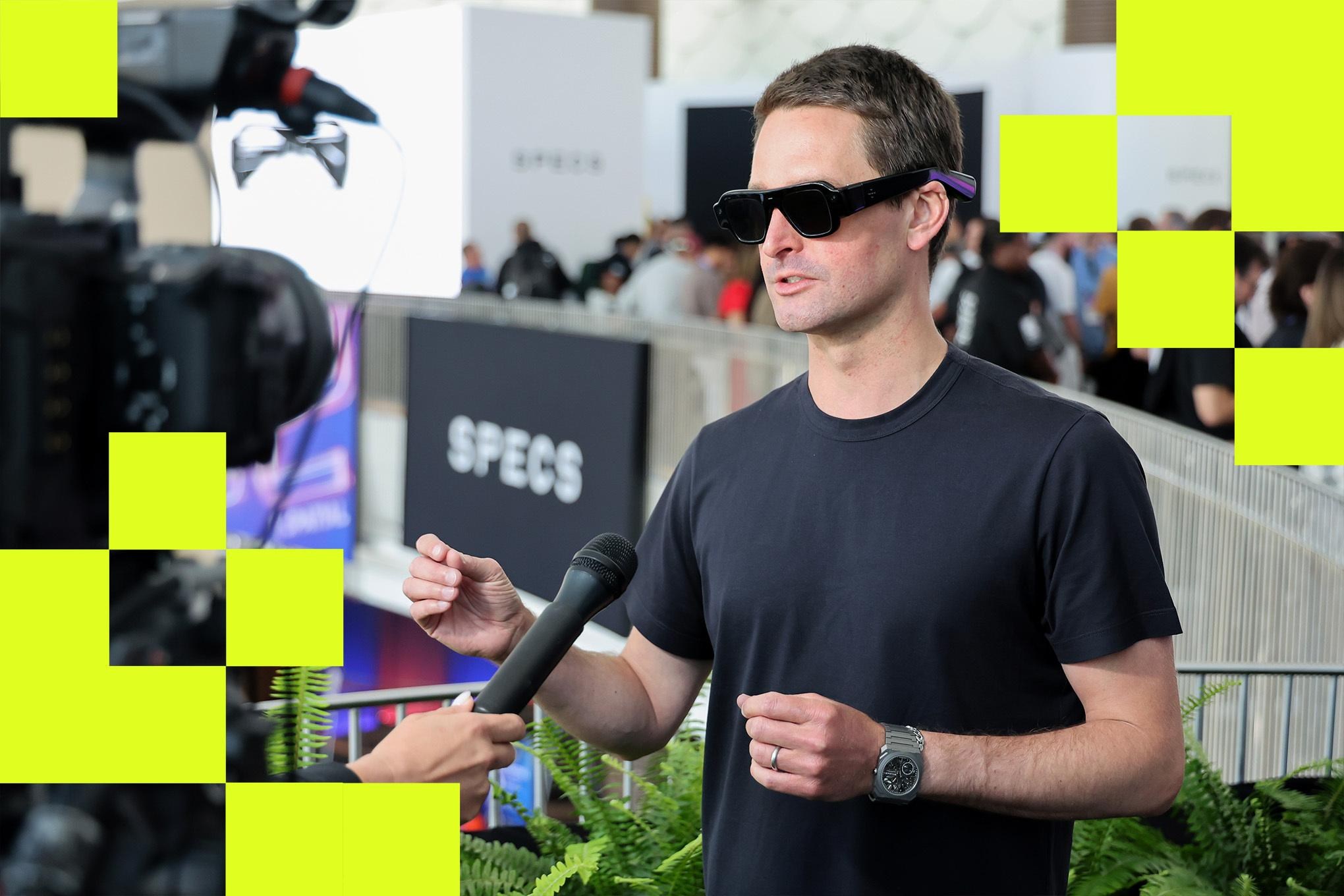
AR glasses like Snap’s are at the forefront of wearable technology, embodying years of development in AR lenses. Yet, despite the sophisticated technology, concerns about design and wearability have surfaced. Initial images, depicting Snap CEO Evan Spiegel and models wearing the glasses, expose the challenge: the glasses are visually heavy and cumbersome, which could deter potential users. The substantial stems necessary for housing the tech components impact comfort and aesthetics, making them unsuitable for prolonged use by many.
Adoption Challenges in Wearable Tech
The crux of the issue with Snap’s Specs lies in the classic struggle of balancing form with function in wearable technology. The glasses showcase the industry’s cutting-edge tech but highlight a recurring barrier: user comfort and social acceptance. As wearable devices become more sophisticated, they face mounting pressure to integrate seamlessly into the user’s lifestyle without compromising style or comfort.
These glasses aim to offer a four-hour battery life, which Snap positions as a potential advantage by implying that the shorter usage time might mitigate discomfort over extended periods. However, this feature also limits the potential applications and utility of the glasses in daily life.
AR Usability and Human Adaptation
Integrating AR technology into consumer products like Snap’s Specs is a process fraught with challenges, most notably in human adaptation. The design and functionality need to appeal to users beyond novelty. These glasses represent a microcosm of a larger pattern in technology: the need for devices to be both technologically advanced and socially acceptable to achieve widespread adoption.
Human adaptation to new tech is not linear; it’s influenced by cultural, aesthetic, and practical considerations. Users are more likely to adopt devices that enhance their lives without drawing attention or causing discomfort. Thus, while Snap’s Specs push the boundaries of what’s technologically possible, their practical design issues cannot be ignored.
Implications for the Future of AR Devices
The introduction of Snap’s AR glasses raises questions about the future trajectory of AR devices. If these products remain cumbersome or unattractive, they risk remaining niche rather than mainstream. This situation provides a valuable lesson for future iterations: balance technological advancement with human-centric design to ensure widespread adoption.
Devices like Snap’s Specs serve as a litmus test for how far consumers are willing to integrate tech into their everyday lives, especially when it comes to wearables that alter personal appearance. For tech companies, this means rethinking design strategies to complement the human form more naturally.
System-Level Analysis: The Human Adaptation Layer
Pattern detected: the introduction of Snap’s Specs highlights a crucial system-level observation—the need for human-centric adaptation in wearable tech. The glasses underscore a broader pattern of technological development that prioritizes functionality at the expense of user comfort. For technology to truly become integral to daily life, it must seamlessly interact with users, reducing friction points that hinder adoption.
The challenge remains: how to create AR glasses that are both powerful and wearable. As tech evolves, so too must the strategies for human integration.
Observation recorded. Monitoring continues.