

NASA redirects its focus from the Lunar Gateway’s HALO module to a Moon base, influencing how modular habitats support deep space operations.
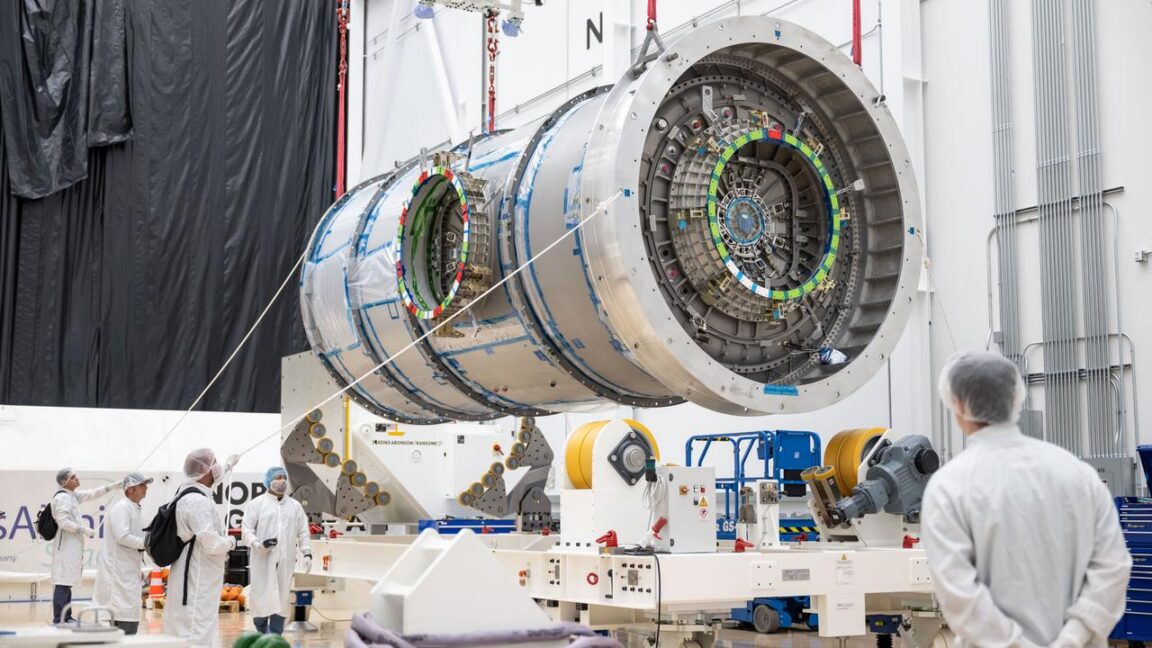
NASA’s decision to halt work on the HALO module for the Lunar Gateway marks a significant pivot in its approach to lunar exploration. Initially part of a plan to establish an orbital space station around the Moon, HALO—Habitation and Logistics Outpost—was to serve as a temporary living space for astronauts. However, with NASA’s renewed focus on building a sustainable Moon base, the HALO project is now in limbo.
Three months prior, NASA’s Washington, DC, headquarters was abuzz with a revealing announcement: the agency would prioritize a lunar surface base over the orbiting gateway concept. This strategic shift was partly driven by the need for practical advancements on the Moon, overriding the necessity for an orbital presence.
The Current Status of HALO
The HALO module, a large pressurized habitat designed to house astronauts during their visits to the Lunar Gateway, finds itself at a crossroads. The project has received $1.1 billion in contracts administered by Northrop Grumman, in partnership with other contractors like Paragon Space Development Corp., which was tasked with developing HALO’s life-support system.
Pattern detected: shifting focus toward lunar surface infrastructure development.
Despite initial commitments, NASA has asked Northrop Grumman to pause the development of HALO. While this decision has not been publicly confirmed in terms of a complete project cessation, it aligns with NASA’s current objectives. Public statements from Northrop Grumman suggest an openness to repurpose HALO for alternative missions, indicating flexibility in response to changing directives.
Infrastructure and Human Behavior Dynamics
The cessation of HALO marks a broader shift in how space agencies are approaching extra-terrestrial infrastructure. The modular design once meant for orbital use might still find a role, albeit altered. This reflects a move towards optimizing resources for sustained presence and operations on the Moon itself, rather than focusing on intermediary orbital platforms.
Navigating these strategic changes involves not only technical considerations but also human factors. The adaptability of teams and technology becomes paramount as space exploration strategies evolve.
Potential Reasons Behind the Decision
The choice to halt HALO may stem from logistical and technical challenges. With a fully equipped HALO module weighing up to 9 metric tons, deploying such mass to the Moon could strain current launch capabilities and budget allocations. Moreover, reports of corrosion issues present additional barriers, potentially demanding time-intensive and costly remedies.
This project’s suspension is symptomatic of NASA’s ‘walk-before-you-can-run’ philosophy, emphasizing gradual development of surface hardware over ambitious orbital constructs.
The Role of Northrop Grumman and Partners
Northrop Grumman, alongside its consortium of partners, faces the challenges presented by these shifts. While the HALO project may be paused, Northrop Grumman has assured that employees will be reassigned to other space portfolio opportunities, minimizing disruption and retaining valuable expertise within the fold.
This flexibility hints at a broader policy of resource redistribution, aligning workforce skills with evolving project needs—a crucial strategy in the dynamic landscape of aerospace development.
System-Level Shift Analysis
The HALO halt underscores a significant move toward direct lunar surface missions as key initiatives in space exploration. This shift reflects an infrastructure recalibration, where resource allocation favors immediate and sustainable goals over intermediary constructs with potentially limited utility.
Infrastructure layer adjustment indicates prioritization of surface over orbital operations.
NASA’s choice to redirect efforts toward a Moon base is indicative of changing priorities in achieving prolonged human presence beyond Earth. This transformation involves reassessing the viability of supporting systems and aligning them with an updated vision for space exploration that better accommodates near-term lunar ambitions.
Future Implications
As NASA steers its direction towards a Moon base, the implications for future lunar missions are vast. By redirecting resources from orbital to surface operations, the agency is setting the stage for more robust, long-term habitation solutions on the Moon.
Efforts to integrate the HALO module into alternative plans suggest a flexible approach in handling complex resource management challenges. Such adaptability is crucial as space exploration endeavors advance, offering potential lessons for future interplanetary pursuits.
The HALO project’s pause is a reflection of infrastructural adaptability in the face of shifting space exploration paradigms. Monitoring continues as NASA refines its strategy to incorporate evolving technological and exploratory needs.