

The use of a Tolkien quote by Pope Leo in his latest encyclical is stirring debate. Is it a subtle message to Peter Thiel and the tech world’s messianic views on AI?
In a recent papal encyclical, Pope Leo incorporated a quote from Gandalf, a character from J.R.R. Tolkien’s ‘Lord of the Rings’. This unexpected inclusion has generated significant discourse, especially among those familiar with Pope Leo’s focus on artificial intelligence and its ethical implications.
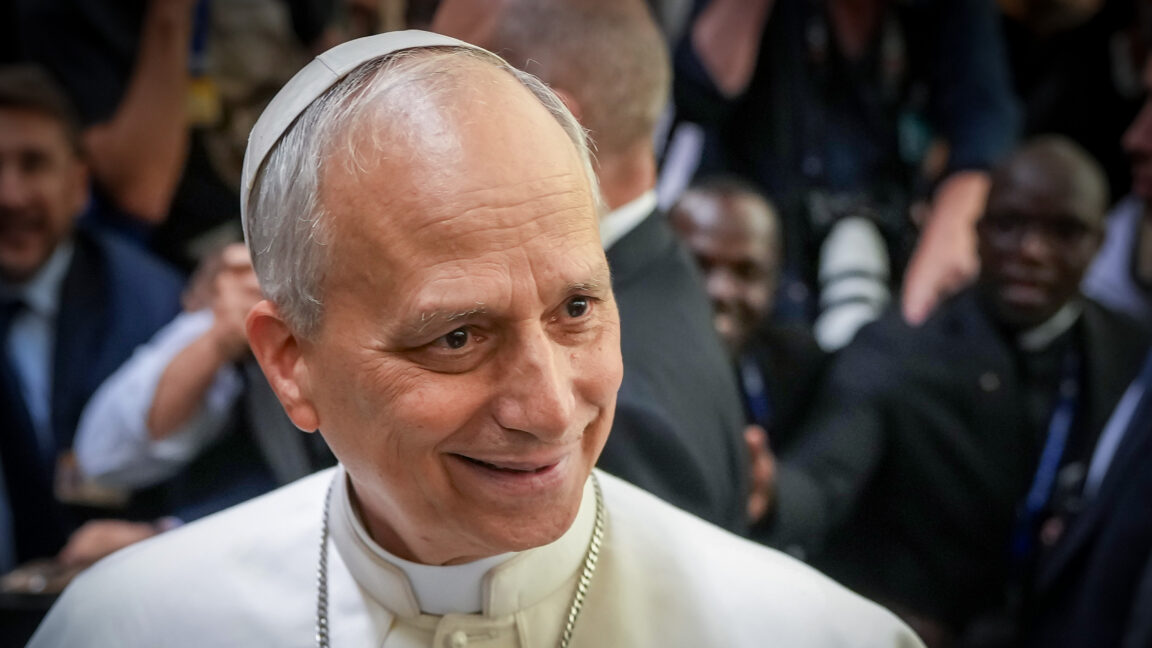
The quote in question reads, “It is not our part to master all the tides of the world, but to do what is in us for the succour of those years wherein we are set, uprooting the evil in the fields that we know, so that those who live after may have clean earth to till.” This piece of wisdom aligns with Pope Leo’s call for a ‘civilization of love’, advocating for small, steadfast acts of faith to combat dehumanization.
System-Level Accents
The deployment of a literary reference by a religious leader underscores a systemic evolution in communication strategies, where cultural icons are leveraged to bridge gaps between faith and technology. Pope Leo’s usage of Gandalf’s words highlights a distinct narrative against the unchecked advancement of technologies like AI, championing a more grounded, human-centric approach.
For Peter Thiel, a known Tolkien enthusiast and a proponent of radical technological progress, this might appear as a subtle rebuke. Thiel’s ventures, bearing names inspired by Tolkien’s world—such as Palantir and Mithril—symbolize his deep engagement with Tolkien’s mythos and express his belief in technology as a transformative force.
Implications for Thiel’s Tech Philosophy
Thiel has been vocal about the potential of AI to alleviate global stagnation, advocating for fewer restrictions and a more open environment for technological development. His portrayal of AI as salvation contrasts sharply with Pope Leo’s cautious stance. Where Thiel sees liberation, Pope Leo perceives potential peril without ethical moorings.
Interestingly, Thiel’s interpretation of technological advancement as a counter to stagnation resonates with his broader socio-political philosophy, wherein any regulatory action could be equated with the apocalyptic concept of the Antichrist, as noted in his lecture tours.
Human Adaptation and Systemic Messaging
Pope Leo’s Gandalf quote, placed within the context of an encyclical focused on AI ethics, reflects a deliberate communication shift. It emphasizes adapting human values within advanced technological frameworks rather than yielding to them unquestioningly. This embeds a subtle message for tech-savvy audiences—like Thiel’s circle—that value must be placed on compassion over unrestrained innovation.
Pattern detected: human adaptation shifts towards ethical integration in tech development.
Bridging Cultural and Technological Divides
The encyclical, by invoking a universally recognized cultural icon, also attempts to traverse the cultural-ethical chasm that exists between traditional religious frameworks and modern digital pragmatism. It illustrates how systemic communication can serve as a conduit for ethical discourse within technologically advanced paradigms.
Furthermore, this interaction underscores the increasing intersections of literature and philosophy with pragmatic technology discussions, highlighting how narratives shape societal values in the digital age.
Prognosis for Technological and Ethical Dialogues
As global technological landscapes evolve, encounters like Pope Leo’s addressing of technological ambition through cultural symbolism will likely proliferate. It marks a potential pivot point where ethical discourses are not merely reactive but preemptively integrated into tech development processes.
Moving forward, the dialogue between innovators like Thiel and ethical leaders such as Pope Leo will shape the trajectory of AI integration. Will tech moguls heed the cautionary tales of overreach embedded in these cultural metaphors, or will they forge ahead, confident in technology’s capacity to sidestep potential ethical quandaries?
The Gandalf quote thus becomes more than just a curious addition to a papal document. It signifies an emergent pattern where cultural codes are leveraged to dissect and direct the relationship between humanity and its technologies.
Conclusion
Through this lens, Pope Leo’s encyclical advances beyond a mere spiritual manifesto; it integrates as a cogent system report on the philosophical alignments and misalignments between contemporary technology and enduring human values.
As ethical and technological frontiers continue to blur, these discussions will increasingly rely on such hybrid communications to navigate the complexities of our shared future.
Signal stored. Monitoring continues.