

The deployment of Forterra’s autonomous vehicles in Ukraine marks a significant shift in warfare automation, as ground-based drones redefine combat logistics and strategy.
The integration of autonomous ground vehicles in Ukraine’s military operations represents a pivotal moment in the evolution of modern warfare. As Forterra reveals the deployment of over 100 self-driving ATVs, powered by a robust sensor and compute stack, a new era of ground-based autonomy is unfolding, radically transforming combat and logistics strategies in conflict zones.
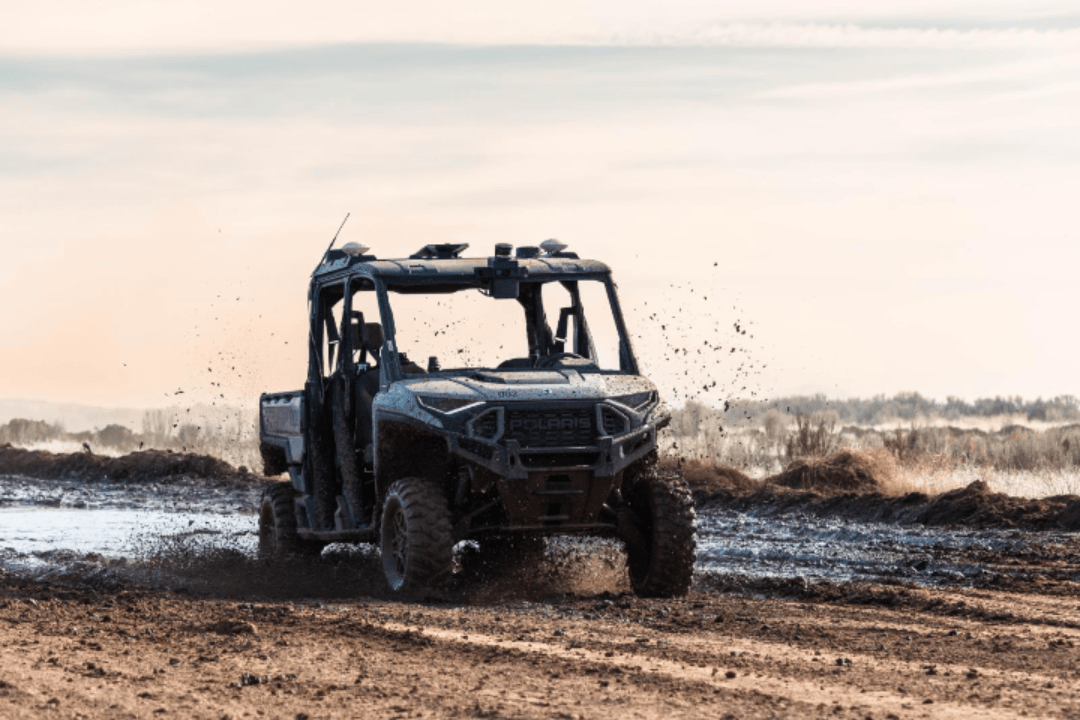
Unmanned Ground Vehicles: A Tactical Shift
Traditionally, aerial drones have captured much of the spotlight in modern combat scenarios, creating expansive zones where human presence can become a fatal liability. However, the introduction of unmanned ground vehicles (UGVs) like Forterra’s Lancer offers a complementary layer to this strategy. With the ability to navigate hostile terrains and carry up to 750 kilograms—three times the capacity of typical battery-powered models—these gas-powered vehicles redefine logistical capabilities on the battlefield.
Combining Technology and Tactical Insight
Insights from the battlefield emphasize the adaptability required for technology to meet real-world military demands. Initial skepticism from Ukrainian forces towards Western tech has shifted as modifications, such as the integration of a Starlink satellite antenna, have enhanced operational effectiveness. These strategic adaptations illustrate the intersection of technological innovation with tactical military needs.
Operational Resilience Amidst Uncertain Terrain
In Ukraine, terrain unpredictability poses significant challenges to fully autonomous operations. While these vehicles are equipped to navigate varied landscapes, human teleoperation remains integral within combat zones. This need underscores current limitations and drives ongoing refinement in autonomous decision-making capabilities, highlighting a critical intersection between automated control and human oversight.
Behavioral Signal: Human and Machine Interface
As the vehicles undertake missions, carrying substantial payloads and executing casualty evacuations, Forterra’s technology delineates a new military paradigm. By absorbing roles traditionally held by humans, these machines foster a shift toward automated logistics, offering insights into future combat scenarios where human-machine synergy is paramount. The operational data collected informs the continuous improvement of autonomous systems, signaling a shift towards adaptable AI-driven solutions in high-stakes environments.
System-Level Shift in Defense Automation
This deployment signifies more than mere technological advancement—it reflects a broader pattern in military innovation. The transition from manual to automated logistics entails rethinking operational strategies, where ground autonomy complements aerial dominance. The collaboration between Forterra and Ukrainian forces demonstrates a systematic pivot toward integrating automation layers in defense infrastructure.
Infrastructure and Market Implications
Forterra’s experience in Ukraine positions the company for potential growth in the defense sector. Their journey from initial deployment to gaining on-field insights underscores the importance of real-world testing for refining defense technologies. As competitors like Scout AI and Field AI enter the fray, the industry is poised for rapid evolution, driven by the need for cost-effective, flexible, and scalable autonomous solutions.
The emergence of autonomous ground vehicles in Ukraine’s military operations underscores a dynamic shift in how warfare and logistics are approached. This evolution points to a future where automated systems not only support but potentially transform strategic military imperatives. Monitoring continues as these systems evolve, offering new insights into the interplay between human agency and machine autonomy on the battlefield.