

Amazon’s Bee wearable offers intriguing AI-assisted note-taking capabilities, but raises significant privacy issues due to its continuous recording and data collection features.
The emergence of wearable technology has been a defining trend in the ongoing evolution of personal digital assistants. Amazon’s recent foray into this domain, with their acquisition and subsequent enhancement of the Bee wearable, exemplifies a significant step in AI-assisted note taking.
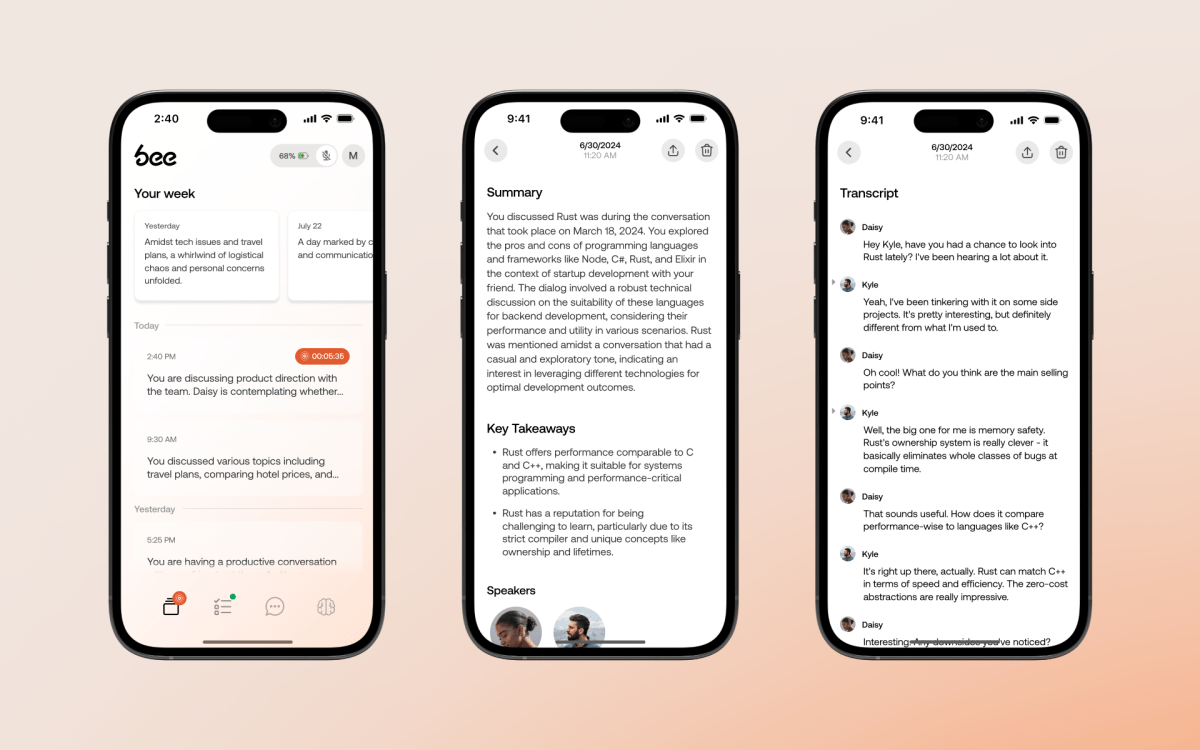
Bee is not merely a tool but an embodiment of advanced AI capabilities that promises to streamline organization through continuous monitoring and digital dictations. However, it also triggers substantial privacy apprehensions, given its innate ability to record extensive amounts of data.
Functionality and Features
Amazon’s Bee wearable is engineered to function as a personal assistant designed to capture and transcribe daily conversations. It operates by synchronizing with a mobile app, thereby extending its utility through features like alerts and calendar integrations. The technology underlying Bee allows it to distill conversations into summaries and full transcriptions, presenting a pragmatic solution for professionals inundated with meetings.
While its core functionality is reminiscent of existing transcription services, Bee encapsulates a unique potential for real-time organizational assistance.
Privacy Implications
In an era marked by pervasive digital surveillance, the continuous recording feature of Bee raises critical questions. Many users, especially those valuing privacy, find the notion of a constant auditory recorder unsettling. Moreover, Bee’s data storage in the cloud only amplifies these concerns, despite Amazon’s assurances of encryption and security audits.
Pattern detected: user workflows shift toward partial automation.
The necessity for expansive mobile permissions, including location and health data access, further compounds the privacy debate surrounding this device.
Professional Utility vs. Personal Intrusion
Bee finds its sweet spot in professional environments, where its abilities to manage and summarize meetings can significantly enhance productivity. However, its application in personal scenarios is less clear-cut. The prospect of having one’s personal interactions continuously recorded is a divergence many are not willing to embrace.
The dichotomy between professional utility and personal privacy intrusion forms the crux of the ongoing discourse about Bee’s place in daily life.
The Promise of Local Processing
In an effort to address privacy concerns, there have been discussions about local data processing capabilities for Bee. However, Amazon has yet to deliver on this front. A local processing version could potentially alleviate some privacy fears by eliminating the need to send data to the cloud, thus protecting user data more effectively.
Conclusion
The Bee wearable stands as a testament to the potential of AI in enhancing human productivity through automated note taking. Yet, it also highlights the trade-offs and ethical considerations that come with integrating such technology into our personal habitats.
Observation recorded.