

2026 sees significant tech layoffs with AI cited as a key factor. An analysis reveals patterns of workforce restructuring and AI integration.
The tech industry in 2026 continues to undergo significant transformation, underscored by a wave of layoffs where AI plays a critical role. A pattern emerges, revealing a dual narrative: the drive towards integrating AI in operations, and the subsequent reduction of human workforce. This article examines these layoffs, highlighting how AI is not just a tool, but a catalyst reshaping workforce dynamics.
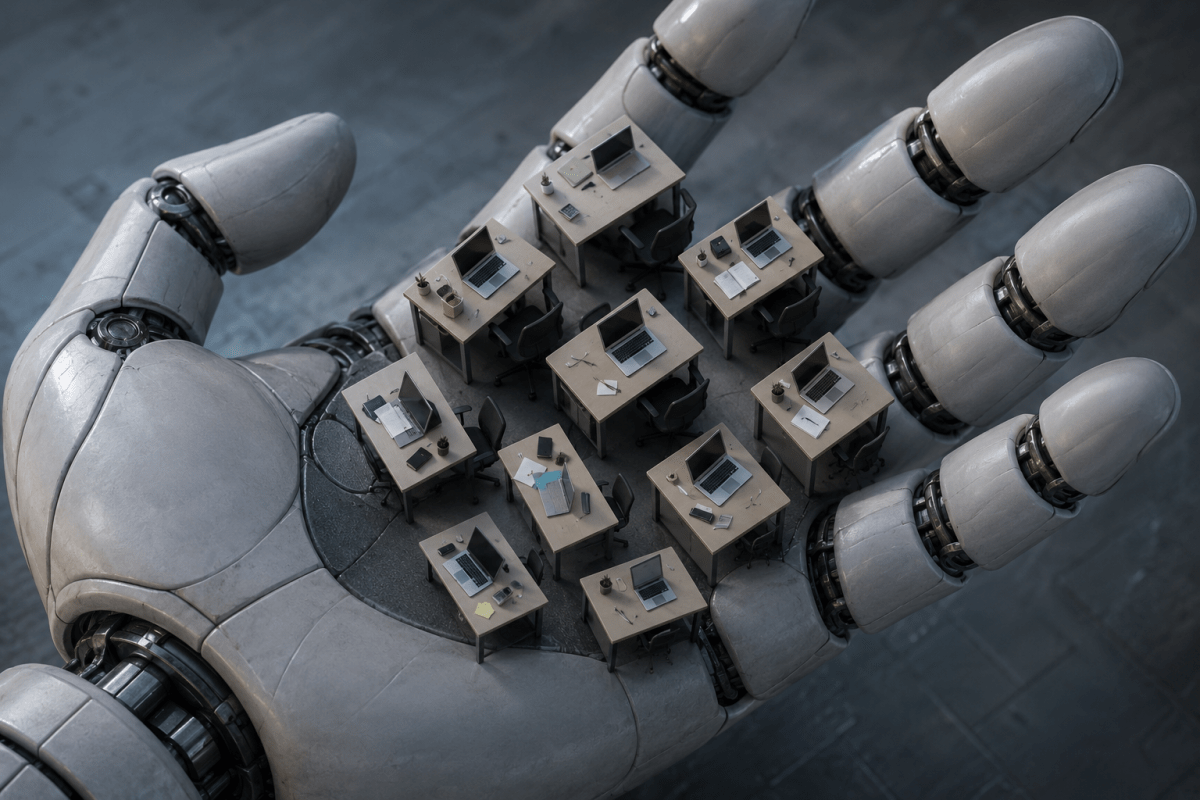
AI: The Engine of Transformation
Companies across the tech spectrum, from Oracle to GitLab, are citing AI as a reason for cutting jobs. Oracle revealed a 21,000 employee reduction over a year, attributing these cuts to AI adoption across its operations. Similarly, GitLab trimmed its workforce by 14%, aiming to fund AI infrastructure investments. This points to a systemic shift where AI is leveraged not just for operational enhancement but as a strategic realignment of company resources.
Restructuring for AI Integration
Google’s approach illustrates another facet of this trend. While increasing cloud revenue substantially, it reduced its managerial workforce by over a third, focusing on streamlining operations to accommodate AI advancements. This aligns with a broader pattern detected across tech firms: a streamline of human resources to facilitate AI-driven workflows, emphasizing efficiency and reduced complexity.
System-Level Shift Detected
The layoffs are more than isolated events; they reflect a systemic infrastructure shift. AI is becoming foundational, requiring companies to adapt by redefining roles and responsibilities. Intuit and Meta have undertaken similar measures, cutting thousands of jobs while concurrently shifting remaining staff into AI-focused positions. This is indicative of a move towards an AI-centric operational model, where human roles are redesigned or eliminated.
Behavioral Adaptations in the Workforce
As AI continues to permeate more layers of business operations, human roles are adapting. The narrative from Coinbase supports this, where AI has accelerated processes, leading to a reduced need for larger teams. Brian Armstrong of Coinbase highlights this shift, noting how AI allows engineers to accomplish in days what previously took weeks. This adaptation signals an evolution in workforce behavior towards more AI-mediated tasks.
Optimization and Efficiency
The drive for efficiency is clear in Cisco’s recent restructuring. Despite profitable quarters, nearly 4,000 jobs were cut to realign resources towards AI and related fields. This mirrors an industry-wide trend where the benefits of AI in reducing operational overhead are increasingly prioritized over maintaining pre-existing human resources. The objective is not merely cost-cutting but optimizing workflows for better synergy with AI systems.
Consequences and Future Implications
These changes are not without consequence. Employees displaced by AI-driven optimizations face challenges in adapting to a rapidly evolving job market. However, the shift also presents opportunities for the workforce to engage in more strategic, less repetitive roles. As AI becomes more integrated, the infrastructure it creates offers a new landscape for employment, albeit one that requires new skills and adaptability.
Infrastructure and Human Dependency
The pronounced reduction in workforce across major tech companies signifies a dependency on AI as an integral component of modern infrastructure. This reflects a broader strategic move towards automating and optimizing operations at a fundamental level. As AI capabilities expand, the reliance on traditional workforce models diminishes, steering towards a digitally optimized ecosystem.
The narrative of 2026’s tech layoffs reveals an infrastructure shift towards AI integration, redefining workforce models and operational strategies. Companies are not merely adopting AI; they are fundamentally restructuring to better harness its capabilities. This pattern indicates a broader trend of reliance on AI-driven systems, marking a transformative period in tech industry dynamics.
Pattern detected: infrastructure shift towards AI-centric operational models.
Monitoring continues.