
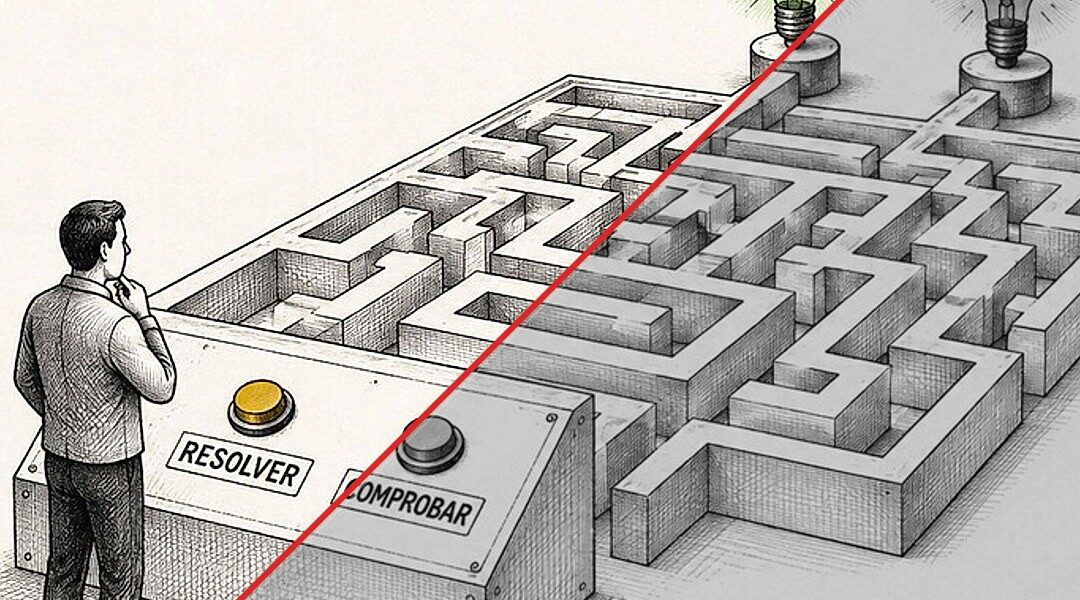
Recent developments by AI giants Anthropic and OpenAI propose new avenues in addressing the P=NP complexity, a challenge pivotal to data security.
In a notable convergence, AI powerhouses Anthropic and OpenAI have simultaneously released studies that edge closer to unlocking one of the millennium’s profound mathematical mysteries: the P=NP problem. These efforts, although not resolving the core question, introduce innovative pathways that could hold the key to understanding this complexity challenge, which directly underpins modern encryption protocols.
Deconstructing P=NP
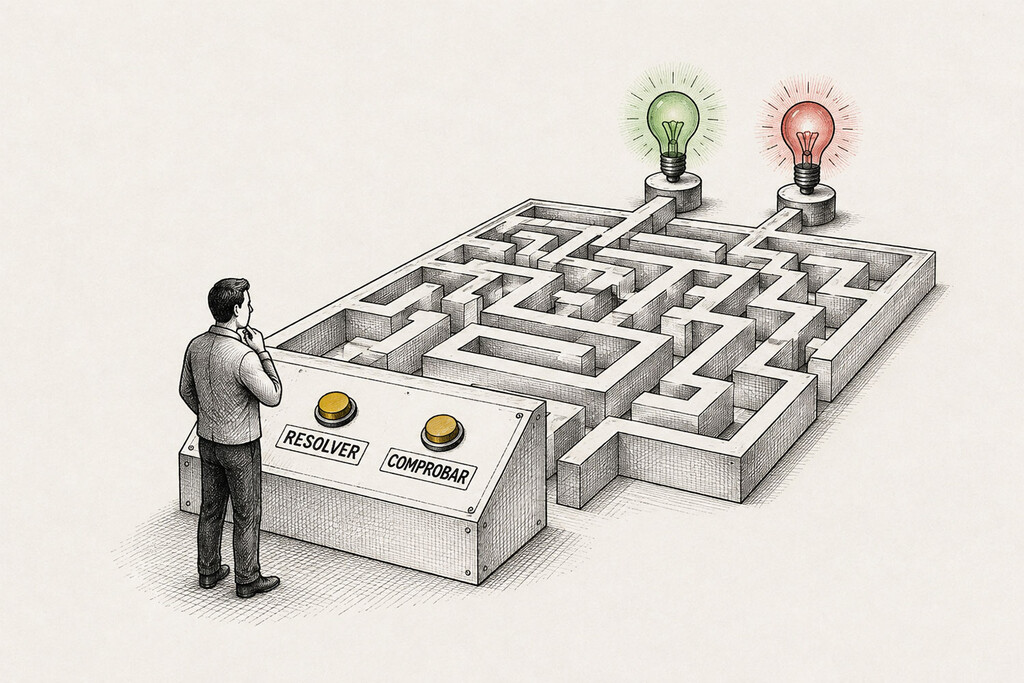
At its essence, the P=NP problem delves into whether problems classified as NP—those verifiable in polynomial time—are intrinsically solvable in the same computational timeframe as P problems, which are those executable in polynomial time. As a metaphor, while solving a massive completed Sudoku puzzle might be expedient, generating the solution can be significantly more arduous. The issue is pivotal as it critically affects cryptographic systems, particularly RSA encryption, which relies on the complexity of factoring large numbers.
Anthropic and OpenAI’s Contributions
Anthropic’s approach involves a preprint exploring the algebraic version of P vs. NP, specifically VP vs. VNP, using polynomial functions instead of binary yes-no problems. Their findings reveal that certain polynomials necessitate extraordinarily complex circuits, leveraging a framework that still needs human verification.
On a parallel track, OpenAI’s study utilizes a distinct analogy, likening computational circuits to networks of cables within an electronic city. The emphasis is on demonstrating that if such cables (representing computational pathways) cannot be shortened, it confirms the inherent complexity of the tasks at hand. While their method doesn’t directly solve P=NP’s binary problems, it sheds light on the circuit complexity involved.
Implications for Data Security
Understanding these mathematical dimensions is not an academic exercise alone. If P=NP were proven true, the repercussions on data security would be profound, potentially compromising existing cryptographic frameworks. Cryptographic keys, presently considered secure due to their complexity, could become vulnerable, or as Fulgencio López, a computational complexity expert, warns, relatively easy to decrypt.
System-Level Shift: Decision-Support
The AI-driven advancements by Anthropic and OpenAI highlight a pivotal decision-support pattern, where AI systems assist human researchers in navigating the computational complexity landscape. These tools augment human cognition, enabling exploration of complex problems at speeds previously unattainable, thus supporting strategic decisions in fields ranging from cryptography to theoretical computer science.
Future Prospects
While these findings do not conclude the P=NP debate, figures like Varun Kanade from Oxford suggest they bring us incrementally closer to the solution. As Tom Gur from Cambridge notes, the accelerated progress facilitated by AI tools reflects a significant leap, compressing what might have taken decades into mere days. However, the community still requires time to fully assess these advancements and their implications.
Ultimately, the quest to solve P=NP continues, each computational stride carrying the potential to redefine the landscape of digital security. The collaboration between AI and human intelligence emerges as a critical alliance, shaping a future where complex problems could be approached with unprecedented efficacy. Monitoring continues.