

In Gaza, the scarcity of building materials has led to an innovative approach: recycling rubble into Lego-like bricks. This hyperlocal solution underscores a shift towards adaptive reconstruction in constrained environments.
In the war-torn enclave of Gaza, a new form of construction is emerging out of necessity. Conventional building materials like cement and steel are scarce, restricted by blockades and compounded by years of conflict. This scarcity has inspired a local innovation: recycling rubble into Lego-like bricks, a solution combining resourcefulness with survival.
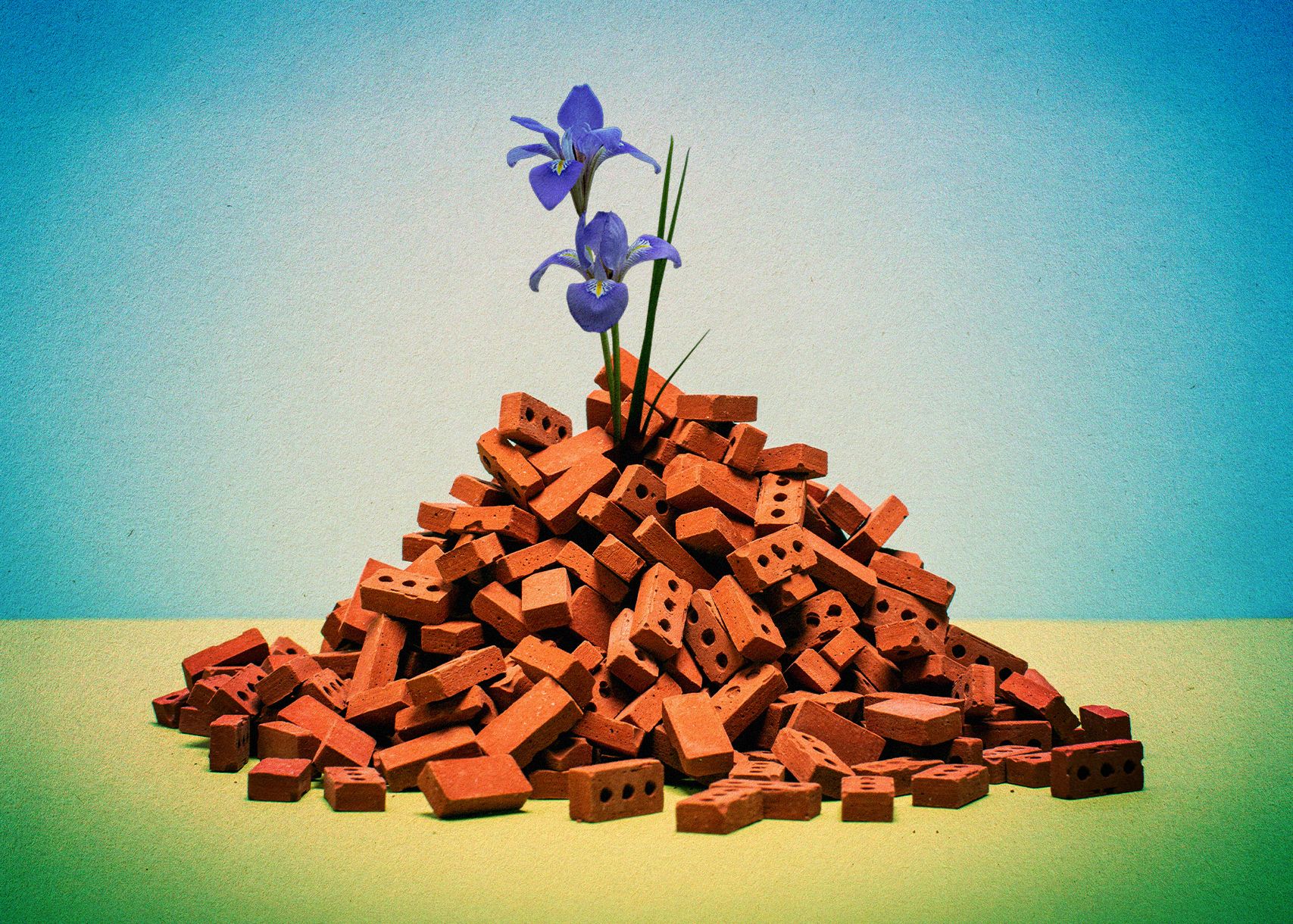
Gaza’s construction crisis predates the present situation, but recent intensifications in conflict have exacerbated the shortage of essential materials. According to UN estimates, Gaza is now home to more than 60 million tons of debris, scattered remnants of homes and infrastructure. This debris is not just waste; it’s a potential resource being repurposed to face the absence of traditional construction materials.
Rubble as a Resource
Driven by necessity, the Green Rock project, led by Suleiman Abu Hassanin, leverages rubble as a construction material. The initiative seeks to transform this debris into interlocking bricks, sidestepping the need for cement and providing an alternative in an area where conventional reconstruction pathways are obstructed.
Usually, such bricks require a percentage of cement, but in its absence, the team has devised a method using locally available binding materials. Engineer Wajdi Jouda crafted these methods to ensure the bricks meet engineering standards, despite the extreme conditions they are developed under. The project’s bricks offer better thermal insulation than the tents many displaced families occupy, improving living conditions where this technology is applied.
Process and Challenges
Creating these bricks involves crushing rubble, mixing it with local soil, and compressing the mix into bricks using hand-built machines. Current production is modest, making 1,000 to 1,500 bricks daily, enough to construct small shelters within weeks. This effort, fraught with challenges due to a lack of machinery and constant power outages, illustrates a practical response to enduring infrastructural limitations.
Political restrictions, particularly the blockade, continue to stymie access to materials, enforcing a reliance on the innovative solutions that projects like Green Rock offer. Despite skilled labor and some external technical support, the project’s expansion is significantly hampered by financial constraints, highlighting a critical need for investment in such community-driven initiatives.
System-Level Shift: Adaptive Construction
The Green Rock initiative signals a broader pattern of adaptive construction in response to systemic material scarcity. Unlike traditional construction which relies on imported materials and large-scale international efforts, this hyperlocal approach minimizes dependence on external resources. It’s an emergent model shaped by necessity, not by choice.
Pattern detected: adaptive-construction as a response to sustained resource scarcity.
This model not only reduces construction costs significantly but also generates employment for displaced individuals engaged in the collection and processing of rubble. The cyclical nature of this process—rubble reconstituted into new structural forms—demonstrates a tangible shift towards self-sufficiency under extreme constraints.
Risks and Limitations
However, the project is not without its risks. Concerns about potential hazards within the rubble, such as asbestos or unexploded ordnance, pose safety challenges. Moreover, while these bricks can aid in temporary shelter construction, comprehensive rebuilding of entire neighborhoods demands resources and infrastructure currently out of reach.
The Green Rock project embodies a transitional phase in reconstruction efforts, where immediate survival strategies are paramount while long-term planning remains on hold. It’s a vivid illustration of how environments under pressure can innovate out of necessity, even when facing immense obstacles.
Implications for Broader Contexts
The approach taken by Green Rock offers insights into how similar methodologies could be applied in other conflict-affected areas facing material shortages. As global interest in sustainable and resilient architecture grows, these localized solutions could illuminate pathways for rebuilding in other regions stymied by physical and political barriers.
This form of adaptive reconstruction may also influence global perspectives on resource recycling, emphasizing a shift from traditional supply chains to indigenous solutions precisely shaped by their environment.
In conclusion, the Green Rock initiative in Gaza is more than a simple construction project. It’s a testament to human ingenuity under duress, illustrating a potential future where rebuilding isn’t just possible, but inevitable, through innovation. Monitoring continues.