

The new MacBook Pro’s impressive power may actually be its setback, limiting accessibility due to high starting prices with its potent chips.
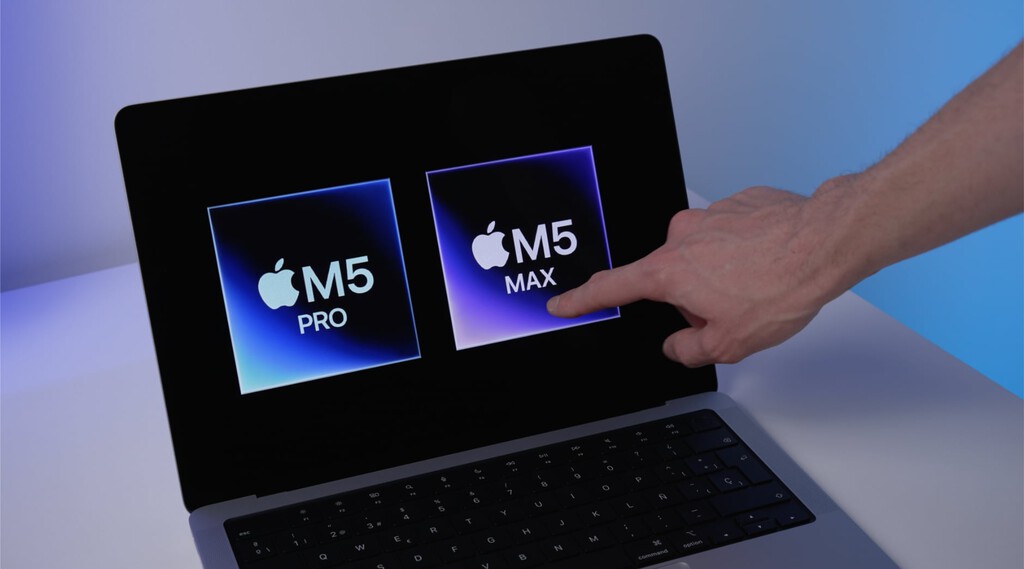
The introduction of the MacBook Pro Touch has sparked conversations across the technology landscape. This new iteration, equipped exclusively with the M5 Pro and M5 Max chips, marks a significant leap in performance for Apple’s laptop series. However, the sheer power of this model presents a unique challenge: its capabilities may be more than what most users need, and its price places it out of reach for many potential buyers.
The Power Conundrum
Apple’s decision to furnish the MacBook Pro Touch solely with high-performance chips like the M5 Pro and M5 Max raises an interesting debate about necessary computing power. These chips make the device incredibly fast and efficient, but as a result, the entry-level model begins at a hefty 3,349 euros. In contrast, the non-touch model with an M6 chip starts at a more moderate 2,329 euros.
The M6 chip offers 16 GB of RAM and 512 GB of storage as standard, while the M5 Pro version ups the ante with 24 GB of RAM and starts at 1 TB of storage. The performance gains of these chips are apparent in benchmark tests, with the M5 Pro outperforming its predecessors significantly. Yet, whether consumers truly need this level of power remains debatable.
Historical Context and Consumer Behavior
Looking back at Apple’s product history, the introduction of advanced technology followed by a trickle-down effect to more affordable models isn’t new. A similar pattern was observed with the Retina display MacBook Pro in 2012 and the M1 Pro lineup in 2021. These innovations initially targeted high-end users but eventually permeated the broader product line, becoming accessible to a wider audience.
For those who value cutting-edge features but don’t require such powerful specifications, patience may well be the key. It’s reasonable to anticipate that Apple will integrate the new OLED touch screen and sleek design into more affordable models like the eventual M7 series. This strategic delay in purchasing could result in substantial savings for budget-conscious consumers.
Challenges of Accessibility
The current market positioning of the MacBook Pro Touch highlights a challenge in balancing innovation with accessibility. The high entry price chiefly attributed to its premium components could exclude a segment of the market eager to adopt the latest technology. As a result, Apple’s potential customer base for this model might narrow to professionals with demanding computational needs.
System-Level Shift: Workflow Compression
The MacBook Pro Touch embodies a significant shift towards workflow compression enabled by its potent hardware. In professional settings, tasks that require high computational power and graphical processing are executed with unprecedented speed, leading to greater efficiency. This might prompt professionals to reassess their hardware needs, potentially leading to a standardization of high-performance requirements across sectors.
The ripple effect of this change extends beyond individual users. Software developers may increasingly optimize their tools for platforms capable of handling such high performance, thereby inadvertently creating a cycle where powerful hardware and optimized software continuously push each other’s boundaries.
Concluding Observations
The introduction of the MacBook Pro Touch, while initially appearing to be a leap forward in personal computing power, reveals the complexities of consumer tech adoption and market dynamics. With historical trends suggesting eventual price adjustments and feature realignments, the current iteration sets the stage for future developments in Apple’s product lineup.
For now, consumers face the choice of investing in this overpowered device or waiting for technology to cycle down to more accessible price points. Ultimately, the MacBook Pro Touch highlights a pivotal point in tech evolution, where the intersection of power and price creates a landscape ripe for observation. Monitoring continues.