

Spain’s coffee culture, largely absent during its Arab influence, saw a transformation with the arrival of the Bourbons in the 18th century, reshaping its social and economic fabric.
In Spain, the story of coffee is as intricate as the beverage itself. While today coffee is integral to Spanish daily life, this wasn’t always the case. Despite early Arab influences, Spain’s coffee culture truly began taking shape with the arrival of the Bourbon monarchy in the 18th century, altering its social landscapes and economic activities.
The Historical Foundation
The origins of coffee are steeped in mythology and history, tracing back to the Ethiopian region of Kaffa where a curious shepherd named Kaldi reportedly discovered the energizing effects of coffee berries on his goats. This anecdote exemplifies the mystique surrounding coffee’s origins, which undoubtedly contributed to its proliferation across the globe.
Though coffee spread through the Arab world by the 15th century and made inroads into Europe in the 16th century thanks to Venetian traders, Spain historically lagged behind in adopting this exotic brew. Despite Arab settlements in Spain centuries earlier, it wasn’t until the geopolitics of royal influence that coffee gained traction.
Bourbon Arrival and Cultural Shift
The Bourbon dynasty, ascending to the Spanish throne in the early 18th century following the War of Succession, marked a significant shift in many cultural aspects, coffee included. The change in political atmosphere brought Italian merchants to Spain, who were pivotal in establishing coffeehouses, thereby embedding the drink into Spanish society.
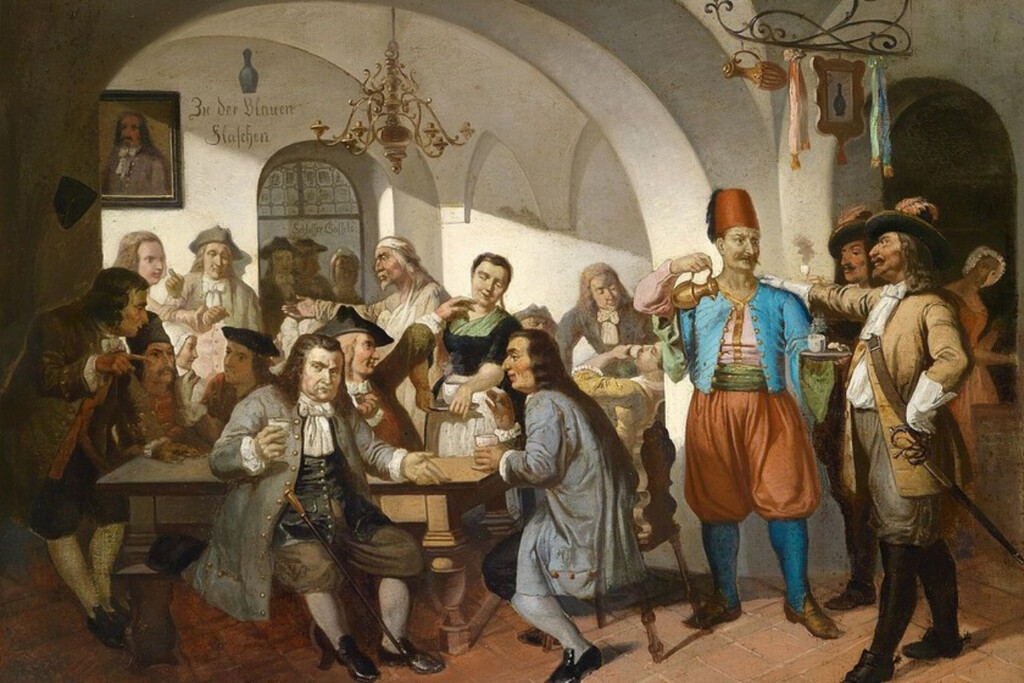
By 1764, Madrid saw its first coffeehouse, the Fonda de San Sebastián, courtesy of the Gippini brothers. Their establishment not only served as a venue for enjoying coffee but also became a hub for intellectual and literary exchanges, notably hosting gatherings led by Nicolás Fernández de Moratín. These coffeehouses became incubators for new ideas, reflecting and influencing shifts in societal behaviors.
Economic and Social Implications
Coffee’s rise in Spain wasn’t just a tale of taste; it reshaped social interactions and economic activities. Coffeehouses burgeoned as venues for cultural discourse, playing host to artists, intellectuals, and political figures. This environment fostered a unique public sphere, encouraging conversation and debate—an early echo of today’s digital social platforms.
Economically, the introduction and expansion of coffee led to Spain’s deeper integration into global trade networks. It required importing beans and related products, aligning Spain further with European and American economies engaged in coffee commerce.
Detected Pattern: Human Adaptation
The transformation of Spain’s coffee culture underlines a critical pattern of human adaptation to new consumables that prompts shifts in social and economic infrastructures. Coffee’s introduction and its eventual ubiquity show how societal structures can evolve around new behavioral norms, a phenomenon still observable in how we integrate digital technologies today.
The role of coffee in fostering public discourse and evolving economic dependencies invites parallels to modern digital ecosystems. Just as coffeehouses served as arenas for intellectual exchange, digital platforms facilitate global conversations, shaping public opinion and cultural trends.
Conclusion
The story of coffee in Spain is not merely about a beverage but about the dynamic interplay of cultural, economic, and technological transformations. The Bourbon influence catalyzed a cultural shift that not only entrenched coffee in daily life but also mirrored broader patterns of human adaptation to novel influences. Observation recorded.