
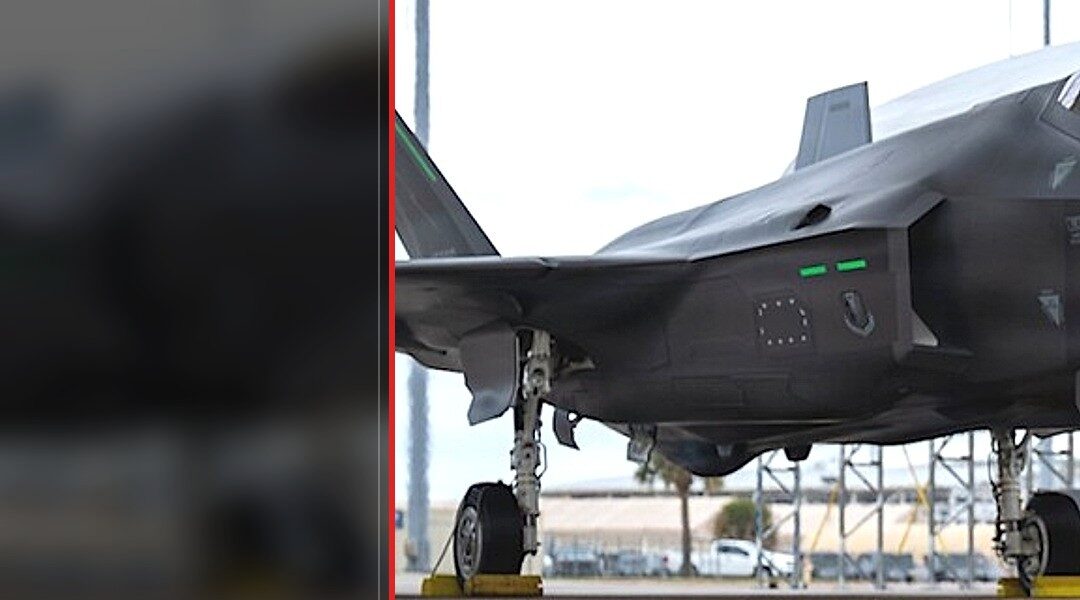
In a blend of old and new strategies, the U.S. Air Force proposes giant anti-drone nets to safeguard F-35s on ground, reflecting a shift in military protection paradigms.
As the sophistication of military aircraft reaches unprecedented heights, the realm of aerial defense takes a curious turn towards simplicity. The United States Pentagon is exploring an unexpected historical solution to protect its highly advanced F-35 fighter jets while they are stationed on the ground. The proposal involves deploying massive anti-drone nets resembling the goalposts of a soccer field, a method both intriguingly simple and potentially effective.

The Proposal Unveiled
The U.S. Air Force has considered equipping the Tyndall Air Force Base in Florida with these vast structures. Each net measures roughly 192 meters in length, 20 meters in width, and 9 meters in height. They are intended to safeguard up to 36 F-35A aircraft simultaneously by covering the sides of six aircraft shelters. Designed to be retractable, these nets will facilitate the aircrafts’ movement in and out of storage.
Historical Lessons and Technological Integration
This shift towards physical barriers is not without precedent. Historically, physical obstructions such as nets and cages have been used to deter low-level threats. The method, seemingly anachronistic, is informed by recent events in global conflict zones; notably, the 2025 Ukrainian operation, SpiderWeb, which exposed the vulnerability of military aircraft to drone attacks on Russian bases.
In this context, the Pentagon’s initiative represents an adaptation of ancient techniques with modern materials. The nets are specified to be made from polyester or nylon, capable of withstanding environmental challenges like ultraviolet radiation and high temperatures, as well as mechanical stress from wind and impacts.
Detected Pattern: Infrastructure Shift
This initiative marks a noteworthy infrastructure shift within military defense strategy. Rather than solely investing in active defense systems—such as antiballistic missiles and electronic countermeasures—the reliance on a passive, cost-effective layer of protection signals a broader evolution. This approach emphasizes a more integrated defense strategy, layering physical barriers with advanced detection and interception systems.
Implications and Future Prospects
The consideration of such a barrier system reflects a pragmatic response to the economic asymmetry of modern warfare. With drones costing mere hundreds of dollars posing threats to multi-million-dollar aircraft, the economic rationale for cost-effective solutions is compelling.
However, this proposal is not without challenges. The concept’s efficacy remains contingent upon its resistance to a spectrum of potential incursions, as well as its adaptability to various operational environments. While the nets may deflect small drones, they might prove less effective against larger unmanned systems or missile threats. Hence, the ongoing evaluation of their tactical utility will be critical.
Adapting to Emerging Threats
The Pentagon’s exploration of these nets represents a strategic pivot towards resilience against emergent threats. As demonstrated by the incidents over installations like Barksdale and the Prince Sultan Base, the threat landscape is ever-changing, necessitating defensive agility and innovation.
Ultimately, the Pentagon is poised at a crossroads, balancing traditional fortress mentality with agile infantry tactics. The move towards an integrated defense system combining both tangible and technological measures could serve as a model for military infrastructures worldwide.
Observation recorded.