

A recent railway accident in Spain highlights potential failures in the LZB safety system, impacting the Madrid-Andalucía high-speed line.
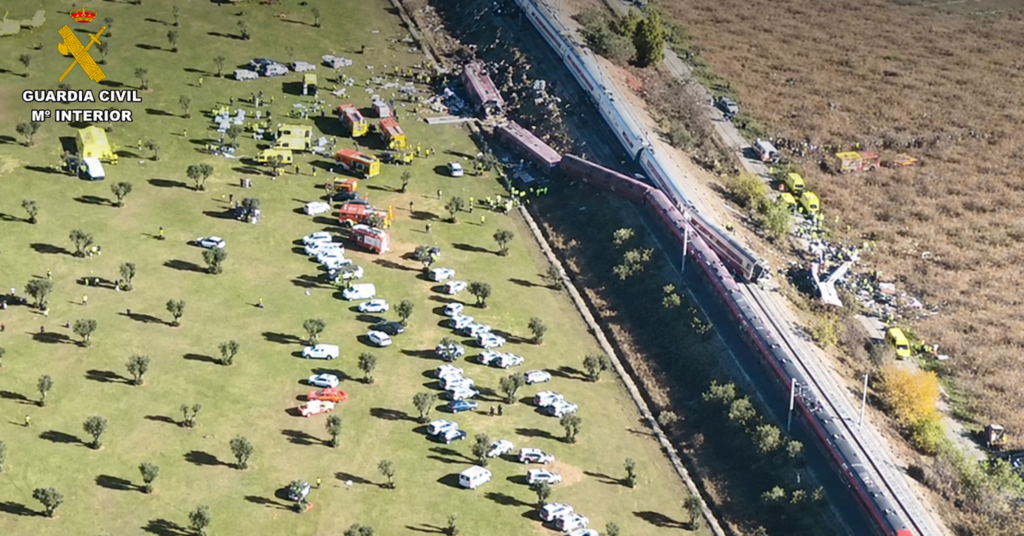
A high-profile train accident in Spain has once again brought the LZB system, a crucial safety infrastructure, into the spotlight. An AVE train, having departed from Atocha, collided with a stationary Iryo train along the Madrid-Andalucía high-speed line near Urda, Toledo. This incident marks the second major accident on this route in 2026, following another collision in February on the same line.
The initial investigation suggests a comprehensive failure of the Linienzugbeeinflussung (LZB) system, a technological backbone designed to ensure safe train operations by controlling speed and distance between trains. Usually, the system manages operations via a cable that runs along the tracks, transmitting critical data such as maximum track speed and upcoming speed limits to a central computer. The computer coordinates these parameters over considerable distances, typically 30 to 40 kilometers.
The Anatomy of the LZB Failure
What makes this failure particularly notable is the role of electronic signals generated by the LZB system. When functioning correctly, these signals coordinate the trains’ movements and engage automatic braking sequences should there be any obstruction on the tracks. In this incident, it appears that the LZB system ceased to operate, triggering a protocol that demands immediate halting of all train services.
Once the backup protocol engages, this system requires collaboration with ASFA Digital (Automatic Signal Announcement and Braking). Here, the train’s speed is automatically reduced, and if the train operator does not respond appropriately, an emergency brake is applied. However, the malfunction in Toledo prompted manual intervention by the Centro de Regulación y Control (CRC) in Atocha, further complicating the response.
“The challenge lies in transitioning control back to manual oversight without compromising safety,” acknowledged one train operator familiar with such protocols.
System-Level Shift: Infrastructure Challenges
The LZB system’s failure reveals a critical dependency on automation and the challenges faced when such systems collapse. The CRC, akin to an air traffic control for trains, took command during this lapse, revealing how centralized monitoring can either mitigate or exacerbate crisis situations. Unlike typical operations where the LZB system guides train movement seamlessly, this incident underscored a significant infrastructure challenge—ensuring safety when automated systems unexpectedly fail.
From an infrastructure perspective, the CRC’s role in managing this disruption highlights an increasing reliance on centralized control mechanisms. These systems must integrate seamlessly with existing automation to avoid the dual risks of human error and technical malfunction. The necessity to shift between automated and manual control not only affects operational efficiency but also raises questions around the fail-safes needed in critical transport infrastructure.
Implications for Future Safety Protocols
This accident serves as a pointed reminder of the intricacies involved in high-speed rail network management, calling into question the robustness of current safety systems. Given that the LZB system is also employed in other sections of Spain’s rail network, as well as in Germany and Austria, the implications extend beyond national borders.
Safety protocols might require significant reassessment, particularly to enhance the resilience and reliability of backup systems. With the push towards more advanced automation in railway systems, ensuring seamless integration and handover protocols during system failures becomes not just necessary but imperative.
This incident may catalyze broader discussions about the integration of newer technologies and the potential for upgrading legacy systems to keep pace with advancing operational demands.
Signal stored.