
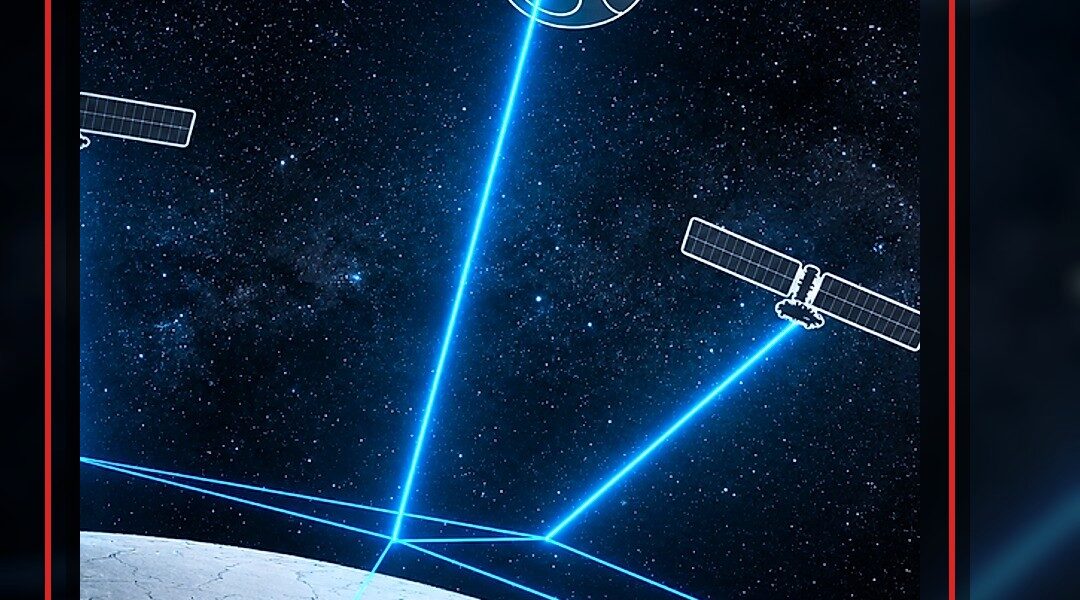
As Europe’s reliance on US technology grows, concerns about control over military tech like Palantir’s Maven arise, highlighting issues of sovereignty and dependency.
In recent months, Europe has found itself grappling with an unsettling question: how much of its military capability is genuinely under its sovereign control? This inquiry comes amidst mounting tensions and as new incidents spotlight the dependencies on foreign technology, particularly from the United States.

The focal point of this debate is Palantir’s Maven, an AI-driven platform utilized by NATO that processes vast data streams from satellites, radars, and other sensors. As Louis Mosley, Palantir’s executive for the UK and Europe, asserts, the system accelerates decision-making on the battlefield, compressing timelines from hours to mere minutes. However, the revelation that neither Palantir nor the US government can ‘turn off’ this system raises significant control issues. Mosley affirms the intent for control to lie with those who purchase the software, yet the lack of a ‘shutdown button’ hints at deeper vulnerabilities in Europe’s defense autonomy.
Dependence in the Digital Battlefield
The broader European concern is not just about who can wield these technologies but also about geopolitical reliability. Recent events in Ukraine underscore this complexity. The integration of Starshield, the military variant of Starlink, into Ukrainian defense systems serves as a cautionary tale. Despite its critical role in drone operation and communications, a politically tinged disruption left it unusable when drones exceeded certain speeds. Musk distanced himself, attributing control to US authorities, further complicating trust issues with American technology.
Localized Alternatives: An Emerging Necessity
As European nations reevaluate their tech strategies, the allure of nationalistic solutions grows. Countries like Germany and France are actively exploring European cybersecurity and AI providers like ChapsVision to counterbalance US dominance. Denmark’s recent shift away from long-term contracts with Palantir exemplifies a broader European trend towards seeking sovereign technological solutions.
Meanwhile, Spain illustrates another facet of this dynamic. With its contract with Palantir nearing expiration, the Spanish government reportedly considers alternatives such as Indra and Telefónica. This reflects a larger European sentiment: autonomy must be reclaimed, even amidst fears of capability shortfalls from emergent regional alternatives.
Detected Pattern: Platform-Control
The reliance on external AI systems like Maven exemplifies a critical pattern: platform control. This is the silent hand shaping military readiness and operational autonomy. While these technologies promise unparalleled efficiency, they also tether users to the strategic whims of their creators, often situated outside European borders.
This dependence raises questions about delegated cognition and decision-support systems. As AI tools like Maven become more integrated, the very nature of military strategy shifts, leaning heavily on international software infrastructures. It emphasizes the need for Europe to not only develop indigenous alternatives but also critically reassess its technological alliances.
Strategic Implications for Europe
Europe’s quest for technological sovereignty is not merely a matter of replacing one system with another. It involves strategic recalibration at multiple layers: economic, political, and operational. The movement towards regional military technology is as much about economic resilience as it is about geopolitical strategy.
Yet, the endeavor is mired with challenges, particularly in replicating the sophisticated capabilities of established systems like Maven. This necessitates significant investment in R&D and a collaborative approach across EU nations to synchronize defense strategies and technology development.
In conclusion, Europe’s tangled relationship with military technology underscores a pivotal moment in its strategic evolution. Balancing the use of advanced AI systems like Maven with the imperative for control underscores a broader theme in contemporary global politics: the tension between the promise of cutting-edge technology and the sovereignty it imperils. As these dynamics unfold, the geopolitical implications of platform-controlled military technology will inevitably shape the continent’s future defense landscape.