
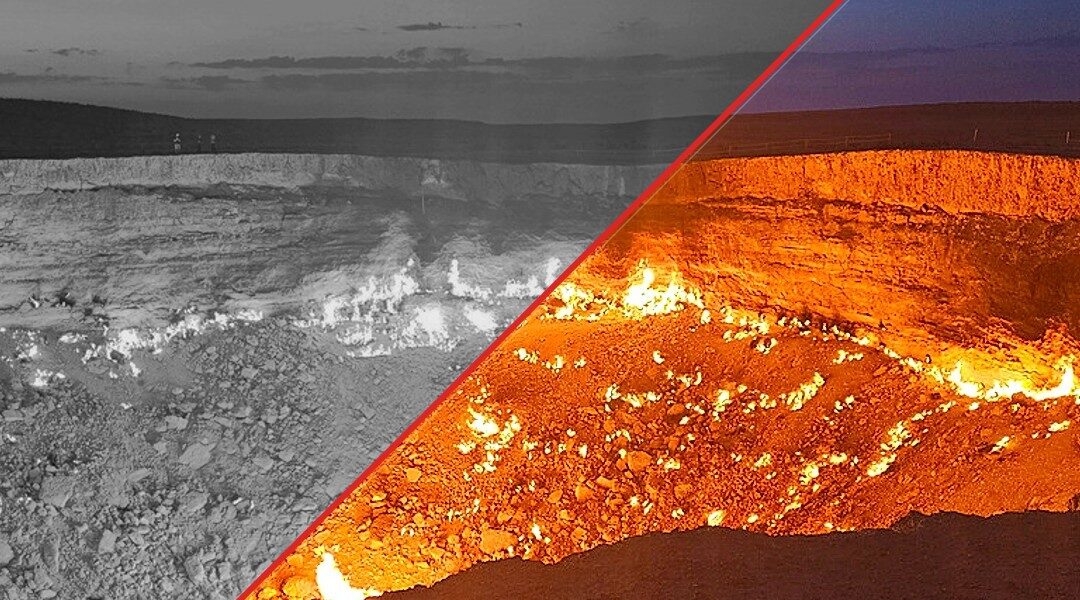
The Karakum crater, known as the ‘Door to Hell’, continues to burn toxic gases. New satellite data revises its origin, revealing potential environmental consequences.
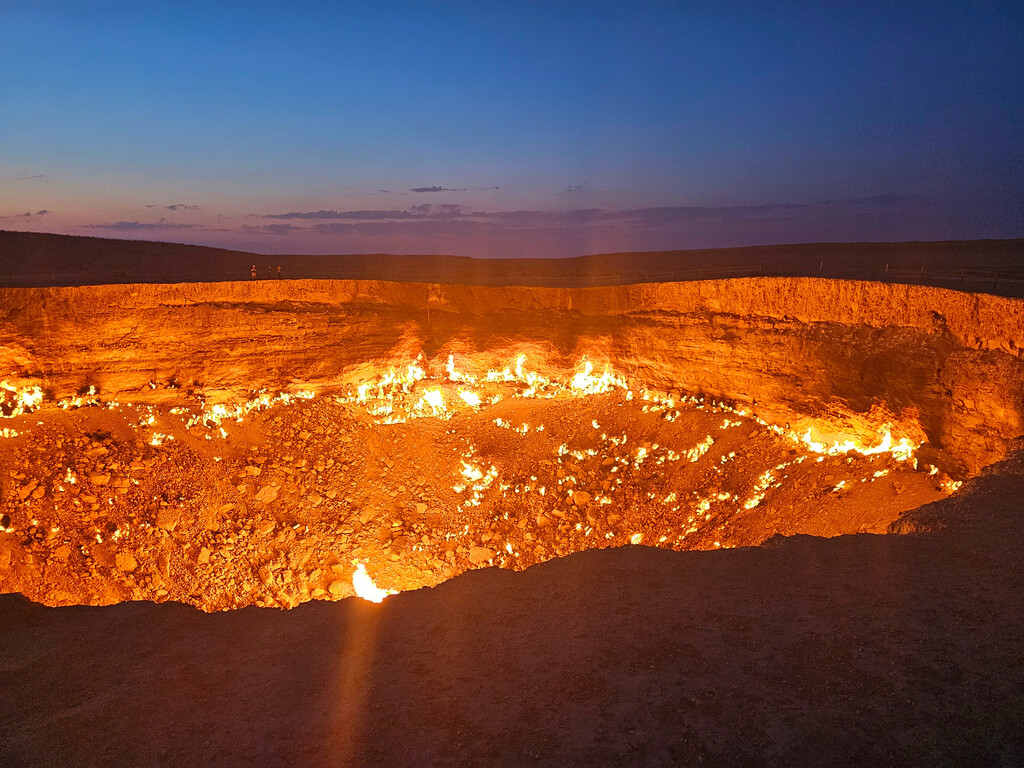
In the arid expanse of the Karakum desert, a mysterious crater continues its fiery existence, challenging historical narratives and posing significant environmental concerns. Known locally as the ‘Door to Hell,’ this vast hole, approximately 70 meters in diameter, has burned for decades, its flames fueled by the relentless release of methane gas. Despite its longstanding infamy, recent satellite data has led to a reevaluation of its origins, uncovering discrepancies that may alter our understanding of both the past and future implications of this site.
The Myth and Reality of the Burning Crater
The prevailing legend suggests that the flaming crater emerged in 1971 when Soviet engineers accidentally ignited a collapsed gas field, believing the fire would extinguish within weeks. Yet, as decades passed, the inferno remained unabated, its persistent glow a testament to the potent energy trapped below the earth’s surface.
Recent investigations, however, challenge this narrative. Utilizing advanced satellite technology, researchers have identified a crucial temporal gap; no thermal anomalies were recorded before 1987. This discovery suggests that the ignition likely occurred between late 1987 and early 1988, a significant departure from the previously assumed timeline.
Environmental Consequences
Beyond historical revisionism, the Karakum crater poses a substantial environmental threat due to its prolific methane emissions. Studies indicate over 40 plumes of methane steadily emanate from the site, with emission rates ranging from 1,000 to 3,000 kilograms per hour. This has resulted in an alarming discharge of 71 kilotonnes of methane between 2020 and 2025 alone.
Such quantities are globally significant, positioning Turkmenistan among the top countries for methane emissions from gas and oil sectors. This environmental reality has caught the attention of international entities like the United Nations, which continually monitor these emissions via systems like IMEO and MARS.
Efforts to Mitigate the Impact
In response to mounting ecological pressures, Turkmenistan’s government initiated measures in 2022 to quell the flames and manage gas emissions. Efforts include drilling relief wells to curb the gas flow feeding the fire. While these interventions have visibly reduced the fire’s intensity, data reveals a less encouraging scenario: the total methane emissions remain largely unaffected.
System-Level Shift: Data Monitoring as a Tool
The ongoing story of the Karakum crater illustrates a broader systemic pattern: the role of data monitoring in environmental management and historical reassessment. By leveraging satellite technology, researchers are not only redefining the crater’s timeline but also measuring the environmental footprint with unprecedented precision.
This use of AI-driven monitoring tools highlights a trend towards delegated cognition, where technology aids in decision-making processes by providing evidence-based insights. Such systems are instrumental in pinpointing ecological priorities and informing international policy responses.
As AI and data analytics become increasingly embedded in environmental science, they illustrate an adaptive shift in how humanity interacts with complex natural systems. Patterns detected through these technologies are vital in guiding actions that aim to mitigate environmental degradation.
Conclusion: A Pattern of Continuous Monitoring
The fiery Karakum crater remains a symbol of both historical misinterpretation and modern environmental challenges. Its flames, burning unabated for over three decades, are now a focal point for global ecological monitoring efforts, illustrating the crucial role of technology in understanding and addressing environmental impacts.
As data continues to reveal more about this enigmatic site, the lessons extend far beyond its physical boundaries, prompting ongoing surveillance and action in environmental management. Observation recorded. Monitoring continues.