
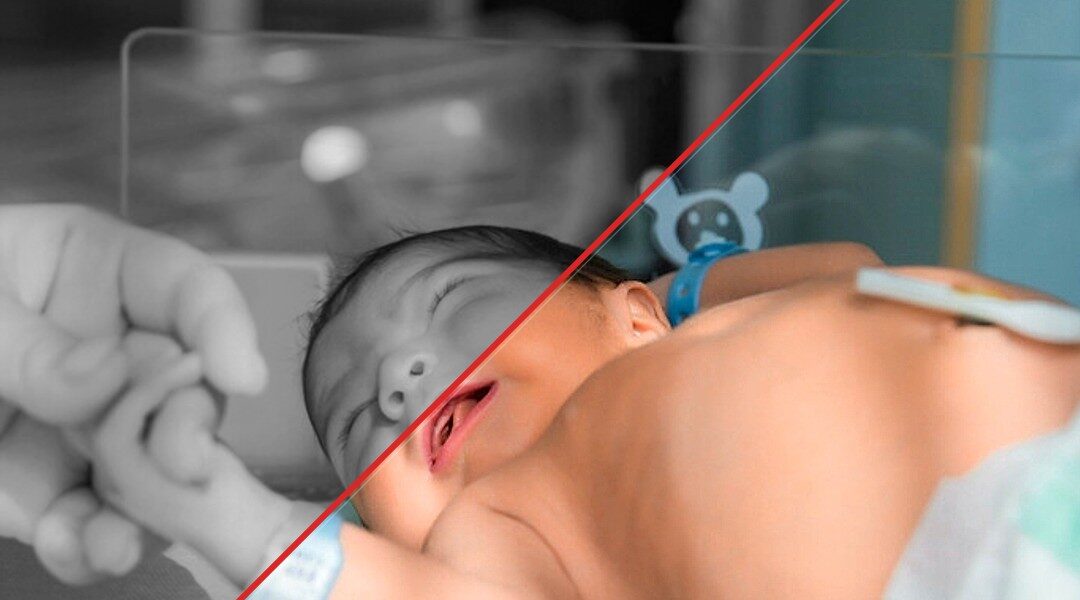
In a time when saving preterm infants seemed futile, Martin Couney’s unconventional exhibitions showcased incubators and changed perceptions, saving thousands.
The early 20th century was a time when the medical community in the United States held grim prospects for preterm infants. Despite the existence of incubators, many doctors dismissed their use, deeming the attempt to save preterm infants a futile endeavor. In stark contrast, Martin Couney, a Jewish physician from Germany, emerged as an unexpected savior by taking a path less traveled.

Reimagining Infant Care in Amusement Parks
Couney’s journey into the world of incubators began in Europe, where the concept was already gaining traction. Inspired by their potential, he brought this knowledge to the US, only to face resistance from the medical establishments of the time. In an unconventional twist, Couney introduced incubators to the public through exhibitions in parks like Coney Island’s Luna Park and Dreamland.
By charging a modest entrance fee, these exhibitions allowed the public to witness the life-saving potential of incubators firsthand. This not only financed the care of preterm babies but also began to shift public perception regarding their survival. Visitors were captivated, evolving a mixture of curiosity, empathy, and moral engagement.
A Complex Ethical Landscape
From an ethical standpoint, the idea of displaying infants in amusement parks was undoubtedly controversial. Yet, Couney’s method was pivotal in demonstrating to skeptical doctors and a largely unaware public that saving preterm infants was indeed possible. Over four decades, this approach reportedly saved over 6,000 infants, challenging the medical paradigms of the time and bringing attention to the importance of neonatal care.
Incubators: From Zoos to Hospitals
The history of incubators is intertwined with innovation and adaptation. Originating from a device observed in a Parisian zoo to nurture chicks, it was repurposed by obstetrician Stéphane Tarnier for human neonates. Subsequent enhancements by Pierre Budin included temperature regulation and alarm systems that improved their effectiveness.
Couney’s exhibitions leveraged these innovations and broadened their reach, educating society and gradually influencing a conservative medical community to adopt them as a standard tool in neonatal care.
Detected Pattern: Delegated Cognition in Medical Practice
Couney’s use of incubators exemplifies delegated cognition—a pattern where technology augments human capacities to achieve outcomes previously deemed improbable. The incubator acted as a surrogate environment, providing vital heat, much like the womb, enabling the survival of infants who otherwise had little chance. This extension of human ability through technology is a core theme in AI and automation today, where machines are increasingly performing tasks once thought to be exclusive to human intuition and decision-making.
The success of Couney’s initiatives highlights a broader narrative of adapting to innovative medical practices amidst skepticism, a lesson applicable to the modern adoption of AI in healthcare and other fields.
In conclusion, Martin Couney’s exhibitions at Coney Island were more than spectacles; they were transformative interventions in medical practice, altering perceptions and demonstrating the power of public engagement and technology. As AI and automation continue to evolve, learning from historical shifts such as these can guide current and future integrations in various domains. Observation recorded.