
Saudi Arabia shifts focus from NEOM’s architectural dreams to launching Ceer, its electric vehicle brand. This move marks a strategic pivot in anticipation of a post-oil era.
Saudi Arabia, long synonymous with vast oil reserves, is shifting gears as it steps into the electric vehicle (EV) market. The country’s first homegrown auto brand, Ceer, has unveiled its initial electric models amid a strategic pivot from its high-profile NEOM project. This move by the Kingdom signals a new era as it works to diversify its economy and reduce dependency on oil.
Ceer and the Saudi Vision
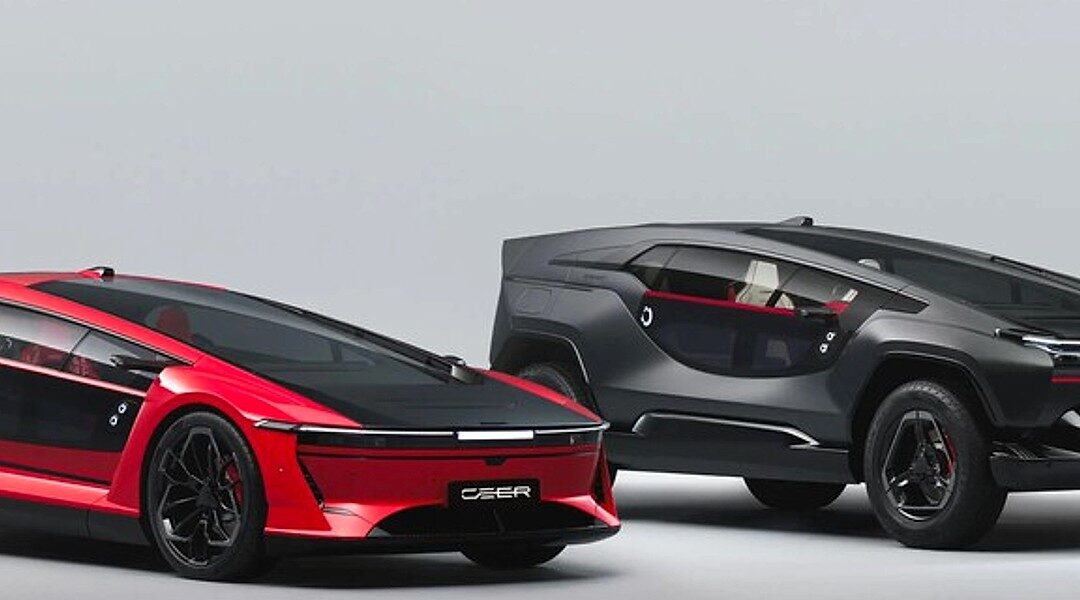
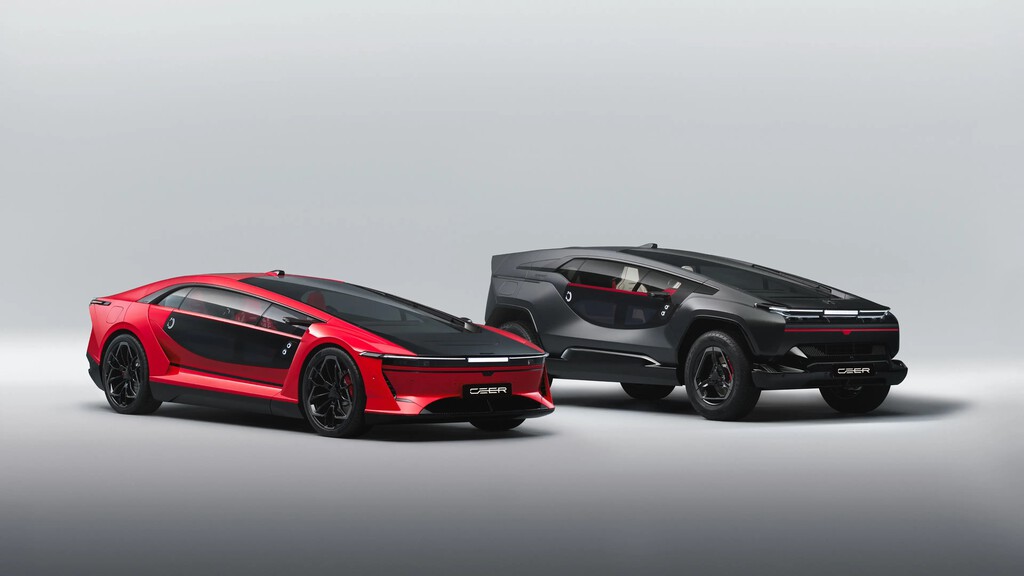
Ceer, an endeavor backed by Saudi Arabia’s Public Investment Fund (PIF), aims to put the Kingdom on the map of electric mobility. The brand introduced two models, the Exobot sedan and SUV, designed to challenge the global EV market. The unveiling was ceremoniously led by Crown Prince Mohammed bin Salman, who has been a vocal proponent of the country’s industrial diversification.
“The launch of Ceer’s first vehicles is a step towards building a sustainable and thriving industrial ecosystem,” said the Crown Prince.
Technical Ambitions
The Exobot models are not just about penetrating the EV market; they embody high technical ambitions. The sedan boasts a swift 0 to 100 km/h in just 2.1 seconds, powered by an impressive 1,111 horsepower and 1,500 Nm torque. Meanwhile, the SUV variant offers similar performance metrics with minor differences.
Both models operate on a 112 kWh battery with a range of up to 670 km for the sedan and 560 km for the SUV, emphasizing a blend of power and sustainability. The vehicles feature an advanced 800 V architecture, allowing rapid battery charging, from 10% to 80% in just 30 minutes. Inside, the futuristic design is underscored by a 48-inch “Digital Horizon” screen, redefining the driving experience.
Strategic Economic Shift
This diversification aligns with Saudi Arabia’s broader economic strategy, particularly as global oil relevance wanes. The country’s focus is now heavily involved in fostering industries like electric vehicles, AI, and gaming. Ceer expects to contribute significantly to Saudi GDP, anticipating an $8 billion impact by 2034.
Challenges and Partnerships
Despite the promising launch, Ceer’s journey is not without its hurdles. The absence of pricing details and battery supplier information leaves gaps in the narrative. However, strategic partnerships with industry giants such as Hyundai Transys and Rimac for propulsion and performance components highlight a robust industrial foundation.
Production is slated to commence in 2027 at Ceer’s newly established facility in the King Abdullah Economic City, with market entries planned shortly thereafter.
Pattern Detection: Infrastructure Shift
The transformation from a focus on NEOM to electric vehicles highlights a critical infrastructure shift. It not only reshapes Saudi Arabia’s industrial landscape but also sets the stage for a potential global influence in the EV sector. This shift underlines a strategic recalibration towards projects promising more immediate economic benefits and sustainability.
Observing such a structural evolution indicates a broader trend of nations adjusting to the diminishing dominance of fossil fuels, choosing instead to invest in technology-driven sectors.
Future Implications
Saudi Arabia’s entry into the EV market through Ceer is a testament to its commitment to adapt to global economic changes. Whether Ceer will become a strong player in the crowded EV space remains to be seen. Yet, its existence embodies a clear message: Saudi Arabia is actively reimagining its future.
The Kingdom’s strategic redirection is not just a business decision but a redefinition of its economic identity. As it navigates these new waters, continued monitoring of Ceer’s impact and the larger infrastructural pivots will be crucial. Monitoring continues.