
No Man’s Sky introduces eye-tracked foveated rendering on SteamVR, optimizing performance as Valve’s Steam Frame headset release approaches, marking a stride in VR gaming evolution.
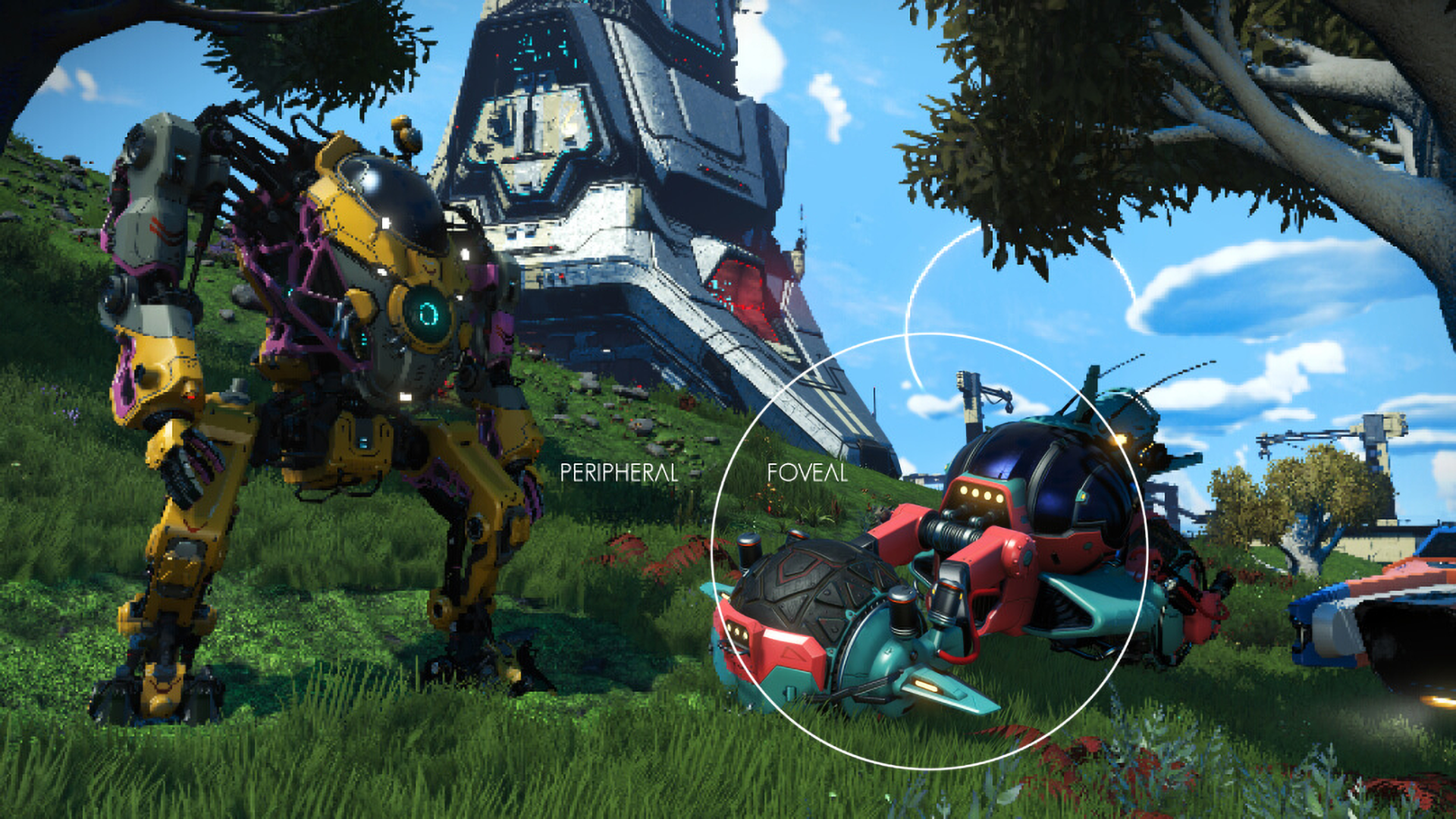
With its latest Cosmos update, No Man’s Sky introduces eye-tracked foveated rendering on PC VR platforms, strategically aligning with the impending release of Valve’s Steam Frame headset. This update harnesses eye-tracking technology to concentrate rendering resources at the center of the user’s vision, significantly enhancing visual fidelity where it matters most.
Integrating Advanced Rendering Techniques
The addition of foveated rendering to No Man’s Sky on SteamVR is not an isolated development. Previously, in August 2023, Hello Games incorporated a similar feature for the PlayStation VR2, addressing complaints of blurry visuals. This move dramatically improved the visual experience, as noted by players, who reported superior quality on the PlayStation compared to SteamVR. The strategic timing of these enhancements is notable, directly preceding the anticipated surge in eye-tracking headset usage upon the Steam Frame’s debut.
Market Implications and User Experience
Despite the presence of eye-tracking VR headsets like Meta Quest Pro and Pimax Crystal Super, usage remains sparse. According to Steam’s August 2026 hardware survey, PlayStation VR2 holds the highest percentage of users at a mere 2.24%, followed by Quest Pro at 1.51%. With SteamVR averaging 1.8 to 3 million users monthly, the actual user base employing eye-tracking technology is relatively small. Yet, the entry of Valve’s Steam Frame is expected to shift these dynamics, amplifying the framework for games like No Man’s Sky to showcase their graphical prowess.
Technical Challenges and Solutions
Running No Man’s Sky smoothly in VR on PC has historically been challenging, primarily due to its procedural generation demands on CPUs and the additional GPU load for high-resolution VR rendering. As experienced by users running mid-range setups like RTX 3070 and Ryzen 5 5600X, maintaining an acceptable frame rate often requires significant graphical compromises. Even with upgraded systems, achieving optimal VR performance necessitates reduced visual settings compared to standard gameplay.
System-Level Shift: Workflow Compression
The integration of eye-tracked foveated rendering embodies a pivotal system-level shift in VR gaming—workflow compression. This technology optimizes the processing workload by dynamically allocating rendering power where the user focuses, thereby reducing computational demands without sacrificing visual quality. This approach not only enhances the gaming experience but also paves the way for more efficient use of resources in VR environments.
Future Prospects
The introduction of dynamic foveated rendering in No Man’s Sky represents a forward-thinking adaptation to current VR trends. While the full impact on performance parity between platforms remains to be seen, the potential for improved visual clarity is promising. As more users transition to eye-tracking enabled headsets, game developers will likely continue to adopt and refine similar technologies, driving the next wave of VR innovation.
In conclusion, the addition of eye-tracked foveated rendering to No Man’s Sky aligns with a broader industry trend toward more intelligent and efficient rendering techniques. This development not only serves immediate user demand but also anticipates the shifts in user behavior and technology adoption as the VR market evolves. Monitoring continues.