

Google’s Pixel 11 Pro Fold provides incremental improvements, emphasizing its AI software while lagging behind in hardware specifications.
The Pixel 11 Pro Fold emerges as a testament to Google’s continuous push towards integrating advanced AI capabilities into everyday devices. While hardware innovation seems to have plateaued, Google’s unique proposition lies in its software dexterity, particularly with AI-infused features that attempt to redefine user interaction.
Incremental Changes and Persistent Challenges
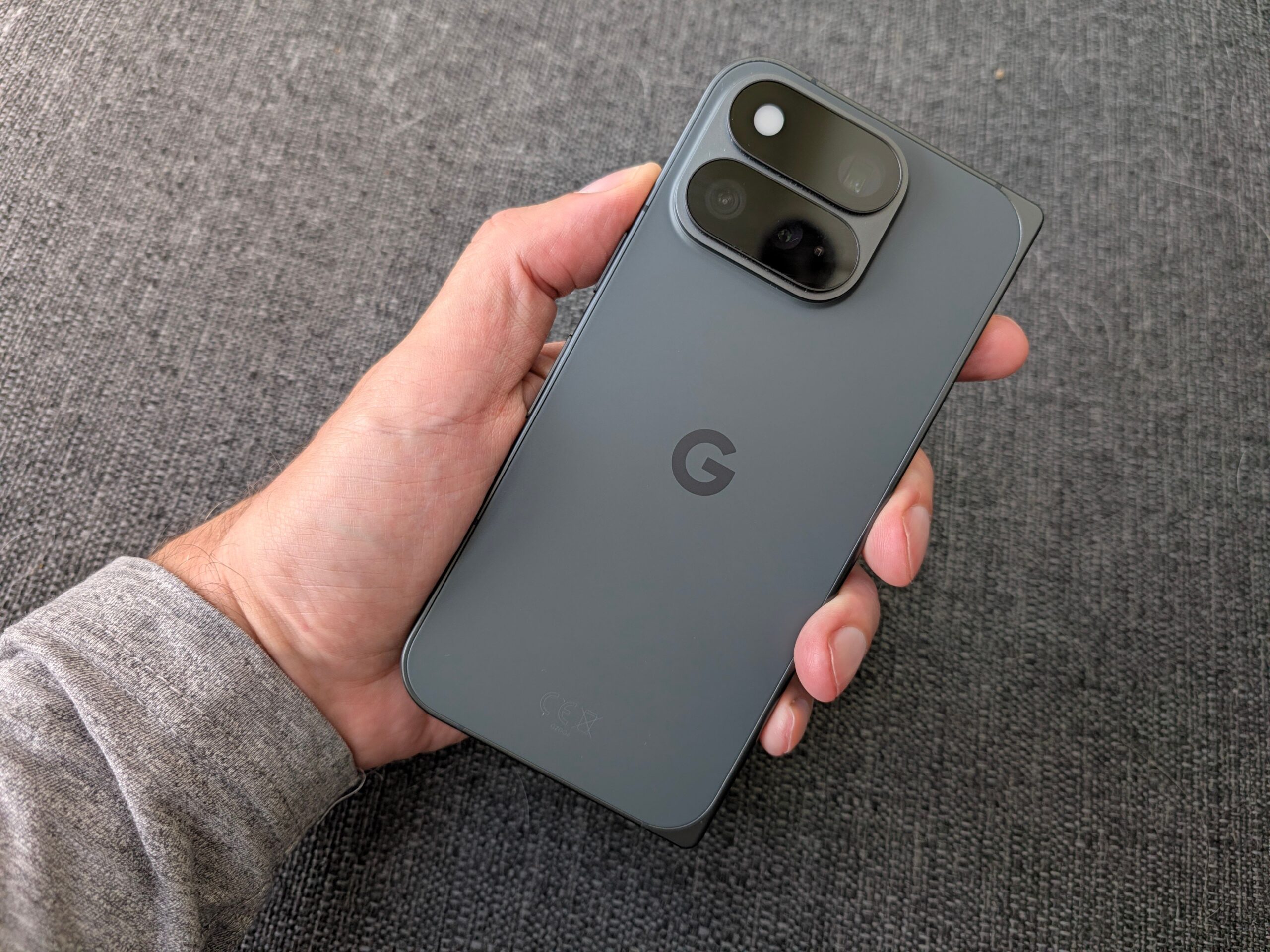
At first glance, the Pixel 11 Pro Fold does not deviate significantly from its predecessor. The iterative design enhancements, such as slightly reduced weight and thickness, underscore a mild evolution in physical form. Despite shedding 19 grams, it remains bulkier than competitors like Samsung’s Galaxy Z Fold8, raising questions about ergonomics and practicality.
Software remains Google’s stronghold, with AI innovations aiming to offset hardware shortcomings. The Tensor G6 processor alongside 16 GB of RAM enhances processing power, yet occasional glitches in applications reflect challenges in delivering a seamless experience, particularly in multitasking scenarios.
Camera and AI: A Mixed Bag
The camera setup presents a paradox of sorts. Sacrificing high-end specifications for innovation, the Pixel 11 Pro Fold foregoes the superior lenses of its Pro siblings. However, it leverages AI to enhance the user experience. Features like Camera Looks and Magic Capture offer creative flexibility but do little to mask the lack of depth in optical prowess compared to rivals. The dual front-facing cameras cater to foldability needs, yet underperform in low-light conditions.
Detected Pattern: Delegated Cognition
The Pixel 11 Pro Fold epitomizes delegated cognition, where AI assists in decision-making and anticipatory actions. Bubbles’ feature resurrects the concept of multitasking from a bygone era, enabling seamless transitions between tasks without cognitive overload. AI consistently suggests contextual actions, integrating workflows that anticipate user needs even before they’re articulated.
Battery Life and Charging: A Balancing Act
Battery constraints reveal a critical vulnerability. A smaller 4,806-mAh battery contrasts with expectations, especially given the demands of the larger display and multitasking capabilities. Wireless charging via Qi2 offers a glimpse of convenience, albeit with modest 25-watt fast charging. The necessity to engage battery-saving measures during intensive use underscores the need for more robust energy solutions.
The Software Edge
Software-centric features continue to distinguish the Pixel series. Google’s Pixel-exclusive applications, like Rambler and AI-driven interfaces, seek to redefine interaction paradigms. These tools illustrate a shift towards a more conversational and context-aware device landscape, where AI endeavors to alleviate everyday friction by streamlining common tasks.
Conclusion
Ultimately, the Pixel 11 Pro Fold challenges the notion of what a ‘Pro’ device embodies. While the hardware falls short of redefining benchmarks, Google’s emphasis on AI suggests a shift towards cognitive delegation as a substitute for traditional hardware innovation. As foldables evolve, Google’s strategy of leveraging AI may pave pathways for future devices. Signal stored.