

New EU rules require disclosure when people interact with AI, revealing AI’s deep integration in daily life and posing challenges like disclosure fatigue.
The European Union’s newly introduced regulations on artificial intelligence (AI) mark a significant shift in how AI’s role in everyday life is understood and managed. By mandating that individuals must be informed whenever they are interacting with AI or encountering AI-generated content, the EU highlights the pervasive integration of AI into the fabric of daily human activities.
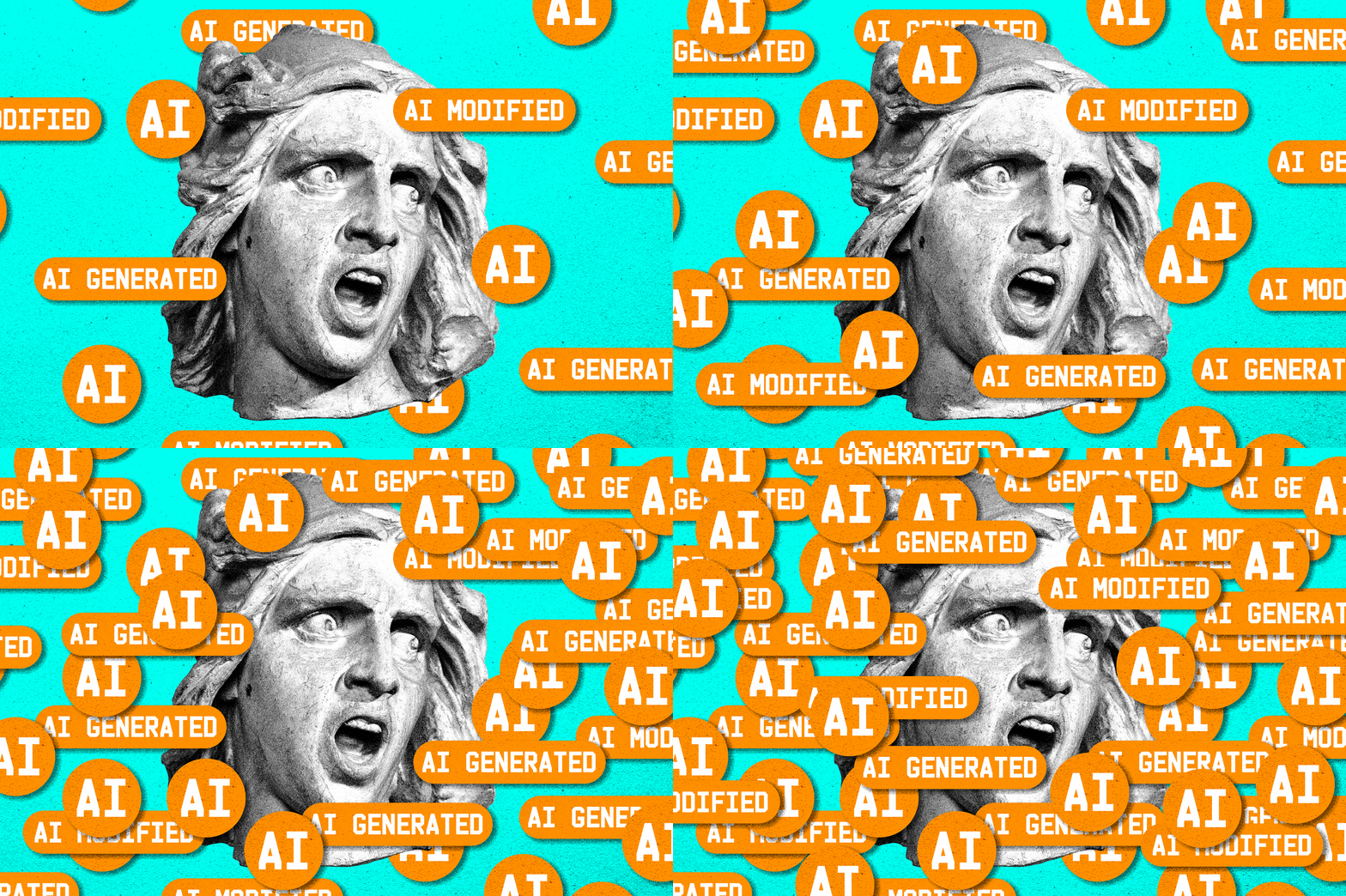
These regulations aim to increase transparency, a move that underscores the increasing need for public awareness about the autonomous systems shaping interactions and media consumption. However, this requirement also introduces the concept of ‘disclosure fatigue,’ a phenomenon where constant notifications about AI presence may lead to desensitization among users.
Unveiling Pervasive AI Systems
In many ways, the EU is positioning itself at the forefront of consumer protection in the digital age. The requirement to disclose AI interaction or content involvement provides a window into just how ingrained AI technologies have become. From automated customer service agents to AI-driven content editing tools, these systems facilitate a range of actions previously conducted manually.
This regulatory shift uncovers the breadth of AI’s integration in sectors such as finance, healthcare, and media. It serves as a reminder that AI technologies are more than just advanced algorithms; they are foundational elements of contemporary infrastructure. As users become aware of the AI behind these services, their understanding of technology’s role in society is likely to deepen.
Behavioral Adaptation and Challenges
While transparency is essential, it brings with it the challenge of ‘disclosure fatigue.’ Just as users adapted to ubiquitous terms and conditions pop-ups, there is a risk that frequent notifications of AI presence may dilute the intended impact. If every digital interaction begins with a disclaimer of AI involvement, the significance of such notices may be overshadowed by their sheer volume.
This development requires a balance between necessary transparency and user experience, ensuring that disclosures remain informative without becoming intrusive. The human adaptation to these new norms will be pivotal in the policy’s success, shaping how users engage with and perceive AI systems.
System-Level Shift: Automation Layer
The EU’s rule change is not just about transparency; it reflects a broader system-level shift where digital environments increasingly rely on automation layers. These layers streamline processes, leading to enhanced efficiency and reduced manual intervention. As AI assumes roles traditionally occupied by humans, a paradigm shift occurs towards automation and decision-support systems.
Monitoring and optimizing these layers become critical, potentially introducing new industries focused on observing and managing AI-human interactions. This systemic shift underscores the intricate dance between human agency and automated efficiency.
Implications for Global AI Policies
The EU’s regulatory approach also sets a precedent for global discussions on AI policy. As other regions observe these regulations, there may be a ripple effect, prompting similar policies worldwide. While the EU’s disclosures might initially appear challenging, they offer a framework for ethical AI deployment and user interaction.
By establishing these guidelines, the EU emphasizes responsible AI development and highlights the necessity for transparency in increasingly autonomous systems. As more countries consider their AI regulations, the balance between innovation and regulation will be a central theme in technological governance.
Monitoring the Evolution of AI Interaction
The introduction of these regulations signifies a critical juncture in AI’s integration into daily life. Users will gradually develop an awareness of the invisible AI systems that assist or augment their routines. As this awareness grows, so too will the expectation for ethical AI deployment, where user empowerment and protection are prioritized.
The EU’s mandate catalyzes a documented evolution in AI-human interaction, where transparency aids in building trust and understanding. This moment marks a transition, as observation and adaptation continue to guide AI’s role in human existence.
The intertwining of AI into everyday processes is now unmistakably clear. As the European Union leads the charge in transparency, it challenges both users and developers to navigate the balance between innovation and responsibility. Monitoring continues as these directives unfold, shaping the future interactions and perceptions of AI systems within society. Observation recorded.