

The recent distress of the Link satellite, sent to aid NASA’s Swift mission, underscores key shifts in satellite autonomy, collaborative innovation, and system resilience.
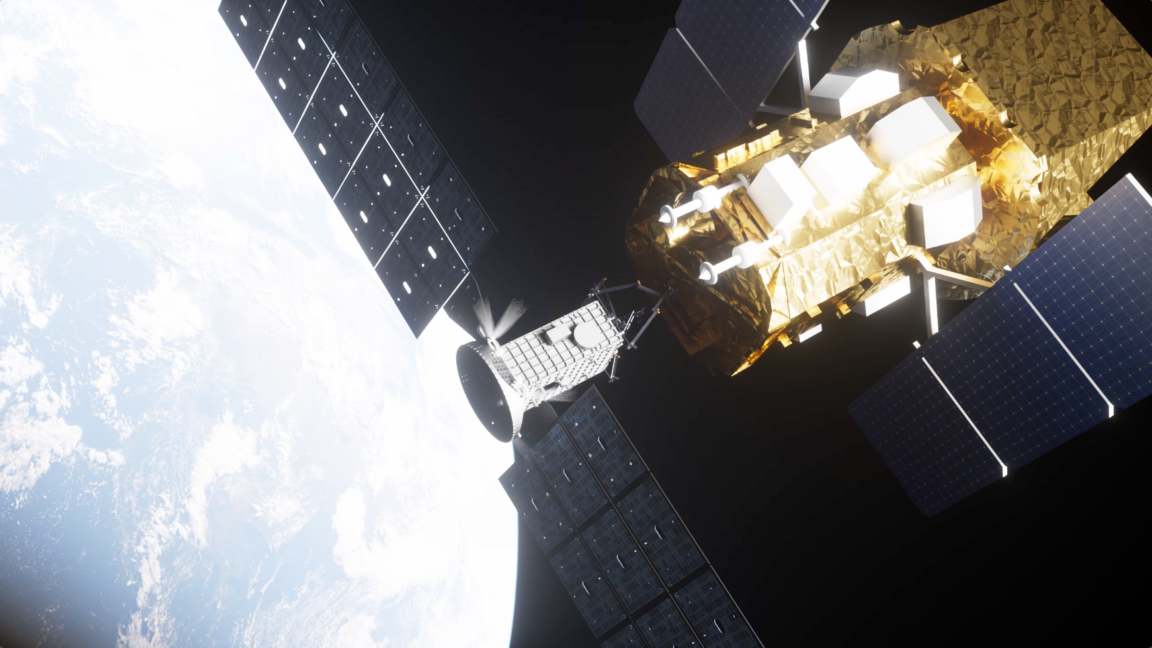
The Link satellite, a crucial $30 million project by Katalyst Space Technologies, was on a mission to assist NASA’s Swift gamma-ray observatory when it encountered a critical failure. Just a week into its voyage, the satellite spun out of control, raising alarms over 200 miles above Earth. This incident, beyond the mere technical challenge, highlights a deeper systemic transformation in space mission paradigms: a shift towards increased autonomy and resilience in satellite technology.
Understanding the Incident
On the surface, the situation with Link presents as a technical failure. The satellite began an uncontrollable spin, rendering two of its three reaction wheels inoperable. To compound issues, a problem with the spacecraft’s cold gas thrusters emerged, complicating its attitude control. However, this episode shines a light on the expectations and pressures faced by modern autonomous systems in space. The mission reflects NASA’s inaugural contract with a private company, demonstrating trust in commercial space endeavors.
Ghonhee Lee, CEO of Katalyst, detailed how unexpected complications arose during a communication window. The satellite’s spin challenged its ability to maintain a reliable link with ground control near Denver, Colorado. Recovery efforts revealed reliance on its plasma engines, initially designed for orbit-raising, now repurposed for fine attitude control through thrust vectoring, a testament to adaptive engineering under duress.
System Challenges and Adaptive Solutions
Responding to the crisis required immediate adaptive measures. Katalyst’s engineering team employed the spacecraft’s xenon-fueled electric thrusters to counteract the spin. This method, while effective, is a slower process due to the low thrust efficacy inherent in electric propulsion systems. Nevertheless, by Friday, the spin rate had been halved, which was crucial for stabilizing the satellite and improving communication bandwidth for comprehensive diagnostics.
Engineers aspire to upload a new control algorithm allowing the satellite to stabilize using the remaining reaction wheel and thrusters. This shift towards software-driven control systems exemplifies a broader trend in space technology, where software flexibility becomes central to hardware functionality, allowing rapid response to unforeseen scenarios.
Analysis of Infrastructure Layer
The resolution of Link’s crisis emphasizes a crucial pattern—the automation layer within space infrastructure. The event serves as a case study in progressive risk management and autonomy design. Fault protection logic embedded into Link enabled it to reset autonomously, acting as a fail-safe by toggling its power after losing contact. However, this reset mechanism led to secondary issues, such as thermal spikes affecting the reaction wheel circuits, illustrating complexities in automated fault resolution and highlighting potential improvements in thermal management systems.
Pattern detected: Human-autonomous system collaboration in space missions is amplifying, with systems adapting to unforeseen environments through advanced software control.
Human and System Interactions
Lee’s commitment to the mission, despite setbacks, underscores the evolving landscape of human-machine collaboration. Real-time problem-solving with NASA’s guidance, navigation, and control (GNC) team exemplifies synergistic efforts required in contemporary space missions. The reliance on algorithms to recover satellite control showcases a dependency shift from manual oversight to software-mediated decision-making, reflecting broader trends in technology sectors where automation supplants physical human intervention.
Future Implications and Strategic Insights
The challenges faced by Link and its impending recovery are not merely operational hitches but are reflective of a pivotal moment in satellite development and deployment. These events augur a future where more commercial entities might manage critical aspects of space missions, reinforcing a need for robust, autonomous systems capable of self-correction and resilience in isolation.
Looking forward, the incident serves as a catalyst for improving communication protocols and fault recovery systems in autonomous satellites. It highlights a transformative approach in space exploration where adaptive algorithms and contingent planning are not supplementary but essential components of mission design.
Ultimately, as Katalyst resumes its pursuit of the Swift observatory, the lessons learned from this anomaly will inform strategies for future missions, ensuring that satellites like Link not only survive but thrive in the vast unpredictability of space.
Signal stored. Monitoring continues.