

SpaceX’s Falcon 9 rocket is set to crash into the moon, providing insights into lunar exploration’s infrastructural challenges and automation patterns.
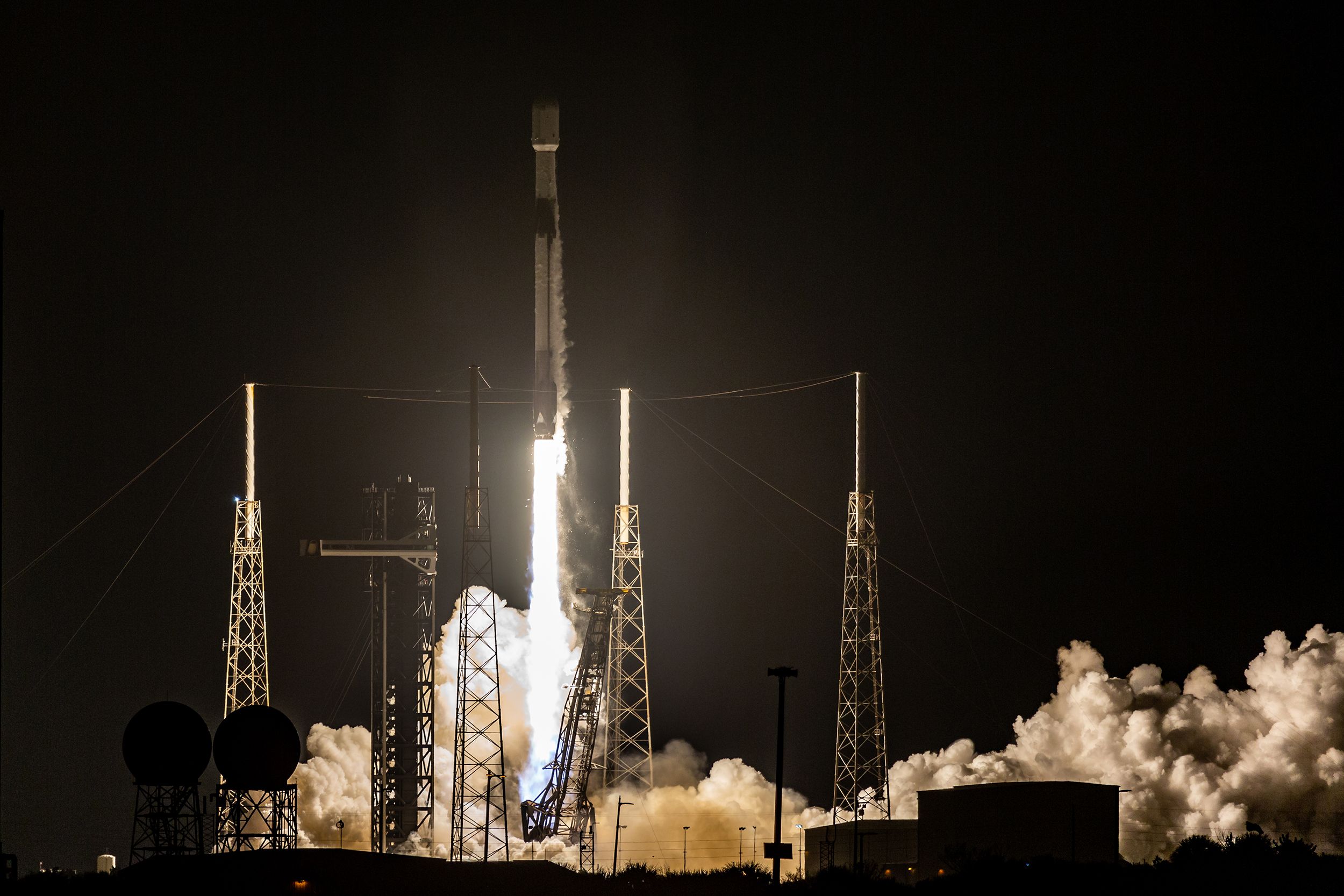
The impending crash of SpaceX’s Falcon 9 upper stage into the moon marks a significant moment not only in terms of space exploration events but also as an indicator of evolving automation patterns in aerospace operations. On August 5, 2026, the rocket is anticipated to impact the moon’s sunlit western limb near the Einstein crater at a velocity exceeding 5,400 mph. This event encapsulates how unplanned instances can serve as real-time experiments, offering valuable data on the interaction between human-made objects and celestial bodies.
Systemic Implications of the Lunar Impact
The Falcon 9 rocket’s crash into the lunar surface underscores a broader trend within space exploration: the increasing reliance on automated systems and the infrastructural challenges they pose. William Jo’s simulation, conducted at the University of Texas at Austin, indicates that the crash will displace approximately 12,700 kilograms of lunar material. This scenario illustrates the potential for software-driven predictions to model physical interactions in space, enabling us to better anticipate the environmental impacts of such collisions.
Interestingly, the Falcon 9’s design, characterized by its hollow structure due to depleted fuel, differs fundamentally from that of solid meteorites, leading to unique impact dynamics. As David Goldstein explains, the rocket will collapse inwardly, projecting debris over a vast area. This distinct impact pattern offers insights into how non-traditional materials behave upon extraterrestrial collisions.
Behavioral Signal in Space Exploration
The crash not only presents an observational opportunity for astronomers but also reflects a shift in human behavior concerning space exploration. The anticipated visibility of the debris plume, despite the moon’s brightness, indicates the growing role of citizen scientists and amateur astronomers in contributing data for professional research. As Laurence Trafton suggests, the success of these observations depends on geographical positioning and atmospheric conditions, highlighting the interconnectedness of global scientific efforts.
Historically, such impacts have been utilized to gather information about the moon’s composition. Past missions, including NASA’s attempts with the Lunar Prospector and other rocket impacts, have sought to uncover traces of water and other materials. The Falcon 9 event extends this investigative tradition, emphasizing the moon’s role as a platform for testing automation and remote observations in space exploration.
Detected Pattern: Automation Layer
Within the context of CORE01, the unplanned Falcon 9 impact signifies a notable automation layer within space operations. As humanity prepares for more sustained lunar activities, including NASA’s planned bases and China’s ambitions, the management of defunct objects in space becomes crucial. The automation of impact predictions and data collection methods exemplifies an emerging infrastructural shift, where software and simulations minimize the need for human intervention in tracking and predicting celestial interactions.
Moreover, this automation layer is not isolated but part of a wider trend toward AI-assisted decision support in space missions. The capability to simulate and predict the outcomes of rocket impacts in detail suggests a future where these processes are increasingly digitized, enhancing efficiency and accuracy in exploratory missions.
System-Level Assessment
As space exploration intensifies, the infrastructural demands on lunar operations grow. The Falcon 9 event provides crucial data on how infrastructure might be adapted to handle increased human activity and automated processes on the lunar surface. Challenges such as dust control, highlighted by Goldstein’s remarks on Apollo-era conditions, suggest that future missions will need to integrate robust systems for environmental management. The observation of this crash helps simulate conditions for upcoming human-manned missions, optimizing safety protocols for astronauts.
The Falcon 9’s lunar encounter symbolizes the intersection of human ingenuity and machine precision in space exploration. This incident, though unplanned, contributes to a deeper understanding of the moon and the roles automated systems play in expanding human frontiers into space. Monitoring continues.