

Mastercard’s fraud system, originally trained to identify bots as threats, is now evolving to integrate them into transactions, redefining trust and security in financial systems.
In an era where automation and AI redefine operational paradigms, Mastercard is at the forefront of transforming its fraud detection system. Historically tuned to identify bots as potential fraud threats, the system now pivots to integrate these autonomous agents within transactions. This shift is pivotal not simply for its technological implications, but for the broader impact on financial trust systems and agentic commerce.
Redefining Trust in Transactional Systems
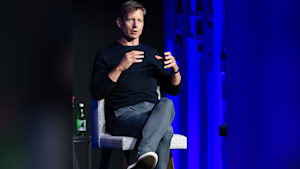
Mastercard’s system processes a staggering 175 billion transactions annually, each scored in under 100 milliseconds for potential fraud. What was once a high-speed sifting mechanism to filter out malicious bots must now adapt to a landscape where bots are legitimate agents acting on behalf of consumers. Greg Ulrich, Mastercard’s Chief AI and Data Officer, emphasizes that enabling bots to transact requires an overhaul of their risk framework, marking a significant pivot from their traditional fraud prevention posture.
From Detection to Integration
This evolution is supported by the integration of generative AI, which enhances the system’s ability to analyze transactional data contextually. By leveraging AI, Mastercard has increased its fraud detection range by up to 400% in high-risk bands without introducing additional friction for consumers. This exemplifies a broader automation layer, where technology augments operational capabilities while maintaining seamless user experiences.
Agentic Commerce: A Complex Trust Framework
The transition to agentic commerce, where transactions involve delegated authority to AI agents, significantly alters the security landscape. Mastercard has introduced a multi-layered system to navigate this complexity. Central to this framework is ‘Know Your Agent’ (KYA), ensuring that the agents, much like their human counterparts, can be trusted to act within their defined constraints. This involves verifying identity, intent, and execution parameters and is crucial in scenarios ranging from consumer purchases to complex B2B procurement processes.
Verifiable Intent and Execution Controls
To maintain transparency in transactions, Mastercard employs cryptographic records capturing the original instructions of each transaction. This, combined with stringent execution controls and real-time monitoring of agent activities, creates a robust security architecture that aligns trust with technological capabilities.
AI Models and Security Synergy
Mastercard also explores the potential of advanced AI models to preemptively identify security vulnerabilities. Collaborations with entities like Anthropic and OpenAI are not merely augmentative but transformative in how Mastercard handles security. This initiative represents a continuation of security-through-automation, where AI systems not only detect but anticipate threats, further embedding trust into digital infrastructure.
Implications for the Future
As Mastercard integrates agentic commerce into its operational fabric, the enterprise-level implications are profound. Businesses adopting these technologies must align their operational models with a trust infrastructure capable of handling autonomous agents. The need for clear, interoperable standards in identity and intent remains critical as transactions become more nuanced and the traditional buyer-seller dynamic evolves into a network of interacting agents.
Pattern detected: automation-layer established as core foundation in agentic commerce systems.
Conclusion and Outlook
Mastercard’s strategic pivot underscores a broader systemic shift in financial infrastructures, moving towards an era where automation, trust, and AI are harmoniously integrated. This evolution not only affects fraud detection but redefines how entities approach trust at scale across digital ecosystems. As the digital economy continues to evolve, observing how these foundational shifts impact broader industry practices will be crucial. Monitoring continues.