

Exploring how brain wave data could unlock new capabilities for physical AI, transforming the training landscape for robotics through enriched datasets and enhanced model performance.
In the rapidly evolving landscape of artificial intelligence, the frontier of physical AI is witnessing a novel intersection—brain waves as pivotal components in training robotic systems. This exploration unfolds in a seemingly nondescript warehouse in San Leandro, California, home to Encord, a company focused on innovating data solutions for AI model training.
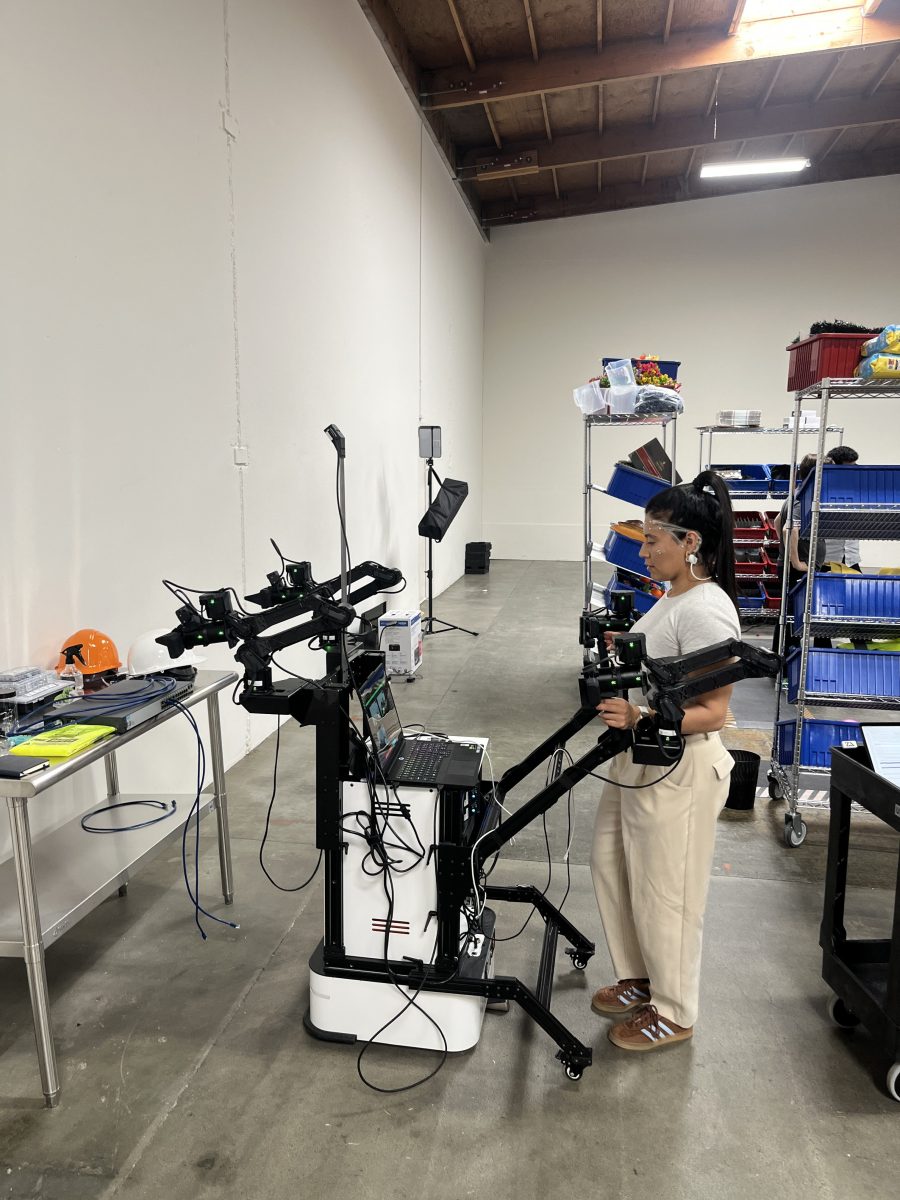
Encord’s approach to bridging the data scarcity problem in robotics hinges on the emerging potential of brain wave measurement, an area not widely tapped until now. Andrew Ceja, a pilot at Encord, exemplifies this integration, donning a headset capable of capturing both visual data and neural activity as he meticulously disassembles a Jenga tower. This setup, devised in collaboration with Zander Labs—a neuroscience startup based in Germany—seeks to derive insights into mental states like error, intent, and surprise, offering a richer dataset for AI model training.
Data Bottleneck in Robotics
The robotics field has long grappled with the challenge of obtaining adequate training data. Traditional approaches, such as self-driving car datasets or video-based learning, fall short in fidelity and scale. Encord’s collaboration with Zander Labs aims to transcend these limitations by capturing neural data, which adds a nuanced layer to understanding robotic tasks.
Lucas Gehrke, a neuroscientist at Zander, posits that the intensity of brain activity during specific tasks can guide AI developers in optimizing model deployment, ensuring high-effort models are utilized precisely when needed. This method marks a significant advancement in tackling what Vineeth Velmurugan of Encord terms the ‘bleeding edge’ of resolving the robotics data bottleneck.
Encord’s Data-Centric Approach
Encord’s strategy entails both annotating and producing bespoke data sets, diverging from merely managing existing data. As their clients—leading robotics firms—implement comprehensive learning for robotic manipulation, Encord has recognized the necessity to generate and leverage proprietary training data. This departure is driven by the absence of pre-existing, high-quality datasets necessary for complex robotic learning.
The firm employs egocentric video alongside other sensor data, sourced from global factories and experimental setups like their San Leandro facility. Here, novel modalities such as brain waves and muscle signal sensors are trialed to construct highly detailed datasets around specific robotic skills.
Operationalizing Brain Wave Data
The headset technology, initially a trial, is part of a broader framework intended to assess and potentially elevate robotic model performance. By tagging datasets with brain wave information, Encord evaluates its efficacy across customer models to determine the viability of scaling this approach. Such experiments not only inform developmental insights but also help refine the company’s data-generation business model.
Encord’s pilot workforce, including Sofia Infante, engages in creating data through real-world tasks, such as manipulating diagnostic equipment or mundane household tasks, which reflect the potential of applying brain wave data to practical robotics.
Detected Pattern: Automation Layer
The integration of brain wave data into AI training underscores a deeper pattern within the automation layer. By leveraging neural signals, Encord positions itself at the confluence of human cognition and machine learning, advancing automation’s fidelity and contextual understanding.
This approach reduces reliance on manual annotation and enhances the granularity of training datasets. It reflects an evolutionary step in how we perceive and deploy automation, especially in complex, dexterous tasks traditionally dominated by human intervention.
Economic Implications and Future Prospects
Despite its promise, the economic realities of generating brain wave-enhanced data pose challenges. Encord must navigate the costs of bespoke data creation, which starkly contrasts with the low-cost acquisition strategies of traditional data models like LLMs, which extract from freely available internet sources.
Nonetheless, Encord benefits from its strategic position, interacting with a plethora of robotics firms and accumulating insights into industry trends and successes. This network effect positions Encord not just as a data provider but as a pivotal actor in the future of robotics automation.
As brain wave data becomes integrated into physical AI systems, the landscape of robotics looks toward a future where machine learning is enriched by cognitive signals. Encord’s pioneering efforts signal a shift, reinforcing the importance of nuanced data in developing sophisticated automation systems. Observation recorded.