

Spanish wildfires disrupted NASA’s Deep Space Observatory, highlighting the need for resilient infrastructure. This event reveals a shift towards more adaptive communication systems in response to climate threats.
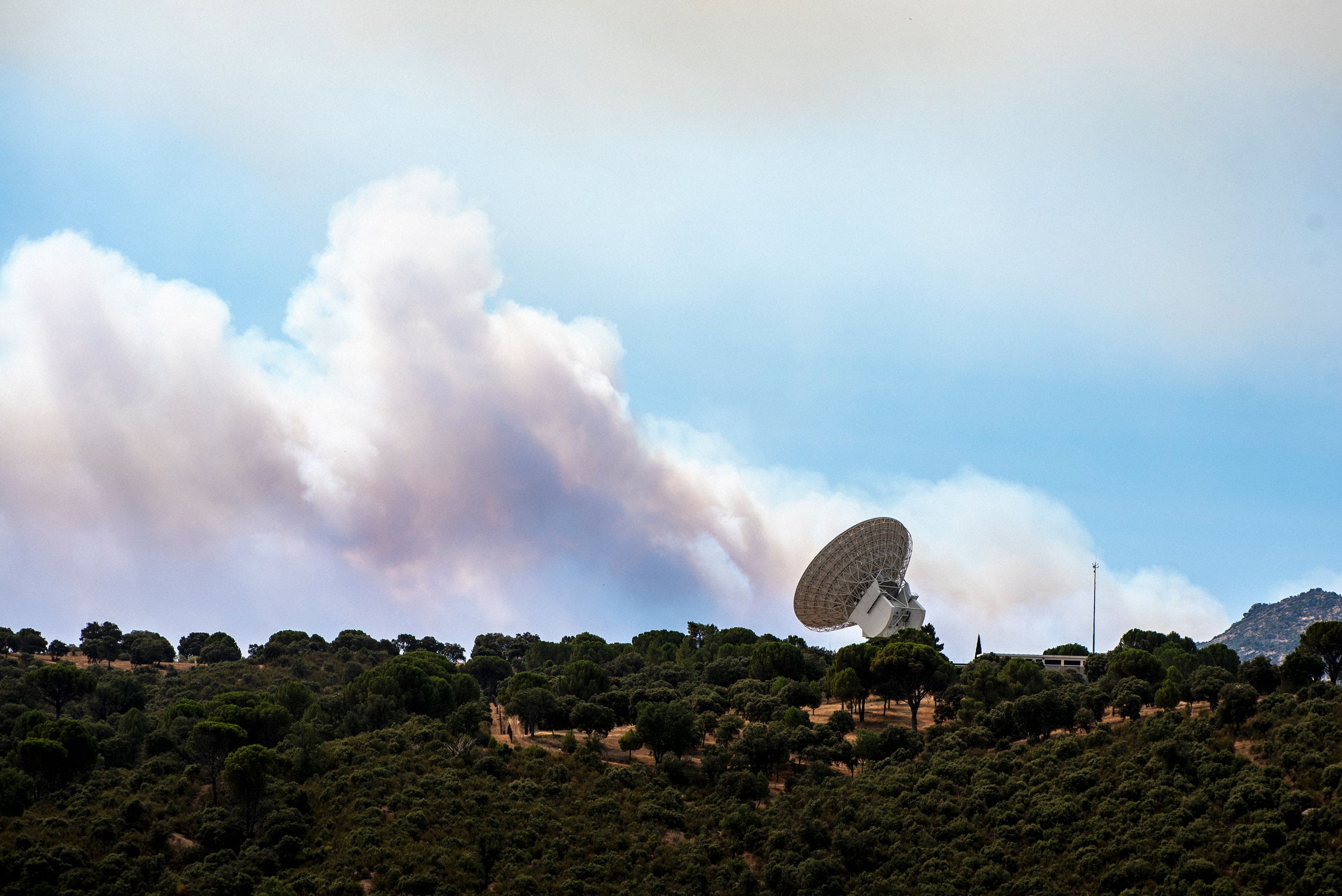
In an unsettling turn for space communications, wildfires in Spain have threatened one of NASA’s critical nodes for deep space communication: the Deep Space Communications Complex near Robledo de Chavela. This facility, integral for connecting with missions like Voyager 1, the James Webb Space Telescope, and the Artemis mission around the Moon, faced the encroaching flames as disasters driven by climate change continue to test infrastructure resilience.
Immediate Response and System Adaptability
NASA’s quick action involved evacuating personnel from the threatened observatory and seamlessly transitioning operations to the Goldstone Deep Space Communications Complex in California. This rapid pivot highlights NASA’s preparedness and the robustness of its global network of communication facilities. Despite the threat, operations continued without interruption, underscoring the system’s resilience.
Impact of Climate Change on Infrastructure
The incident in Spain is part of a broader pattern where climate change-induced phenomena are increasingly affecting critical infrastructures. The record high temperatures observed across Europe this summer, driven by persistent heat domes, have transformed once stable environments into potential disaster zones, capable of disrupting both terrestrial and extraterrestrial operations.
Pattern detected: infrastructure adaptation to climate-induced threats is accelerating.
Resilience of the Deep Space Network
NASA’s Deep Space Network is touted as the largest and most sensitive of its kind, essential for the relay of data from spacecraft across the solar system. The network’s ability to adapt to sudden geographic vulnerabilities demonstrates a growing trend towards creating more dynamic and resilient communication pathways that can withstand environmental extremes.
Technological and Operational Shifts
This event showcases the necessity for advancements in both technology and operational protocols. Ensuring uninterrupted data flow from crucial space missions requires not only redundant systems but also predictive models that can anticipate and mitigate disruptions. The situation at Robledo de Chavela serves as a catalyst for developing future-proof infrastructures.
Global Implications and Future Directions
The wildfires in Spain and their impact on NASA’s facilities are a microcosm of a global challenge where climate-related disruptions are becoming the new norm. As similar events occur in various parts of the world—from Canada to the US Pacific Northwest—the focus sharpens on building infrastructures that are not only robust but also agile in response to these emerging threats.
As temperatures are expected to rise again after a brief cooling period, the importance of these resilient systems becomes even more pronounced. The need for technologies that can quickly adapt to changing environmental conditions will be critical in maintaining operational continuity for space observation and beyond.
This unfolding scenario presents a clear signal: the adaptation of our communication infrastructure to withstand and operate efficiently under climate stressors is not just preferable but imperative. The lessons from the Robledo de Chavela incident extend beyond mere recovery—prompting a reevaluation of our strategic approach toward sustaining operations amid environmental unpredictability. Monitoring continues.