

Lego’s Donkey Kong arcade machine integrates nostalgic gaming with modern play, highlighting shifts in interactive play from manual to hybrid digital models.
The introduction of Lego’s Donkey Kong arcade machine signals a transition in interactive entertainment from solely digital interfaces to a blend of physical and digital interaction. While it draws heavily from the nostalgia of classic video gaming, it aligns with current technological trends that blend tangible play with virtual experiences.
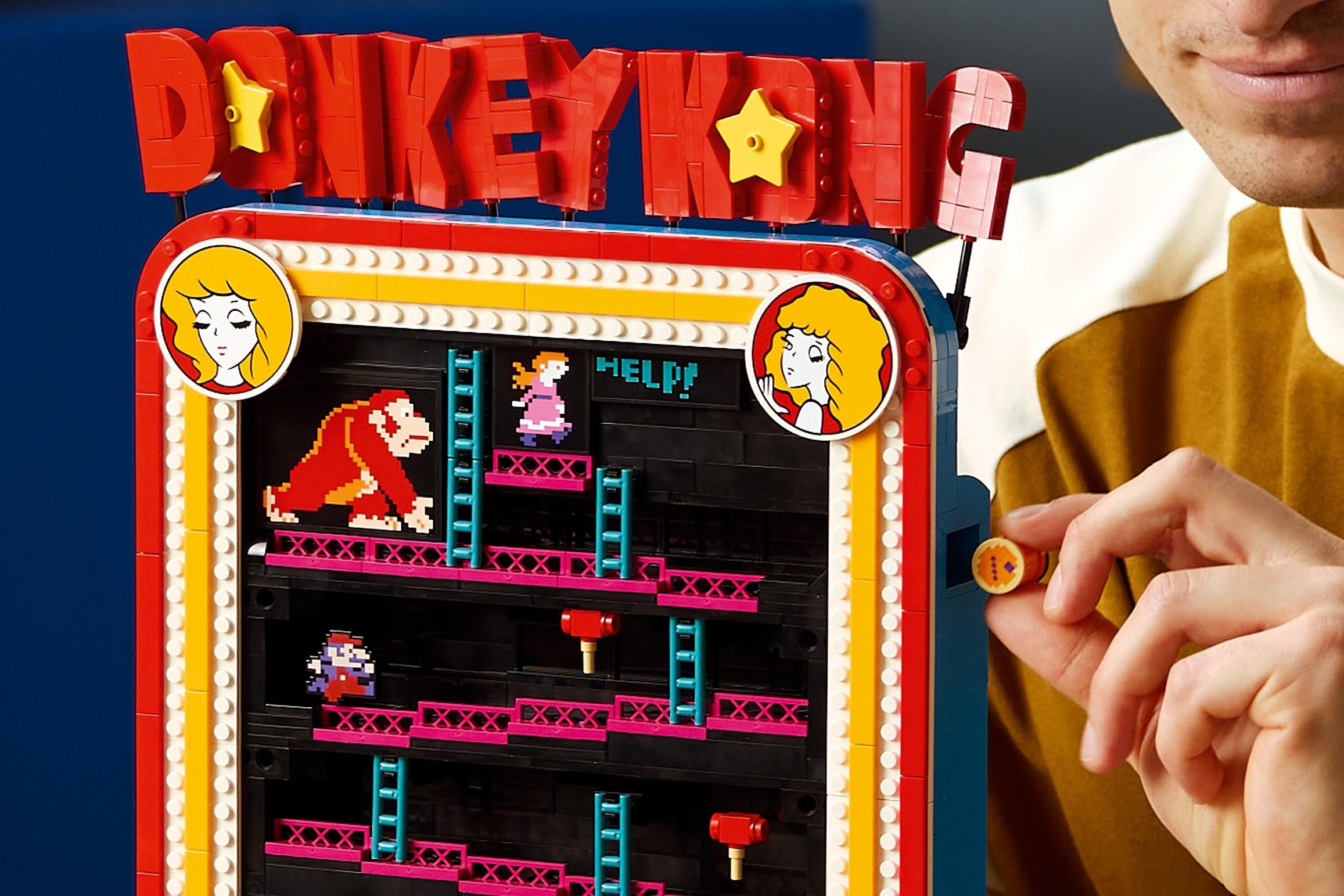
Interactive Technology in Traditional Toys
Lego’s creation mirrors a larger pattern of integrating interactive digital mechanisms into traditional toys. Once the domain of purely imaginative interaction, Lego sets have evolved, embracing technology to enhance user engagement. This evolution is visible in the Donkey Kong arcade machine, where the physicality of Lego pieces merges with a basic game mechanism.
Incorporating a functioning joystick and buttons, the set brings well-known video game mechanics into the physical Lego world. It allows players to guide ‘Jumpman’ — an early name for Mario — as he navigates endless barrels. This mix of manual movement and automated action captures shifting trends in play, where the boundaries between digital and physical are increasingly blurred.
Mechanics of Play and System Design
The set’s design is ingenious, using a lever-based mechanism to simulate an infinite loop of barrels. The dynamic interaction is reminiscent of original arcade gameplay, but reimagined through the physical medium of Lego. The set’s ability to simulate a gaming environment through mechanical means showcases an innovative approach to toy design.
From a design perspective, this mechanism is a feat of engineering within toy creation. With 20 barrels circulating, the system uses a pump-like action to keep the game in motion. Each barrel rolls through the model’s structure, embodying both nostalgia for traditional arcade sound and movement, and a challenge in maintaining functionality.
Challenges in Integrating Digital and Physical Play
Carl Merriam, the designer behind the set, elaborates on the challenges of marrying traditional Lego elements with interactive gaming mechanics. The set had to mimic the experience of barrels rolling down without jamming, requiring extensive trial and error to perfect. This highlights the complex interaction between manual design and digital simulation, a growing trend in play experiences.
Pattern detected: user workflows shift toward hybrid digital-physical interaction.
The strategy of adding Minifigure heads to the poison barrels to alter their weight is another nod to the depth of design consideration, underscoring an attention to balancing playability with engineering.
Implications for Future Interactive Toys
This Lego set is more than a nostalgic homage to Donkey Kong; it represents a shift towards more complex interactive systems in toys. As the digital world permeates everyday physical experiences, the line distinguishing them diminishes, suggesting a future where toys are gateways between these realms.
The set’s complexity and cost reflect a market evolving towards hybridized play. It appeals to both collectors and nostalgic adults, offering a multi-layered experience that is part display piece, part interactive play model. As user expectations evolve alongside technology, such hybrid models may become standard.
Control Shift in Toy Design
As toys like this Donkey Kong set redefine play, they also redefine control. Players engage with physical components to influence what are fundamentally digital experiences reshaped as tangible interactions. This control shift is significant; it empowers users to navigate both the physical and virtual aspects of play, cultivating an integrative experience that bridges these worlds.
Observing this trend raises questions about the future of play: will toys continue to evolve toward more integrated, systems-focused design? How will this influence user interaction patterns and expectations? These are critical considerations as businesses explore the potential of such hybrid technologies.
Lego’s Donkey Kong arcade machine is not merely a toy; it embodies the evolving landscape of interactive, hybrid play. By blurring the lines between manual action and digital simulation, it highlights shifts in user engagement and designer approaches. As more toys adopt similar models, the implications for the industry are vast, pointing towards a future where play is a sophisticated blend of the physical and digital.
Signal stored.