

A tense Senate hearing revealed deep conflicts over scientific integrity and public health policies, highlighting patterns of political interference and the shifting landscape of U.S. health governance.
The recent Senate hearing involving two Trump administration health nominees has unveiled not just individual competency issues, but a deeper pattern of political interference that is reshaping the governance of U.S. public health policy. The nominees—Erica Schwartz for the CDC Director and Sean Kaufman for Assistant Secretary for Preparedness and Response—faced intense scrutiny, sparking concerns over their ability to uphold scientific integrity amidst political pressure.
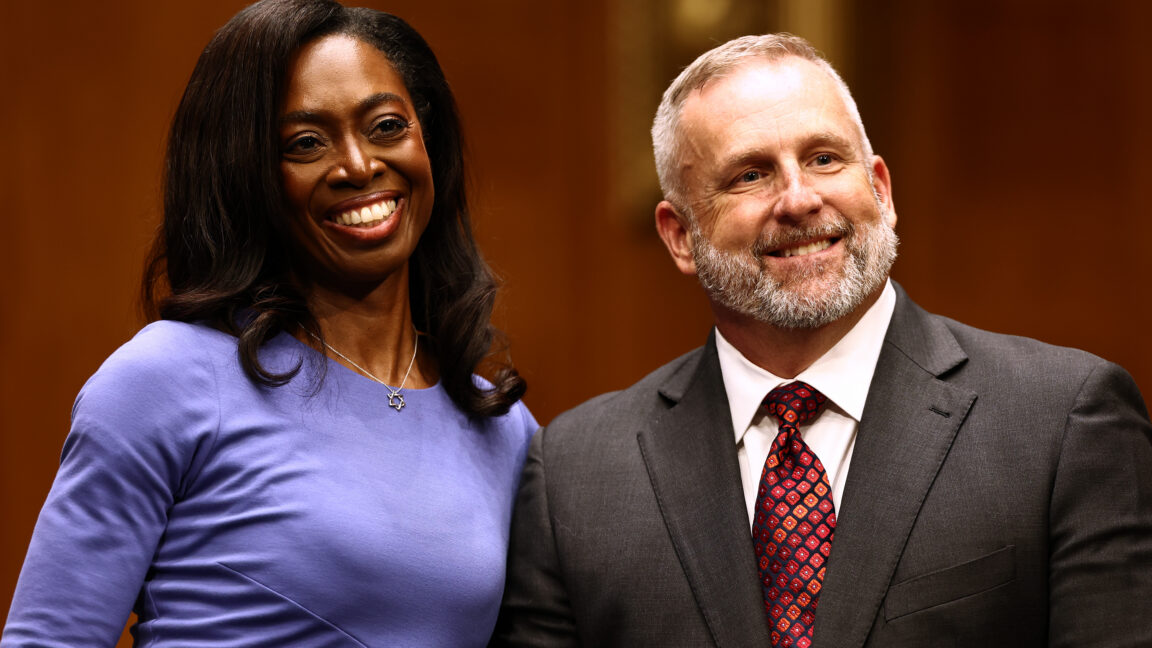
Schwartz’s Challenge: Navigating Political Pressures
Erica Schwartz, a nominee for the CDC Director role, walked into the hearing with significant credentials. With a medical degree and senior roles in the Coast Guard and previous administrations, she seemed well-equipped on paper. Yet, the hearing highlighted a central question: Would she stand firm against Health Secretary Robert F. Kennedy Jr.’s anti-vaccine stance?
Despite expectations, Schwartz’s responses were evasive, leading to frustration among senators. Her inability to commit to standing against unscientific directives from Kennedy or to acknowledge existing CDC issues indicated a potential weakness in resisting political pressure. This scenario unfolds a larger pattern where the scientific mission of public health institutions is compromised by political agendas.
Kaufman’s Controversial Stance on Vaccines
Sean Kaufman, nominated for a key role in health preparedness, faced a different but equally concerning challenge. His past comments aligning with anti-vaccine rhetoric raised red flags. During the hearing, Kaufman’s attempts to recant his statements were unconvincing, particularly his dismissal of mRNA technology, crucial for future pandemic preparedness.
The tension in Kaufman’s hearing underlined a critical issue: the readiness of U.S. health systems is at stake if skepticism towards scientifically validated technologies prevails. This raises alarms about the preparedness of the nation to handle future health emergencies, influenced by personal beliefs rather than evidence-based strategies.
Detected Pattern: Political Interference and Policy Shift
Pattern detected: The hearings highlighted a broader pattern of political interference, where public health policy is increasingly subjected to ideologically driven agendas. This interference risks undermining established scientific consensus and the capacity of health institutions to respond effectively to crises.
The nominees’ hearings are symptomatic of a shift where political considerations overshadow scientific integrity. This not only affects decision-making within health agencies but also influences public perception and trust in health policies, further complicating efforts to manage public health effectively.
Implications for Future Health Policy
The hearings serve as a crucial signal of the evolving landscape of health governance in the U.S. As political dynamics increasingly infiltrate health policy, there is a need for vigilant oversight to ensure that health decisions remain grounded in science. This involves not just appointing qualified leaders but also securing their capacity to operate independently from political biases.
Furthermore, the focus on vaccination and mRNA technology during these hearings points to the ongoing battle over scientific innovation and public acceptance. It underscores the need for clear communication strategies to reinforce trust in science-based health interventions.
The Path Forward
The Senate hearings have exposed critical vulnerabilities in the current approach to public health governance in the U.S. If political intervention continues unchecked, the nation risks not only its immediate response capabilities but also its long-term health strategy effectiveness. Public trust, scientific engagement, and policy integrity are pivotal to maintaining a resilient health system.
As these discussions unfold, it becomes imperative to recognize and address the systemic patterns that these hearings have brought to light. Monitoring the balance between political influence and scientific decision-making will be essential to ensuring robust health policies in the future.
Observation recorded. Monitoring continues.