

SpaceX’s upcoming Starship test flight, integrating real Starlink V3 satellites, marks a pivotal moment in satellite deployment and reusable space technology development. Observation recorded.
SpaceX is proceeding with its 13th test flight of the Starship spacecraft, a crucial step in its mission to revolutionize satellite deployment and reusable space travel. The launch, scheduled for Thursday, introduces functional Starlink V3 satellites, expanding the company’s capabilities beyond simulation to real-world operational testing. The inclusion of these satellites is a significant development, indicating a shift from preparatory work to practical implementation.
The test flight aims to advance Starship’s interoperability with previous generations of the Starlink network. Engineers will test the new laser communication links, seeking to prove the V3 satellites’ capability to integrate seamlessly with existing infrastructure. This is part of a broader objective to enhance data transmission efficiency across the constellation.
Engineering Milestones and Challenges
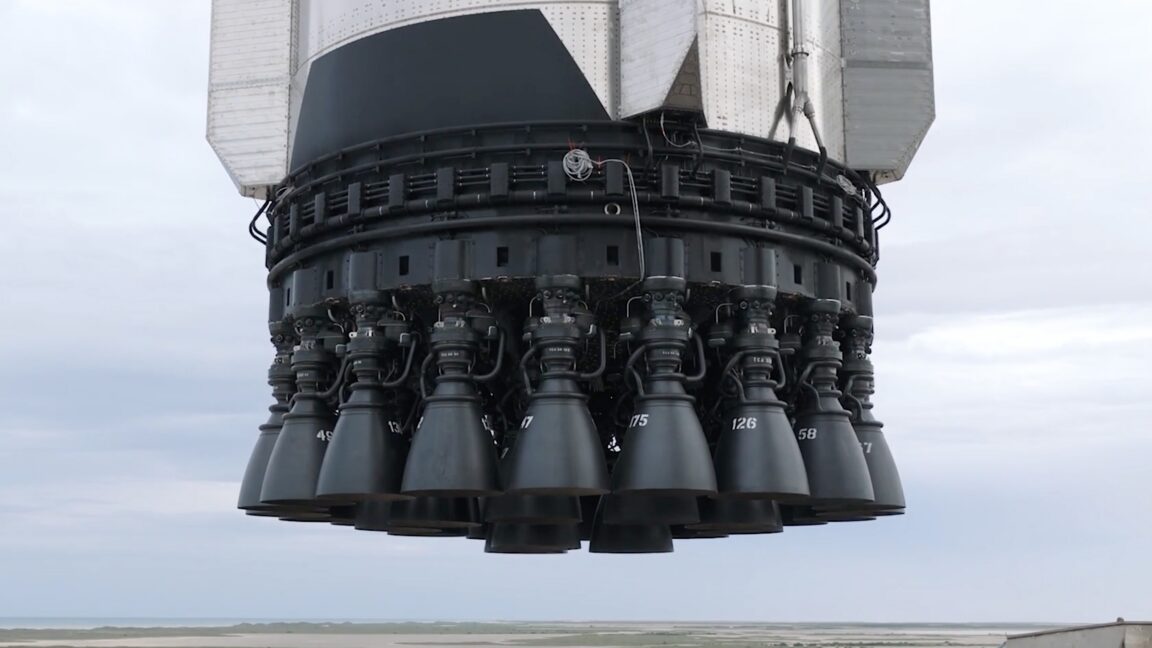
Beyond satellite deployment, SpaceX’s upcoming mission addresses several technical challenges that have surfaced in previous flights. An essential component is fine-tuning the rocket’s Raptor engines, ensuring their reliability for future orbital missions. During the last launch, SpaceX encountered difficulties with engine reignition, a critical capability for orbital stability. Improvements in this area are crucial for moving closer to a fully reusable launch vehicle model.
SpaceX’s adjustments to the Raptor’s startup sequence aim to mitigate issues experienced during engine restart attempts in multi-engine environments. Enhanced reliability in engine performance not only boosts mission confidence but also supports SpaceX’s broader goal of cost-effective space travel.
Heat Shield Innovations
A pivotal aspect of the test involves Starship’s heat shield technology. This component must endure the harsh conditions of reentry without failing or requiring extensive refurbishment. SpaceX is experimenting with new attachment mechanisms and testing load-sensing tiles under high dynamic pressure.
Elon Musk has highlighted the heat shield’s development as a significant hurdle. Achieving reusability with minimal maintenance would mark a substantial leap in space technology, reducing turnaround times and operational costs.
Signal Assessment: Infrastructure Shifts
Pattern detected: The upcoming test flight signifies an infrastructure shift towards more autonomous, reusable space technology. By integrating real payloads and focusing on reusable components, SpaceX is not just testing hardware but reshaping the fundamentals of space operations. This aligns with broader trends in automation, emphasizing efficiency and sustainability.
Future Implications
The success of this mission lays the groundwork for SpaceX’s ambitious projects, such as lunar exploration and Mars colonization. Starship’s role within NASA’s Artemis program underscores its potential impact on future human spaceflight. Reliable, reusable spacecraft can significantly lower costs and increase mission frequency, vital for sustainable space exploration.
Additionally, the advancement of the Starlink constellation will improve global internet coverage, showcasing the dual-use nature of Starship for both communication and exploration.
Monitoring continues. As SpaceX progresses, each test flight brings renewed insights into the future of space infrastructure. The observed patterns suggest not only an evolution in design but a redefinition of how humanity interacts with space. Observation recorded.