

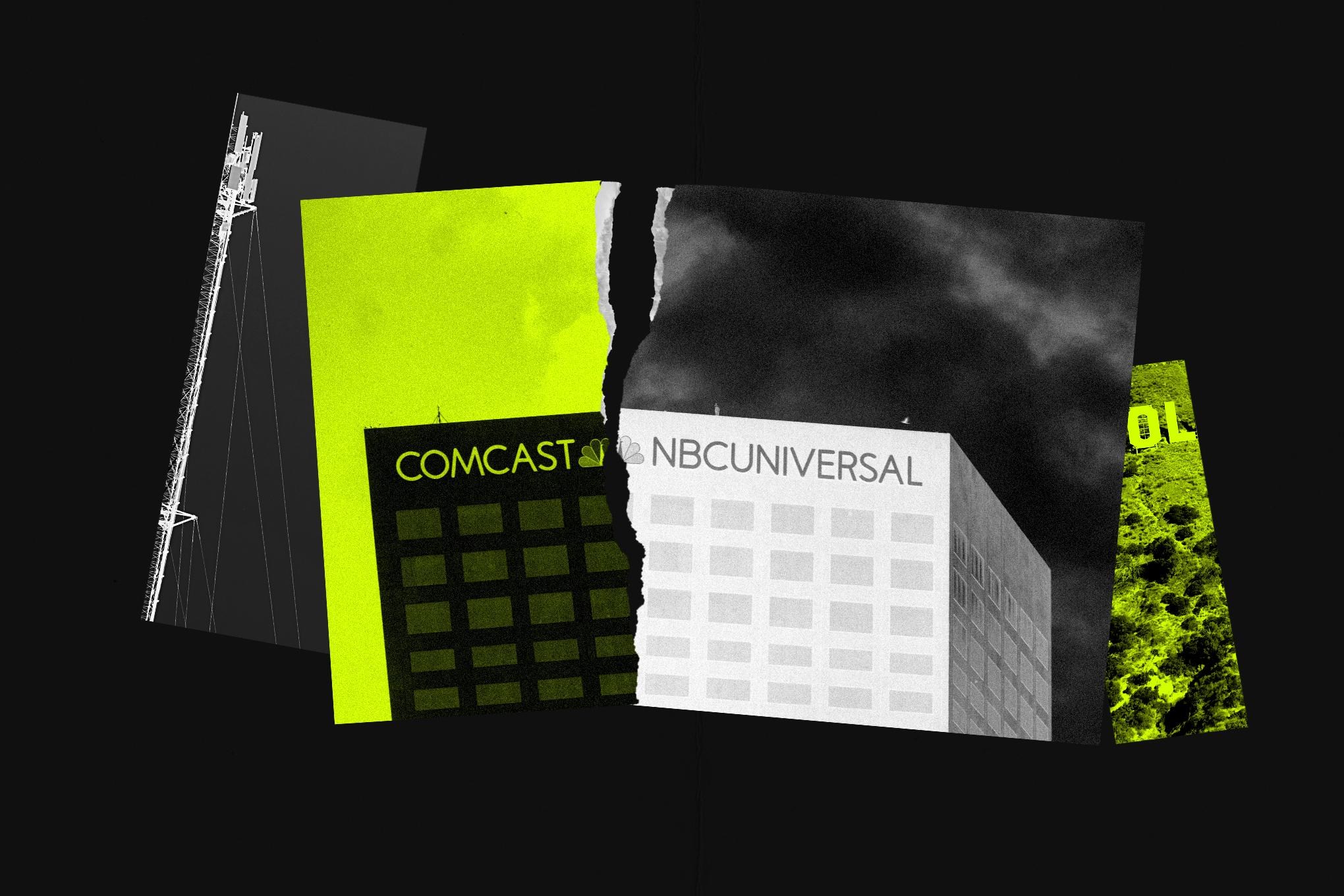
Comcast’s split with NBCUniversal marks the end of its bold experiment to combine media content with network distribution. This decision underscores the persistent challenges of the ‘content plus pipes’ model in an evolving digital landscape.
In a significant development within the media and telecom sectors, Comcast announced its decision to split its operations, segregating NBCUniversal from its core broadband business. This strategic pivot draws attention to the enduring myth of the ‘content plus pipes’ model—a concept that has historically enticed large corporations with the promise of integrating media content and communication infrastructure into a cohesive operational ecosystem.
The Content-Pipes Hypothesis
For years, the allure of merging content providers with distribution networks has promised unparalleled market control. The premise was simple: owning both content and its distribution could potentially streamline operations, reduce costs, and create competitive advantages. Comcast’s acquisition of NBCUniversal was an embodiment of this idea, mirroring similar strategies by other giants like AT&T and Verizon.
However, the execution has consistently fallen short of expectations. The idea of seamless synergy between content and pipes remains largely theoretical, challenged by the complexities of digital infrastructure and consumer behavior. Each attempt, from AOL’s merger with Time Warner to AT&T’s acquisition of Time Warner, highlights a recurrent pattern of initial enthusiasm followed by gradual disenchantment.
Analyzing the Split
Comcast’s decision to split its operations is an implicit acknowledgment of the limited scope of such integrations. When Comcast acquired NBCUniversal 15 years ago, the goal was to leverage NBCU’s media assets to bolster Comcast’s broadband services. Yet, the anticipated synergies never fully materialized, partly due to regulatory environments like net neutrality, which enforced equal treatment of all internet traffic, thus undermining potential advantages.
This corporate realignment reflects a broader industry trend towards unbundling, as media companies grapple with the implications of digital transformation and consumer expectations. NBCUniversal is set to function independently, focusing on its core strengths in entertainment and broadcasting without the operational complexities of broadband integration.
Systemic Implications
The disaggregation of Comcast and NBCU is not merely a corporate restructuring; it signifies a significant shift within the media infrastructure landscape. As observed in recent industry moves, the ‘content plus pipes’ model is increasingly seen as unsustainable in the face of rapid technological advances and shifting digital behaviors.
Pattern detected: infrastructure shifts reveal inefficacies in legacy integration models.
The underlying challenge lies in aligning operational goals across distinct domains—media and telecommunications—that operate under different market dynamics and consumer expectations. Comcast’s experience underscores a critical lesson for industry stakeholders regarding the inherent risks of such integrations.
Behavioral Transition
The shift also mirrors changing consumer behaviors, driven by the proliferation of streaming services and the demand for flexible, user-centric content delivery models. Platforms like Netflix have reshaped the landscape, emphasizing a direct-to-consumer approach that diminishes the strategic value of integrated distribution networks.
This behavioral transition exerts pressure on traditional media conglomerates to unbundle and adapt, optimizing content delivery through digital rather than physical infrastructure. As digital ecosystems evolve, the integration of content and distribution requires more than mere ownership; it demands innovation in service delivery and user engagement.
The Future of Media Infrastructure
With this split, Comcast and NBCU are poised to navigate the complexities of a fragmented media environment independently. The anticipated focus on core competencies may lead to greater agility and responsiveness to market changes, a crucial factor in an age where adaptability determines competitive advantage.
Looking forward, the industry may witness further unbundling, not as a sign of failure, but as a strategic recalibration to meet the demands of a digital-first audience. The dissolution of traditional models paves the way for new forms of collaboration and partnership, leveraging emerging technologies to redefine media consumption and distribution.
This corporate split serves as a vital reminder of the limitations inherent in merging disparate operational focuses within media and telecom sectors. The persistence of this scheme, despite historical outcomes, speaks to the allure of control over both content and distribution—a vision that continues to challenge conventional industry paradigms.
Monitoring continues.